Lot's Cave (Deir Ain Abata)
A Byzantine monastery built around the cave where tradition says Lot sheltered after Sodom, on a slope above the Dead Sea.
The sanctuary
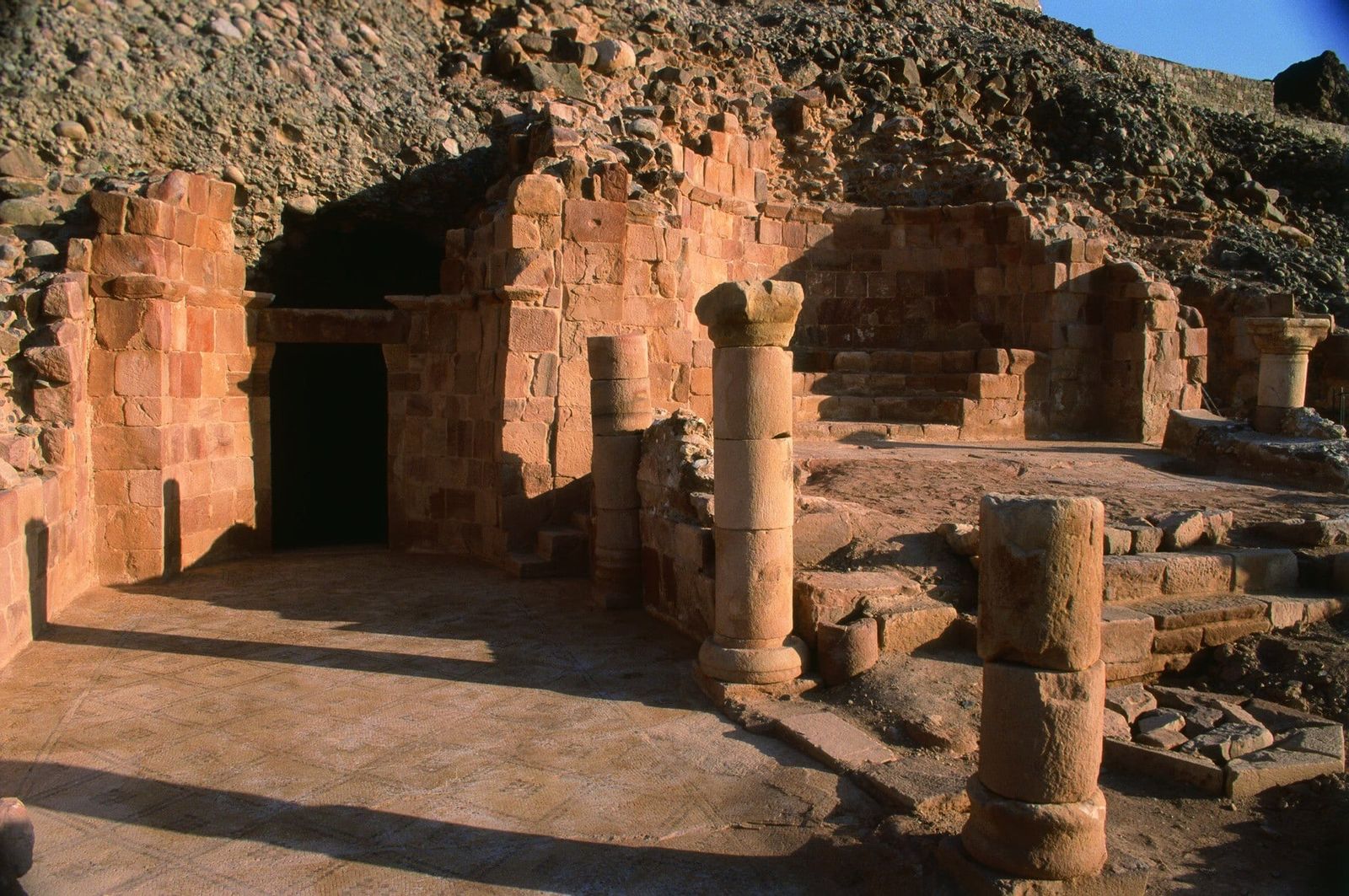
Deir Ain Abata, the Sanctuary of Saint Lot, is a Byzantine monastery on a steep slope above Ghor es-Safi, near the south-eastern shore of the Dead Sea. It was built around a cave identified by tradition as the place where Lot and his daughters took refuge after the destruction of Sodom and Gomorrah, as told in the Book of Genesis. The Madaba mosaic map marks a sanctuary of Saint Lot in this area.
The monastery
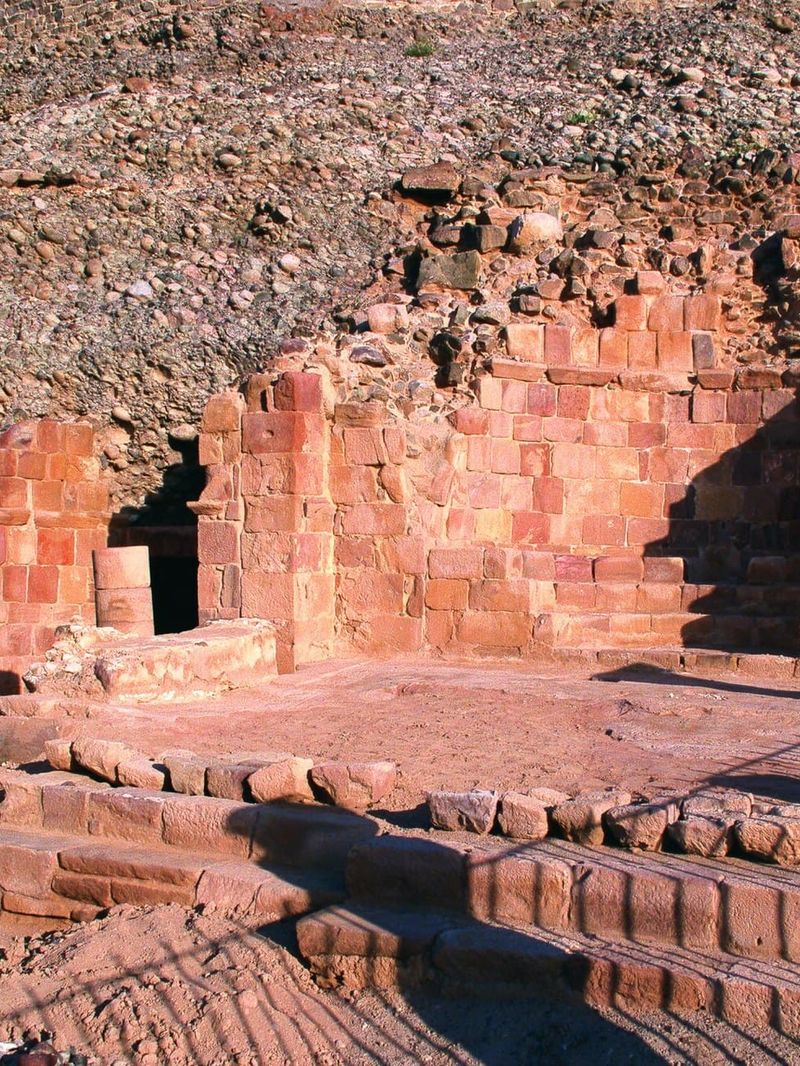
The complex includes a three-aisled basilica built against the mouth of the cave, a large reservoir and rooms for monks and pilgrims. The church floors are paved with mosaics. Greek inscriptions in them record work carried out in the 570s, in the early seventh century and in 691, under Umayyad rule. The cave itself was used long before the church, with finds going back to the Early Bronze Age.
Excavation and museum
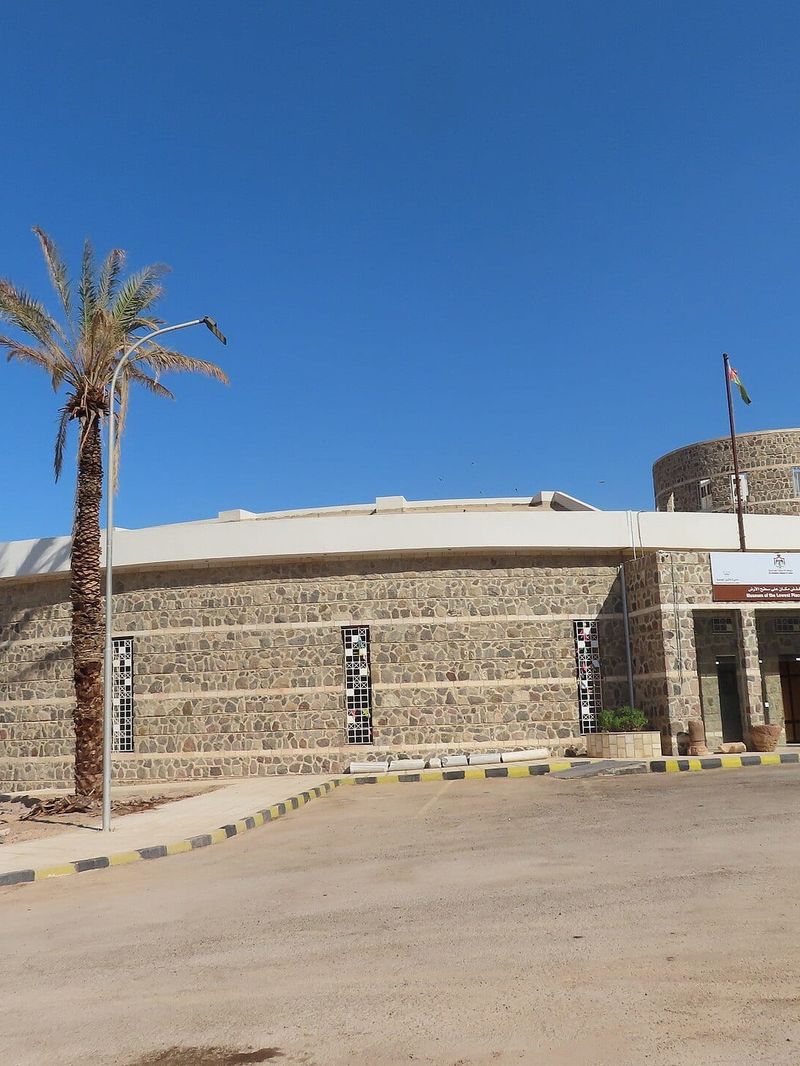
Excavations began in 1988 under Konstantinos Politis, with support from the British Museum and the Department of Antiquities of Jordan. Finds from the site are shown in the Museum at the Lowest Place on Earth at the foot of the slope. The ruins are protected by a modern roof.
Exhibo editorial
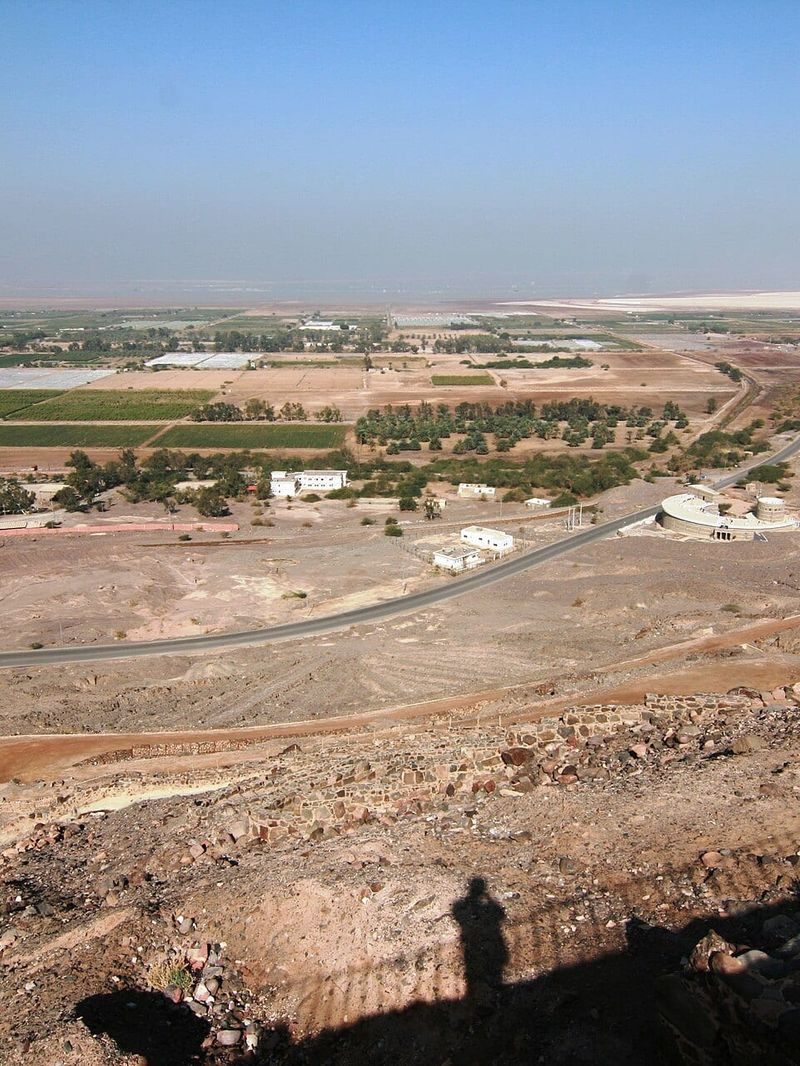
The climb is steep and the sun is strong, but the view is the reason to come. The southern basin of the Dead Sea spreads below, white with salt pans, the green fields of Ghor es-Safi at its edge and the far shore lost in haze.
The monastery itself is modest: a church pressed against a cave, a few mosaics, a cistern. Monks chose this hot, remote slope because a story told them to. Fourteen centuries later the same story still brings people up the steps.
Gallery
How to find it
At Ghor es-Safi on the Dead Sea Highway, about an hour south of the Dead Sea hotels. Park at the Museum at the Lowest Place on Earth. A stepped path climbs from near the museum to the monastery. Avoid the climb in the midday heat.