Khirbet et-Tannur
A Nabataean temple alone on a hilltop above Wadi Hasa, where a goddess crowned with the zodiac was found.
The temple
Khirbet et-Tannur is a Nabataean sanctuary on the summit of Jabal Tannur, a steep isolated hill above the meeting of Wadi Hasa and Wadi La'aban, between Karak and Tafilah. Unlike most temples it had no town around it. It was a high place, reached only by pilgrims.
Excavation
Nelson Glueck of the American School of Oriental Research excavated the temple in 1937 with the Department of Antiquities of Transjordan. Its finds were divided between Jordan and the United States. A team led by Judith McKenzie later restudied the records and published the full results in 2013.
The sculptures
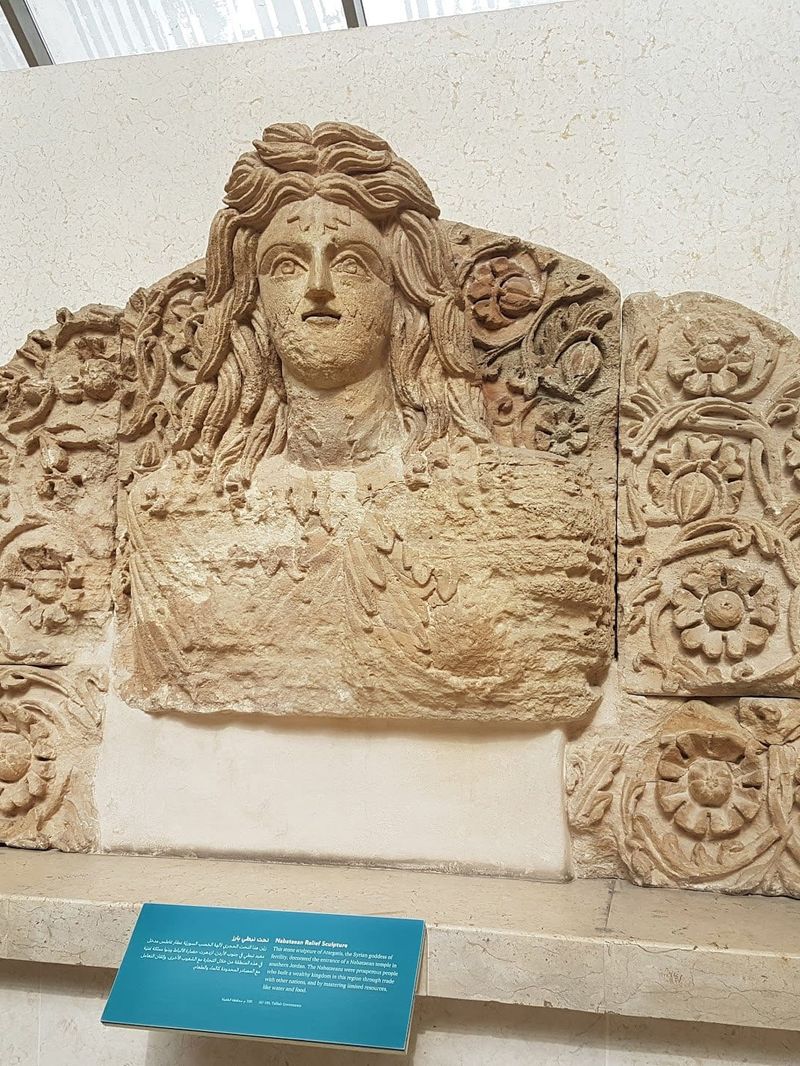
The temple produced some of the finest Nabataean sculpture known. Its most famous piece is a bust of a goddess framed by a ring of the twelve signs of the zodiac, now in the Cincinnati Art Museum. Other reliefs, including a goddess covered in leaves and fruit, are in the Jordan Museum in Amman. Most of the sculpture belongs to the main building phase in the early second century AD.
The ruins
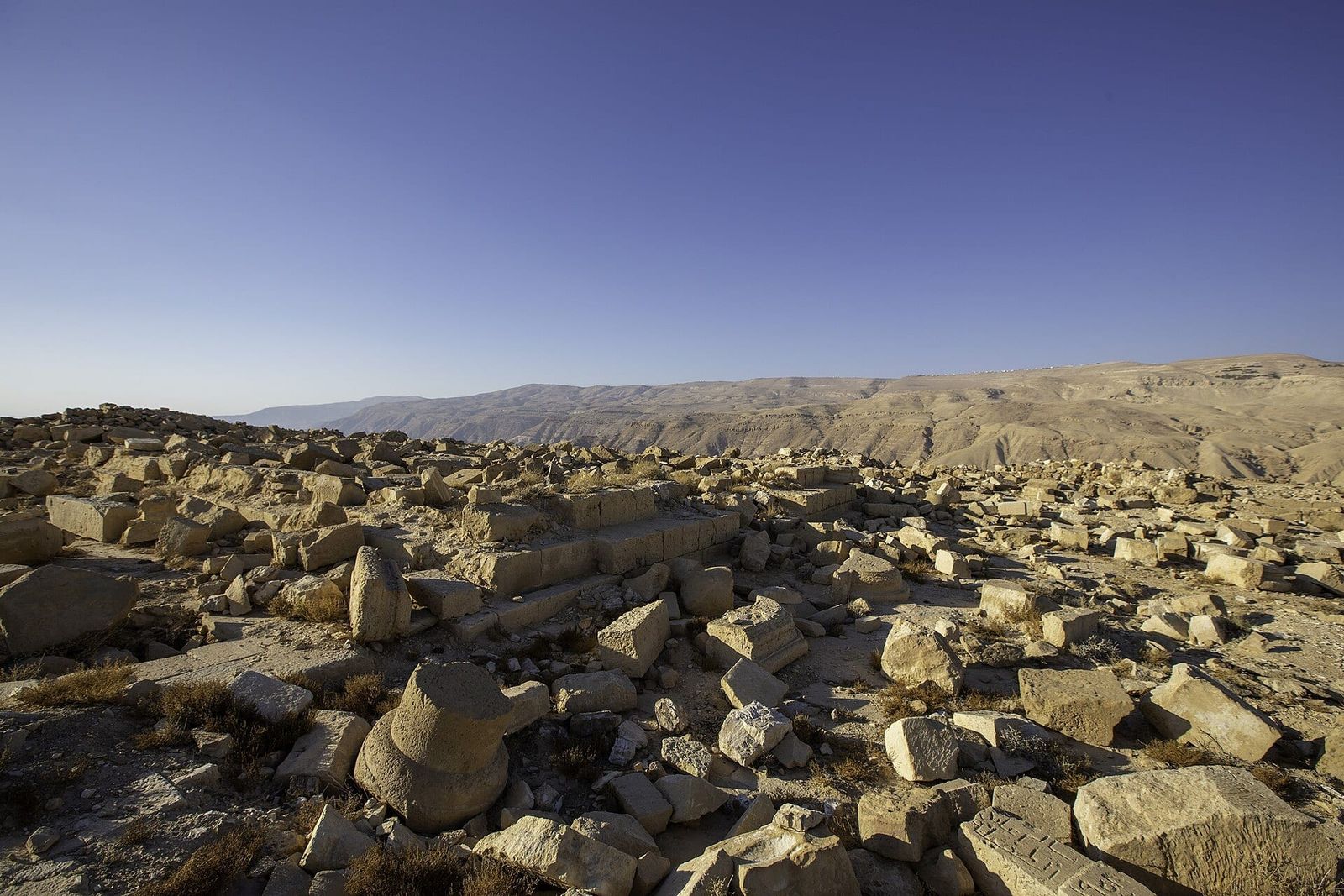
On the summit are the remains of a paved courtyard and an altar platform. The hill looks down on Khirbet edh-Dharih, the village sanctuary in the valley below.
Exhibo editorial
Bring good shoes and a little determination. Tannur sits alone on its summit, the path is steep and the ruins at the top are low. What you get instead is the setting the Nabataeans chose: a point of rock above two deep wadis, with nothing around it but sky.
Its best sculptures are now in Amman and Ohio. Up here there is the altar, the wind and the view. For a sanctuary, that may be the point.
Gallery
How to find it
Near the King's Highway at the bottom of Wadi Hasa, between Karak and Tafilah. There is no visitor centre. Ask locally for the path, which climbs the hill steeply for about 20 to 30 minutes.