Directory listing — not yet managed by the museum. Spotted something wrong? Suggest an edit →

Musée Guimet

Musée Guimet

trocaderoParis

France's national museum of Asian art, from Afghanistan to Japan, with Émile Guimet's historic library

About

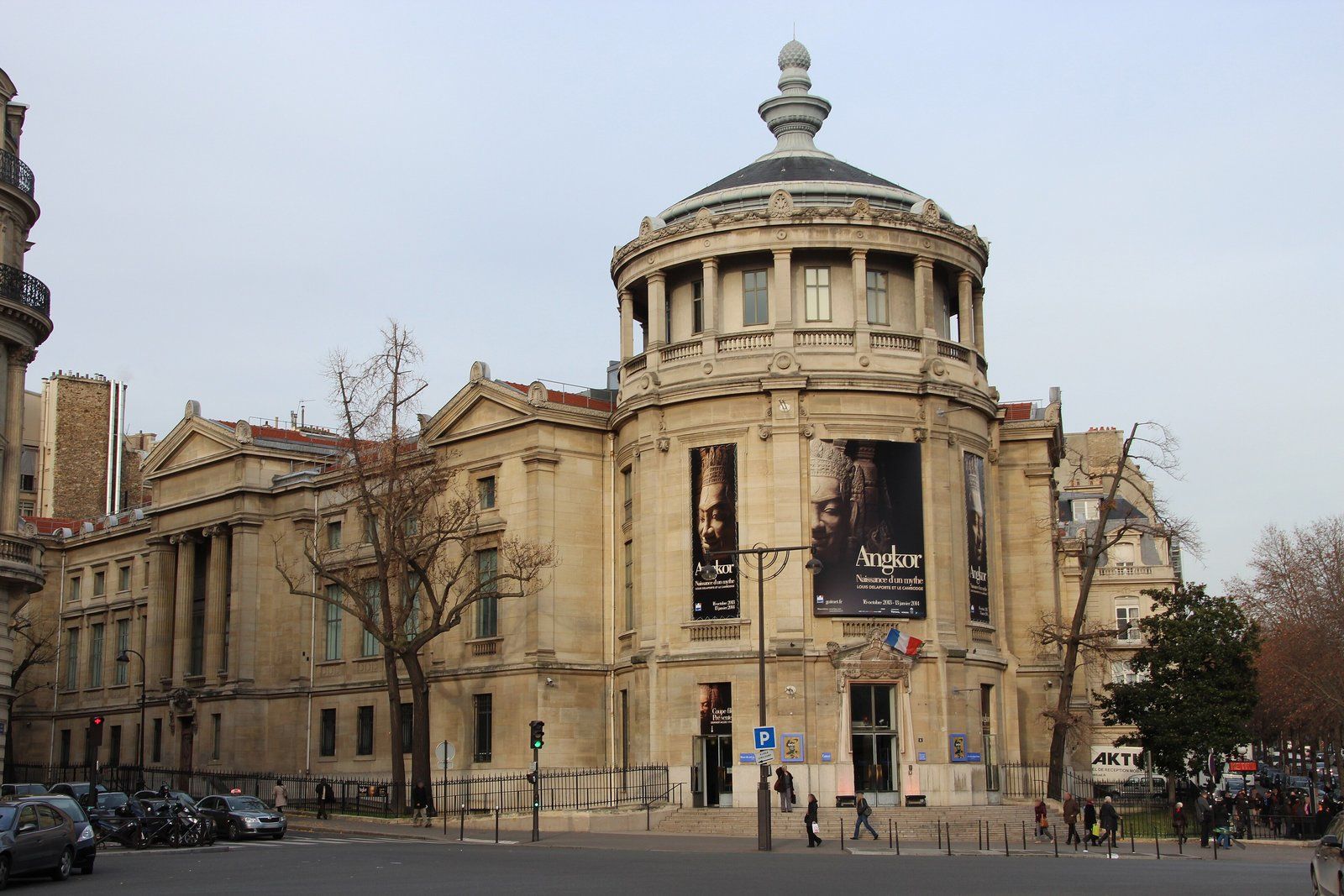
The Musée Guimet, officially the Musée national des arts asiatiques – Guimet, is France's national museum of Asian art. It stands on Place d'Iéna in the 16th arrondissement of Paris, a short walk from the Trocadéro. Its collections run across the whole continent, from Afghanistan to Japan, over about 5,500 square metres of galleries. The museum began as one man's project. Émile Guimet wanted to build a museum of religions. He travelled to Japan, China and India in 1876 and 1877 and brought back the core of his collection. He opened his first museum in Lyon, then raised an almost identical building on the hill of Chaillot in Paris, inaugurated in 1889. He gave all of it to the French State and became director of the new museum. At first it also held objects from Egypt, Greek and Roman antiquity and the Americas. French expeditions of the late nineteenth and early twentieth centuries filled out the Asian side. Louis Delaporte brought Khmer art from Cambodia. Paul Pelliot travelled through China and Central Asia between 1906 and 1909. Jacques Bacot worked in Tibet. Alfred Foucher and later Joseph Hackin worked in India and Afghanistan. Victor Collin de Plancy collected in Korea. In the 1920s and 1930s their finds reached the Guimet, along with the Khmer pieces from the old Indochinese Museum at the Trocadéro. The decisive change came in 1945. In a reorganisation of the national collections, the Guimet sent its Egyptian holdings to the Louvre and received the Louvre's Asian art department in return, including the Grandidier collection of Chinese ceramics. From then on it was a museum of Asia only. Since 1938 the galleries have been arranged around the Khmer courtyard. The architects Henri and Bruno Gaudin renovated the building from 1996, opening it to natural light and adding a monumental staircase and a terrace over Paris. President Jacques Chirac inaugurated the new museum in 2001. Émile Guimet's round library, listed as a historic monument in 1979, survives at the heart of the building. It holds more than 100,000 books on the arts and archaeology of Asia. In 1891 Guimet held Buddhist ceremonies there. Georges Clemenceau was among the Parisians who came. In 1905 a Dutch dancer performed Brahminical dances between its columns before fashionable Paris. It was after this evening that she took the stage name Mata Hari. Two other sites belong to the museum. The Hôtel d'Heidelbach at 19 avenue d'Iéna joined in 1991 and is open only for guided tours. The Musée d'Ennery on avenue Foch, bequeathed in 1908, closed for renovation in December 2025. The museum is open every day except Tuesday from 10:00 to 18:00.

Why this museum matters

Exhibo editorial

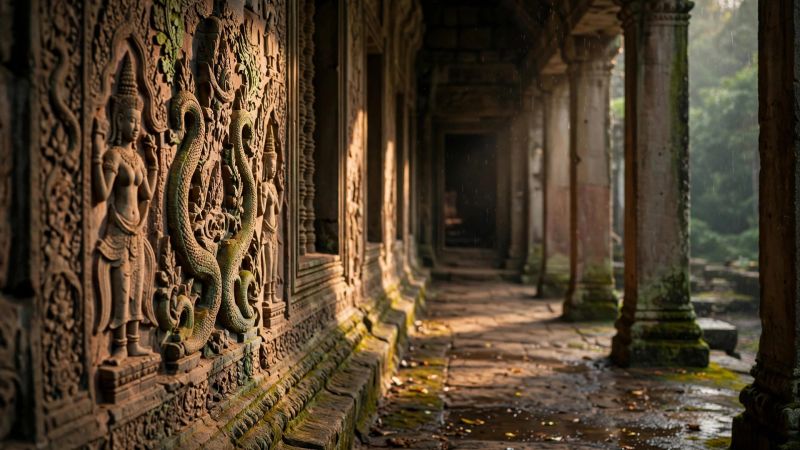
Start in the round library, even if you came for the sculpture. This is the room Émile Guimet built for his museum of religions. In 1905 a young Dutch woman danced here among the columns in front of fashionable Paris. She left with a new name: Mata Hari. The shelves around you now hold more than 100,000 books on Asian art. Then go down to the Khmer courtyard. The galleries have been laid out around it since 1938. Much of what you see came back with French expeditions to Cambodia in the 1870s and 1880s, which is why the Khmer collection here is so deep. Notice what is missing too. Until 1945 this building also held Egyptian antiquities. They went to the Louvre in a swap that brought the Louvre's Asian collections here. Two Paris museums reshaped each other in one exchange. Tuesday is the closing day, so plan around it. The rooftop terrace reopens in mid-May.

Visit

Hours, tickets, and directions for Musée Guimet.

Address

6 place d'Iéna, 75116 Paris

Opening hours

Monday
10:00 – 18:00
Tuesday
Closed
Wednesday
10:00 – 18:00
Thursday
10:00 – 18:00
Friday
10:00 – 18:00
Saturday
10:00 – 18:00
Sunday
10:00 – 18:00

Every day except Tuesday, 10:00–18:00 (last admission 17:30). Closed 1 May, 25 December and 1 January (official website).