6 October 2026 — 17 January 2027
Vertigo: Richard Peduzzi at Orsay
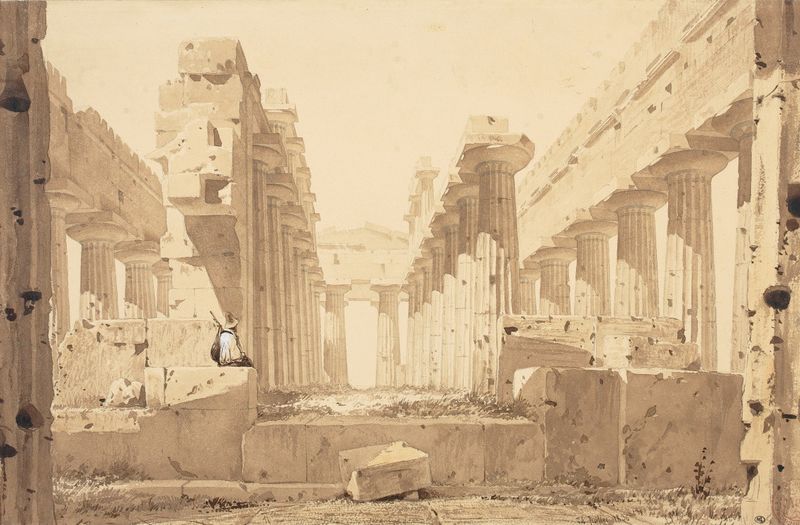
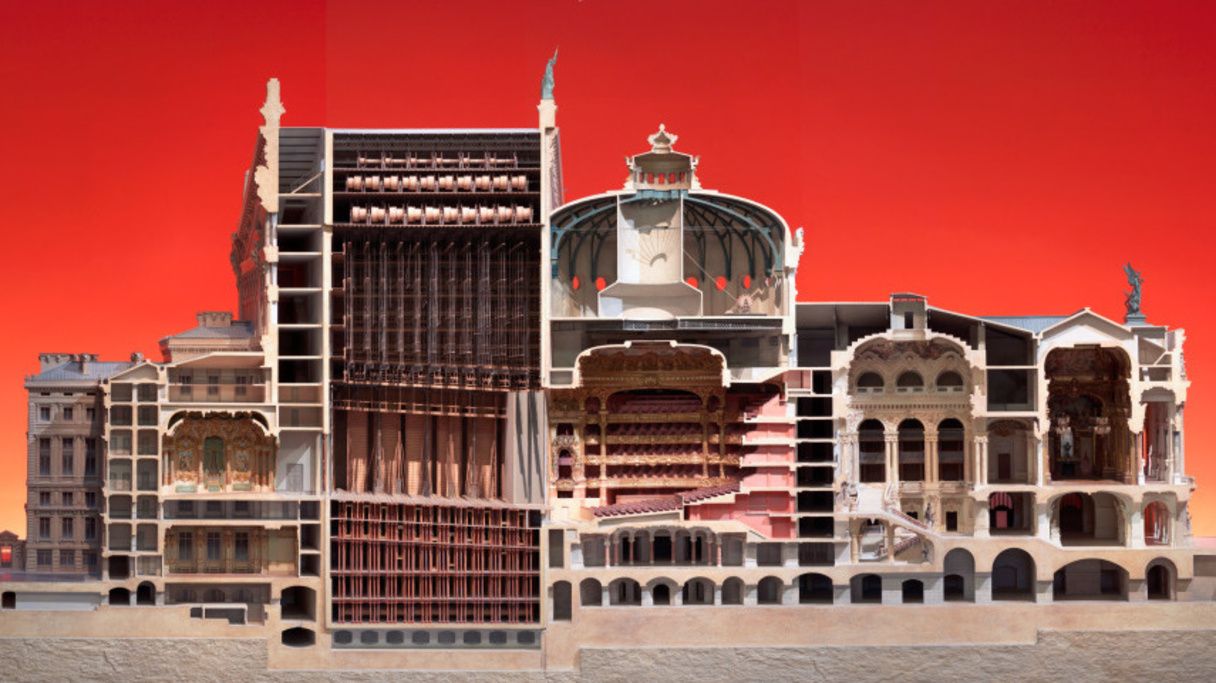
A major set designer for theatre and opera and Patrice Chéreau’s long-time collaborator, Richard Peduzzi has devoted his life to renewing the art of scenography. At the Musée d’Orsay, his monumental models of the Opéra Garnier and its surrounding district have accompanied visitors ever since the museum opened in 1986. That year Peduzzi, celebrated for his avant-garde work for the stage, designed the interior presentation of the Musée d’Orsay, giving pride of place to 19th-century architecture. At the end of the great nave he created a display devoted to the Opéra Garnier and its neighbourhood, radically reshaped by Baron Haussmann’s urban works. To this day the models of Charles Garnier’s building and of the Opéra district – viewed from above in a vertiginous spatial arrangement – remain a highlight of any visit and are among Orsay’s most emblematic exhibits. Forty years on, the museum revisits this highly original choice and invites the artist to resume a dialogue between the institution, its collections and his own creations. The exhibition casts new light on the world of a scenographer haunted by imaginary architecture. Conveying both meaning and emotion, his sets were full participants in the revolution in staging that he and Chéreau brought about in the 1970s and 1980s. His earliest productions with Chéreau (Richard II and The Massacre at Paris) already contain the architectural motifs that would run through all his work: endless walls, towers, ruins and abandoned sites, recurring like obsessions and feeding the meaning of each production. Arranged around the monumental models he created for the museum, a broad selection of paintings, drawings, set models and sculptures revives the expressive power of his achievements. Some, such as the models for Chéreau’s staging of Alban Berg’s Lulu at the Paris Opéra (1979), date from the very years in which Peduzzi was thinking about Orsay’s museography. Above all, they reveal the creative processes behind legendary productions – plays such as Christopher Marlowe’s The Massacre at Paris (Théâtre National Populaire, Villeurbanne, 1972) and Marivaux’s La Dispute (TNP, Villeurbanne, 1973), and operas such as Berg’s Lulu and Mozart’s Lucio Silla (Milan, Nanterre and Brussels, 1984). Clear correspondences emerge with drawings from the museum’s collection, chosen together with Peduzzi as echoes of his own work. Sheets by Eugène Viollet-le-Duc (The Temple of Neptune at Paestum), Hippolyte Le Bas (Prison de la Petite Roquette) and Gustave Eiffel (Study of a Cube and Study of a Cylinder) testify to his eclectic sources, from Antiquity to the present. Fed by these references, his imagination goes beyond historical quotation to create meaningful spaces and a singular aesthetic. Imposing and vertiginous, Peduzzi’s designs are more than stage sets: they give each production its literal setting and are essential components of performances conceived as total works of art. Curated by Clémence Raynaud, General Curator of Architecture, Musée d’Orsay, and Sylvie Patry, General Curator, head of anniversary programmes at the Musée d’Orsay and the Musée de l’Orangerie.
Tickets
Included with museum admission
Check the museum profile for general admission details.