
7 October 2026 — 25 January 2027
Zurbarán (1598–1664)
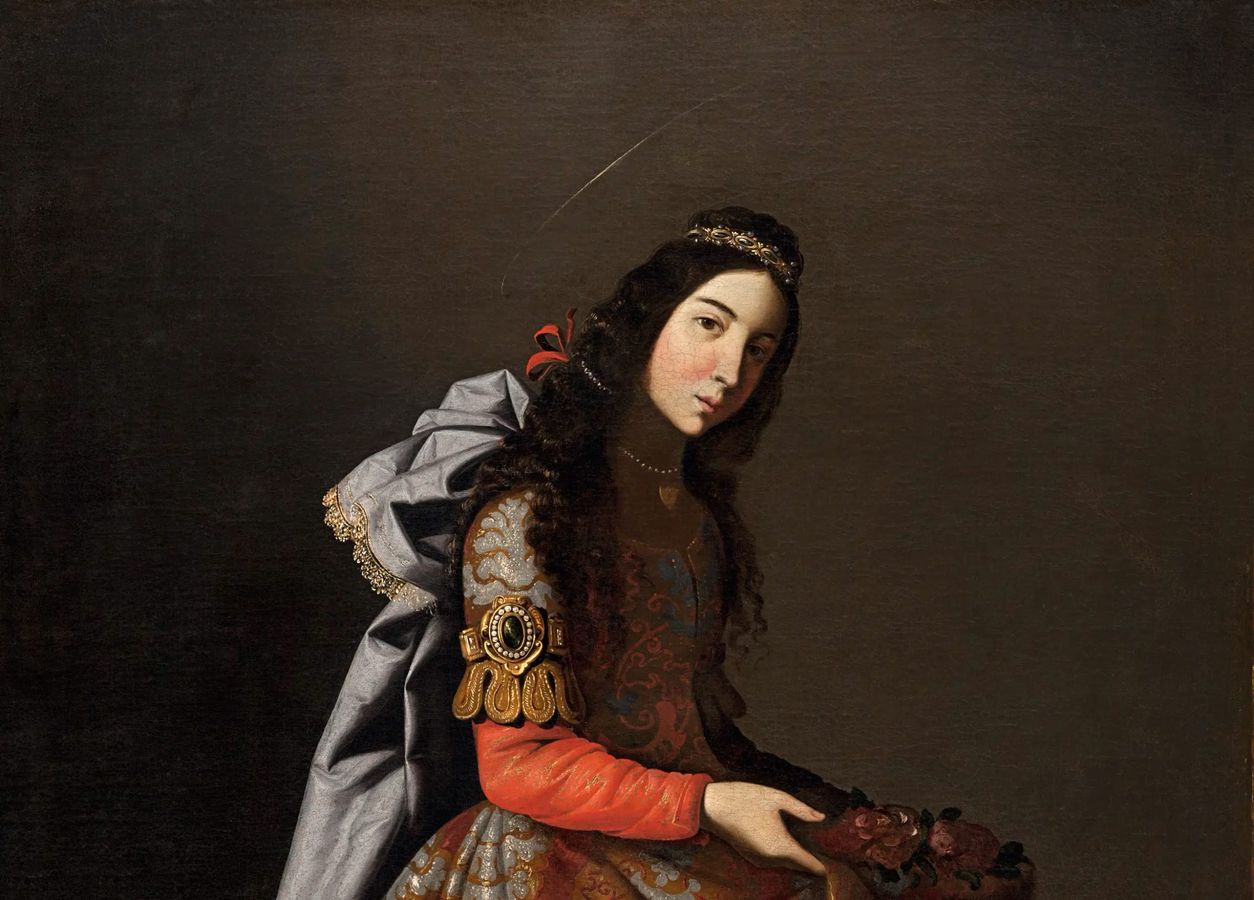
Together with Diego Velázquez and Bartolomé Esteban Murillo, Francisco de Zurbarán is regarded as one of the greatest Spanish painters of the 17th century. Long seen as a follower of Caravaggio focused on monastic asceticism, he came to be recognised during the 20th century as a remarkable colourist with a highly personal style that combines a simplified treatment of volume with striking naturalism. Although Zurbarán has been the subject of many exhibitions over the past decade, the last major international survey of his work was the Zurbarán exhibition organised by the Metropolitan Museum of Art and the Grand Palais in 1987–88. The National Gallery in London, the Musée du Louvre and the Art Institute of Chicago have now joined forces on a retrospective that lets visitors rediscover – or discover for the first time – his paintings, understand his work more fully and admire the modernity and visual power of his compositions. Rather than an exhaustive monograph, the exhibition is an ambitious selection of his finest paintings, accompanied by historical and cultural context, in which visitors can appreciate Zurbarán’s technique and the boldness of his forms and iconography. Arranged in seven sections, the route explores the many facets of his painting both chronologically and thematically, doing justice to his long career and occasionally stepping outside the timeline to compare groups of related works. The Louvre presentation gives pride of place to the monumental canvases commissioned by Andalusian monasteries on which his reputation was built, as well as to portraits and still lifes, with a special focus on the short career of his son, Juan de Zurbarán (1620–1649). Works from the late 19th and early 20th centuries highlight the considerable influence Zurbarán had on later avant-garde artists working in France, such as Édouard Manet, Pablo Picasso and Juan Gris. The exhibition is organised by the Musée du Louvre, the National Gallery, London, and the Art Institute of Chicago. It is shown at the same time and in the same space as “Sculpting Colour”, with a jointly designed scenography that invites a close, comparative look at the arts of 17th-century Spain; a single ticket gives access to both exhibitions. Curated by Charlotte Chastel-Rousseau, Executive Curator in the Department of Paintings, Musée du Louvre, with Francesca Whitlum-Cooper and Daniel Sobrino Ralston (National Gallery, London) and Rebecca Long (Art Institute of Chicago).
Tickets
Included with museum admission
Check the museum profile for general admission details.