
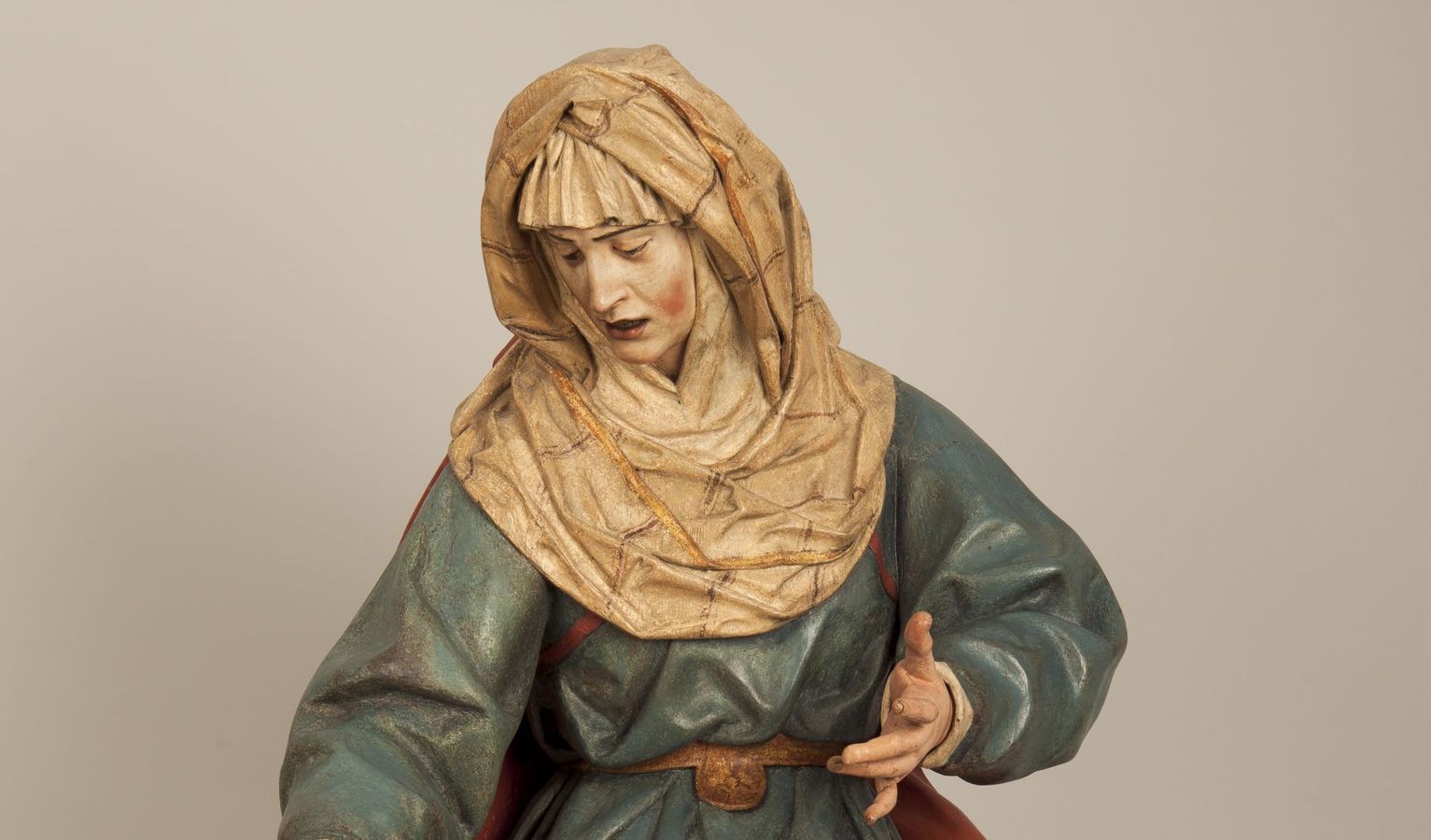
7 October 2026 — 25 January 2027
Sculpting Colour: Masterpieces from the Museo Nacional de Escultura, Valladolid
Shown at the same time and in the same space as the exhibition on the painter Francisco de Zurbarán (1598–1664), with a jointly designed scenography, “Sculpting Colour” invites visitors to take a close, comparative look at Spanish sculpture of the 17th century. Most of the works are religious sculptures in polychrome wood of astonishing naturalism. They help visitors understand the cultural and religious context in which the great Spanish painters of the period – Zurbarán, Velázquez and Murillo among them – worked, at a time when painting and sculpture were closely intertwined. The centrepiece is an entire paso on loan: a traditional processional float of five life-size carved and painted figures from the early 17th century. This monumental ensemble by Gregorio Fernández, a leading sculptor then active in Valladolid, is displayed at eye level so that visitors can study it closely. The exhibition is organised around several themes: the veneration of relics and the role of intercessor saints; the dressing of statues; images of the sufferings of Christ and the Virgin; private devotion; and the Immaculate Conception. It explores the uses and meanings of these sculptures and sheds light on their materials, their regional and stylistic variations and the personalities of the great sculptors of the age. Working from Castile to Andalusia, they include Gregorio Fernández, Alonso Cano, Juan de Mesa, José de Mora, Pedro de Mena, Jerónimo Francisco and Miguel Jerónimo García, José de Arce, and Pedro Roldán and his daughter Luisa Roldán – one of the rare women artists whose career took her all the way to the Spanish royal court. Besides the paso known as the Road to Calvary – one of the most important loans, never before shown in France – highlights include Gregorio Fernández’s Christ of Light, a life-size figure of striking realism, and Alonso Cano’s Saint John the Baptist, considered his masterpiece. Pedro de Mena’s Immaculate Conception of 1680, created for a competition organised by the Bishop of Granada, and Luisa Roldán’s Virgin and Child with Saint John the Baptist – both recent acquisitions of the Museo Nacional de Escultura, spectacularly restored – are also on view. The exhibition is organised by the Musée du Louvre in partnership with the Museo Nacional de Escultura, Valladolid. A single ticket gives access to both “Sculpting Colour” and “Zurbarán”. Curated by Valérie Carpentier-Vanhaverbeke, Executive Curator in the Department of Sculptures, Musée du Louvre, and Alejandro Nuevo Gómez, Director of the Museo Nacional de Escultura, Valladolid.
Tickets
Included with museum admission
Check the museum profile for general admission details.