
Paris · 21/10/2026
David Salle: The Venice Paintings
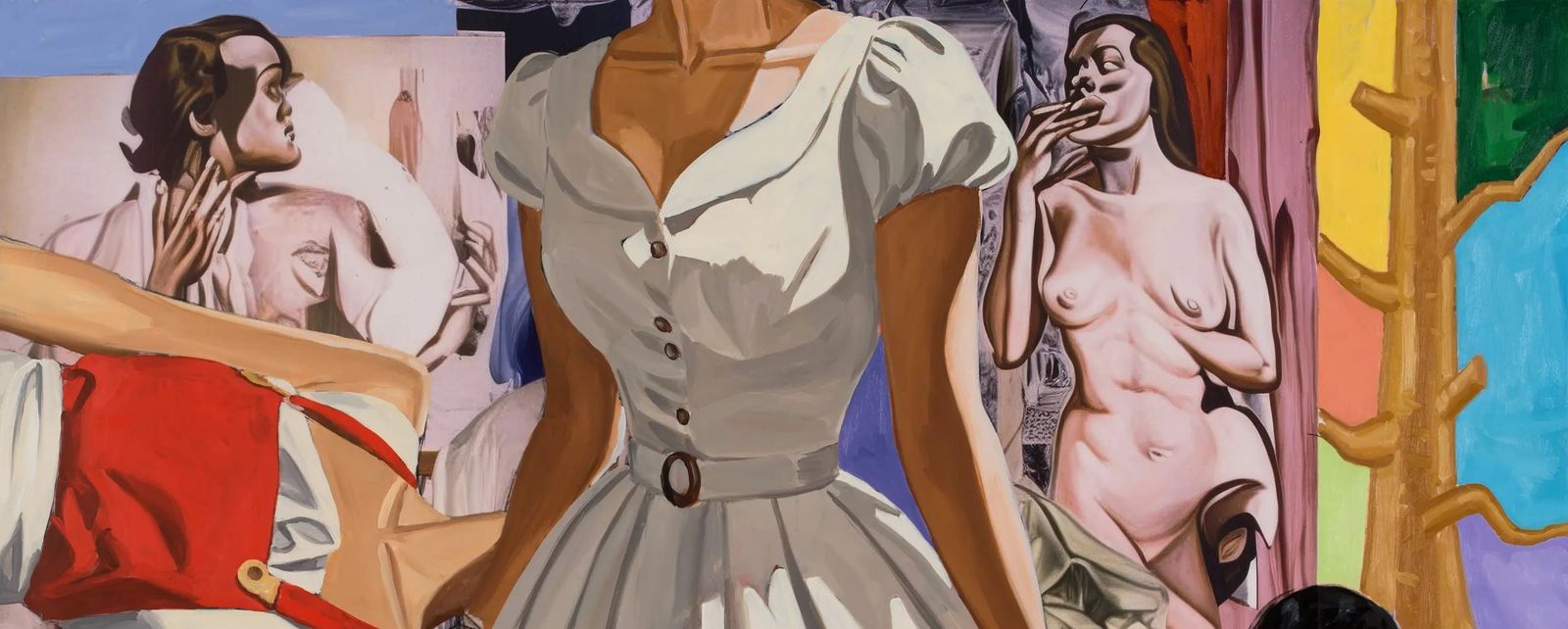
Following David Salle’s solo presentation at the Palazzo Cini Gallery during the 61st Venice Biennale earlier this year, this exhibition in an intimate space at Thaddaeus Ropac Paris Pantin reunites the works shown together in Venice. The paintings extend the New York-based artist’s use of artificial intelligence as a tool for unravelling and recalibrating the logic of painting. Training his AI model on his earlier Tapestry Paintings (1989–91) – a series based on eighteenth-century Imperial Russian tapestries that were themselves interpretations of sixteenth- and seventeenth-century Italian oil paintings – Salle creates new works that collapse time, medium and place. Though committed to the centuries-old tradition of paint on canvas, he has always been quick to bring new technologies into his practice, and his recent partnership with AI can be read in part as an act of resistance to the idea that machines will replace human creativity. Salle has been at the forefront of AI image-making since 2022, when he began developing a personalised model trained primarily on his own body of work. The aim was not to outsource his role as artist or thinker but to introduce a destabilising force into his art – in his words, “to get outside of myself”. The machine neither paints nor draws; it distorts and deconstructs pictorial space, then reassembles the pieces into a new, synthetic whole. The result is a body of work that confronts head-on a central anxiety of our time: what of the human capacity for expression will survive the rise of artificial, self-teaching intelligence? The original Tapestry Paintings embodied a key quality of Salle’s style: simultaneity. The Italian paintings – biblical scenes, court portraits, still lifes and other genre subjects – had been skilfully translated into wool and silk by Russian weavers, and Salle translated these tapestry compositions back into paint on canvas, producing the lyrical clusters of images that are the hallmark of his art. Here the Tapestry Paintings undergo a further, more profound transformation. While they retain the DNA of Salle’s originals and of their distant art-historical sources, the AI model warps them into all-over abstractions, which are then printed onto canvas. Reacting intuitively, Salle corrects, attacks or amplifies each printed pixel with his brush, while adding another layer of imagery on top in high-contrast, high-key colour. A very old technology – oil paint – is made to coexist with a contemporary one. AI can rapidly scan, absorb and average vast streams of visual material, much as Salle himself has done in painting throughout his career, yet its neural network initially had no grasp of basic pictorial values such as contour, edge or tonal pattern. “What I did,” the artist says, “was send the machine to art school,” teaching it distinctly artistic lessons – such as how a brushstroke can define an edge and at the same time stand as an expressive mark in its own right. In the resulting paintings, courtiers, nudes, monarchs and knights in armour vie for space with fragments of fashion advertising, stacks of teacups and other still-life objects. Simulated and painted realities collide and intertwine in a theatre of vivid figures that resist any fixed time or place, blurring the real and the fantastical in ways that are often surprising, bizarre or even subversive. Yet the distorted forms and headless busts do not shock. By pushing these strange scenes towards the dissolution of their figurative framework, Salle defuses their narrative charge and leads us into uncharted pictorial territory where even the most recognisable elements begin to function abstractly. As he wrests painting away from the defaults of AI and returns it to human hands, what remains is a deliberate, masterly demonstration of the power of pure form and gesture. “Everything in painting exists in the present tense. Art-historical past-times resonate through the painting even as they are subsumed within it.” – David Salle