
Paris · 19/10/2026
Jordan Casteel: Winter Sun
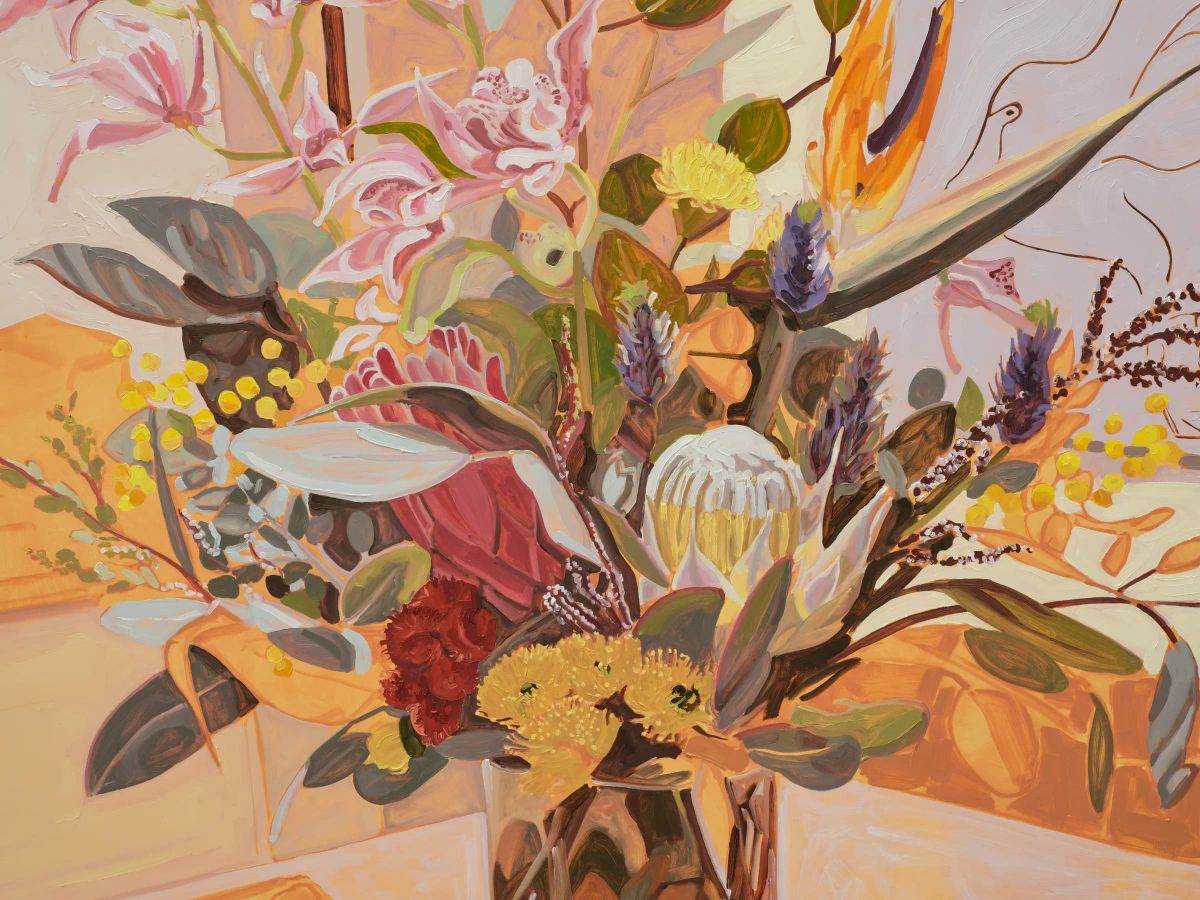
Thaddaeus Ropac Paris Marais presents Winter Sun, an exhibition of new paintings by the American artist Jordan Casteel. It is her first exhibition in France and the most significant presentation of her work in Europe to date. Made in the first half of 2026, the paintings are set in a cool, earthy palette inspired by the light of deep winter. Winter Sun reflects on a season of dormancy and renewal, hope and grief, love and loss, light and darkness, with figurative portraits, landscapes and botanical works that deepen Casteel’s ongoing attention to kinship, place and transition. Casteel’s practice is rooted in monumentalising the collective, offering intimate, dignified encounters that reflect her deep commitment to community. Her subjects are always drawn directly from her surroundings and often bring people of colour into focus, as a way of mapping and honouring the social landscape of her immediate environment and its artistic history. The portraits on view span a wide range of sitters, from family and close friends to strangers met in the places she moves through. In before your time (2026), from her celebrated Subway Series (2015–present), an intertwined family plays out quiet gestures of care against the cool geometry of a train carriage. Gathered as a single unit beneath the stark safety notice “Don’t die before your time”, the family links the painting to the themes of mortality and survival that run through the still lifes in the show. Casteel gives voice to small scenes of humanity – closeness, parental protection, the passing of time and the sacred brevity of childhood – as they unfold in public space. Setting aside the formality and implicit power dynamics of the traditional studio sitting, Casteel works from photographs of her subjects. “I am meeting people where they are, as opposed to asking them to enter my space,” she says. Alice Neel’s relaxed sitters are an anchor for her approach to portraiture, as is the expressionist colour of the Harlem Renaissance painter Beauford Delaney, whom Casteel cites as a key influence on the works shown here. Each is dominated by a single sharp yet sumptuous tone that becomes a vehicle for feeling. “The gesture of covering the canvas in a colour is setting the stage for the rest of the painting,” she explains. “It becomes an aura, an essence of the work.” This approach to colour privileges emotional presence over strict realism, lifting the works out of the everyday and drawing them subtly towards abstraction. Casteel’s paintings have always filtered the outside world through her own personhood, and they show a sustained interest in maternal care. In recent years, however, her work has taken on a distinctly autobiographical tone, widening to include her domestic life while keeping its deep attachment to community. In this body of work she returns to these foundational motifs after the birth of her son – a threshold marked in the exhibition’s title, in which “sun” carries an echo of “son”. In Weighted (For Clyde) (2025), she turns her gaze inward, painting herself carrying her newborn against her chest, his small body tenderly framed by his booties and her enveloping hands. Both faces fall outside the frame, so that the grassy background, the fabric of the carrier and Casteel’s textured, half-buttoned shirt act as fields of colour, loosening the image from description and bringing the intimacy of touch to the fore. For Casteel, painting, mothering and gardening are deeply intertwined acts of creation, and through these parallel forms of daily, hands-on care she builds a conceptual bridge between her portraits and her flower paintings. “For me, it’s all about cultivating,” she says. “It’s about starting from the base, whether that’s the blank space of the canvas or the empty space of land.” Since settling in the Hudson Valley in 2021, she has increasingly embraced her more rural surroundings. Several of the flower paintings on view began in her garden, where she often paints outdoors with the canvas on her lap. Given the same dignity as the subjects of her portraits, the bouquets and blooms are carefully observed and often tightly cropped, lending them an almost personified presence. The garden becomes a place for processing ideas of decay and renewal in the wider world: the flowers press tenaciously towards the surface amid a cooler palette that suggests the turning of the seasons and the approach of harsher weather, becoming symbols of hope that endures through hardship. Set against these intimate studies are larger works that take up the long art-historical tradition of the still life while reflecting on memory, family and the rituals through which we honour those we have lost. Cut stems form a memento mori on a domestic kitchen counter, evoking the transience of all living things, while Memorial (For John) (2026) returns to a subject Casteel first painted in 2017 – a floral tribute she found discarded on a Harlem street. The return to this motif underlines the continuity of a practice that has evolved across the neighbourhoods and communities she has called home. Collapsing the distinctions between landscape and portrait, and between the urban and rural settings of her recent work, Casteel creates modern-day vanitas that give form to time, absence and remembrance. She gives all her subjects equal consideration, each as important as the next within the unfolding landscape of life. Ultimately, these works remind us that amid the ebb and flow of love and loss, growth and grief, the act of witnessing – and tending to – the places we live remains the most profound act of all. The exhibition is accompanied by a catalogue with an essay by Amandine Nana, writer, poet, art historian and curator at the Palais de Tokyo, Paris. It follows Casteel’s first monograph, published by Phaidon in 2025, which features nearly 150 images of her work.