New York · 22/09/2026
Bea Scaccia: Groomed
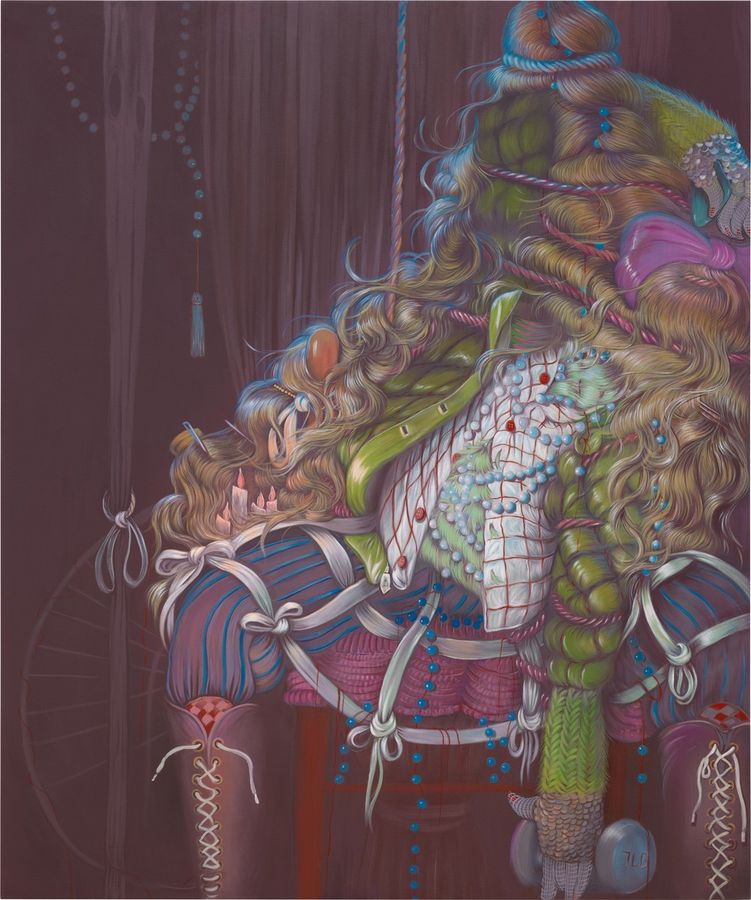
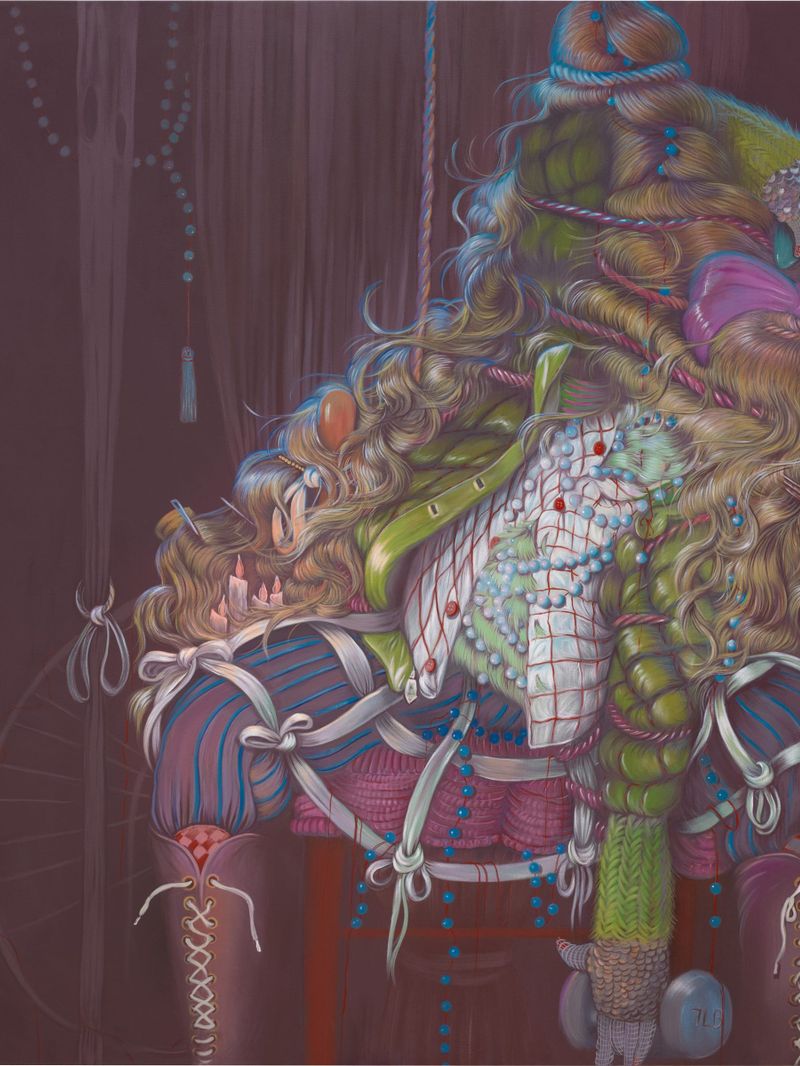
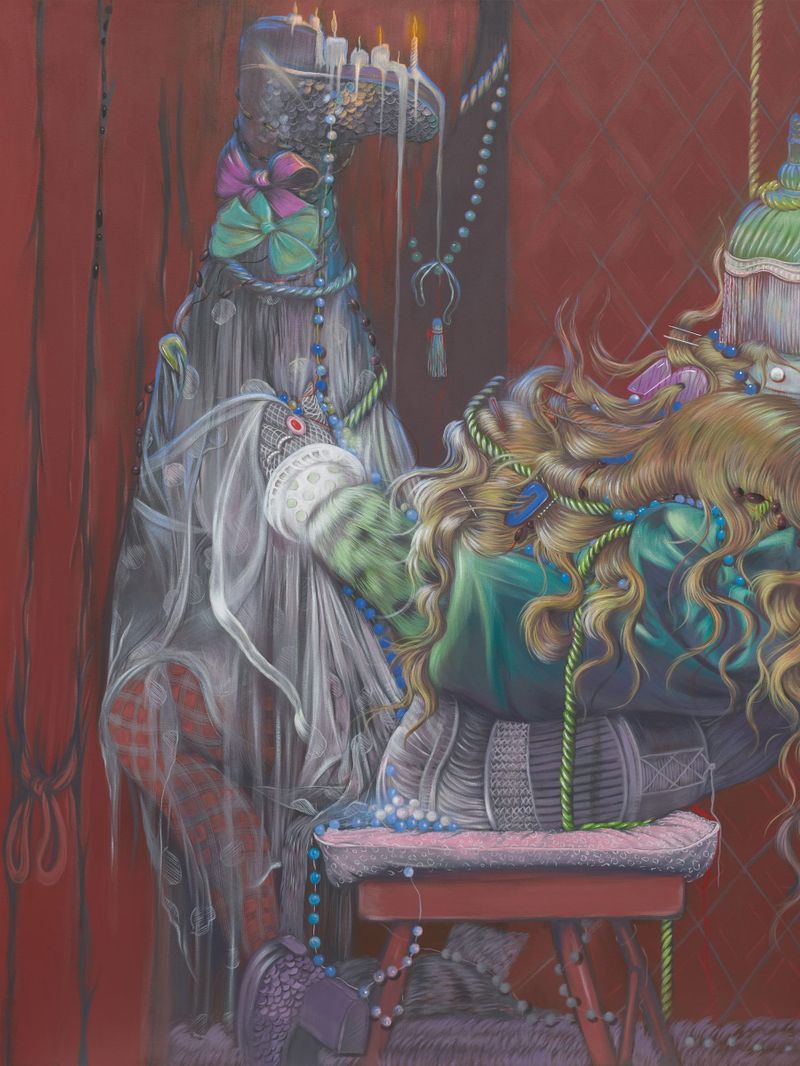
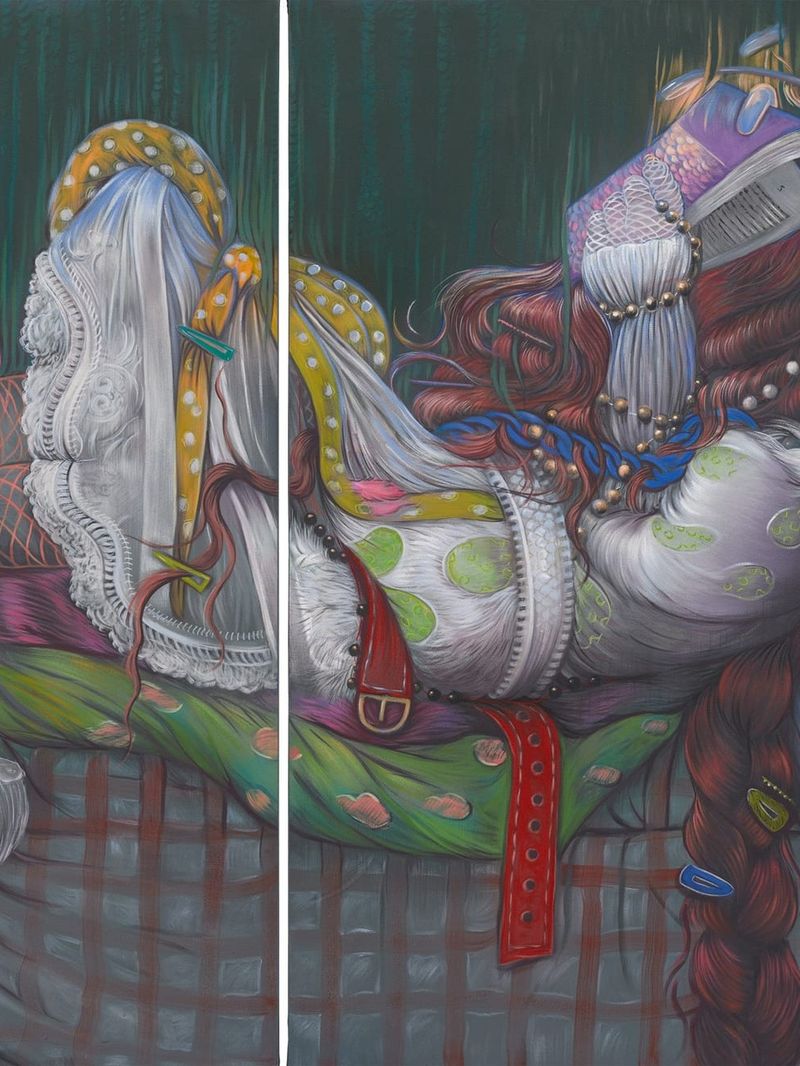
Groomed brings together seven new paintings by Bea Scaccia at Gagosian's Park & 75 space. It is the artist's first exhibition with the gallery and the second in a series of solo presentations by different artists curated by Francesco Bonami. Scaccia's paintings stage lavish, crowded scenes built from heaps of fabric and the trappings of feminine style: wigs, costume jewelry, shoes, belts, zippers, plastic chains, hair clips, bows, tassels, and faux fur. Set before colorful curtains and patterned wallpaper and furnished with chairs, beds, and ladders, these nocturnal tableaux are lit by painted fringed lamps, clip-on book lights, and candles balanced in precarious places. The nighttime mood is heightened by the paintings' matte surfaces, which Scaccia achieves by mixing gesso into acrylic to subdue the color, reworking the surface with an airbrush, and picking out selected details in oil. Deliberately clashing textures and loud colors gather into something like faceless bodies and puppetlike limbs clad in fishnet tights, caught as if in suspended motion. These half-formed figures seem to be attempting ordinary activities—sitting, lying down, reading, climbing, exercising—that they never quite manage to complete. Hovering between still life and figuration, the works describe an enigmatic world in which the inanimate accessories of beautification come close to, but never fully reach, human form. Historical figure painting has long set drapery against the body to convey refinement, style, and eroticism; the materials in Groomed, by contrast, are openly artificial. With their uncanny stand-ins for human anatomy, Scaccia's paintings recall the Surrealists' fetishistic substitution of objects for figures, above all in the sculptures of Hans Bellmer, while her attention to the subtexts of materials, abjection, and gender runs parallel to the work of artists such as Mike Kelley and Sarah Lucas. She also draws on magical realist literature, folktales of metamorphosis and transformation, and the inventiveness of popular culture. The largest painting in the exhibition, the diptych Heels over Head—or Pillow Talk (2026), parodies the reclining nude of Édouard Manet's Olympia (1863) as well as the Rococo theme of a woman reading in her boudoir, familiar from works such as Jean-Honoré Fragonard's Young Girl Reading (1769). Instead of the expected contrast between painted flesh and fabric, it shows tangles of cloth and pillows held precariously together on a bed—faceless, yet holding up a book. Elsewhere, surrogate figures occupy chairs without ever quite managing to sit in them. Gripping dumbbells and twisted into yoga-like poses, they hint at a mania for fitness and physical self-improvement. Other works feature ladders draped and strewn with cloth and assorted materials, climbing nowhere and dangling like marionettes. Born in Veroli, Italy, in 1978, Bea Scaccia lives and works in New York. Her solo exhibitions include My Hope Chest at the Katonah Museum of Art (2021), and her work has appeared in group exhibitions at Magazzino Italian Art, Cold Spring; the Galleria Nazionale d'Arte Moderna e Contemporanea, Rome; and the 18th Quadriennale d'Arte at Palazzo Esposizioni, Rome (2025–26).