
Exhibo Editorial
Tracing Europe's Ancient Megalith Builders Through Modern Geophysical Surveys
How advanced scanning techniques are uncovering hidden prehistoric monuments across the continent
Unearthing Europe's Megalithic Legacy
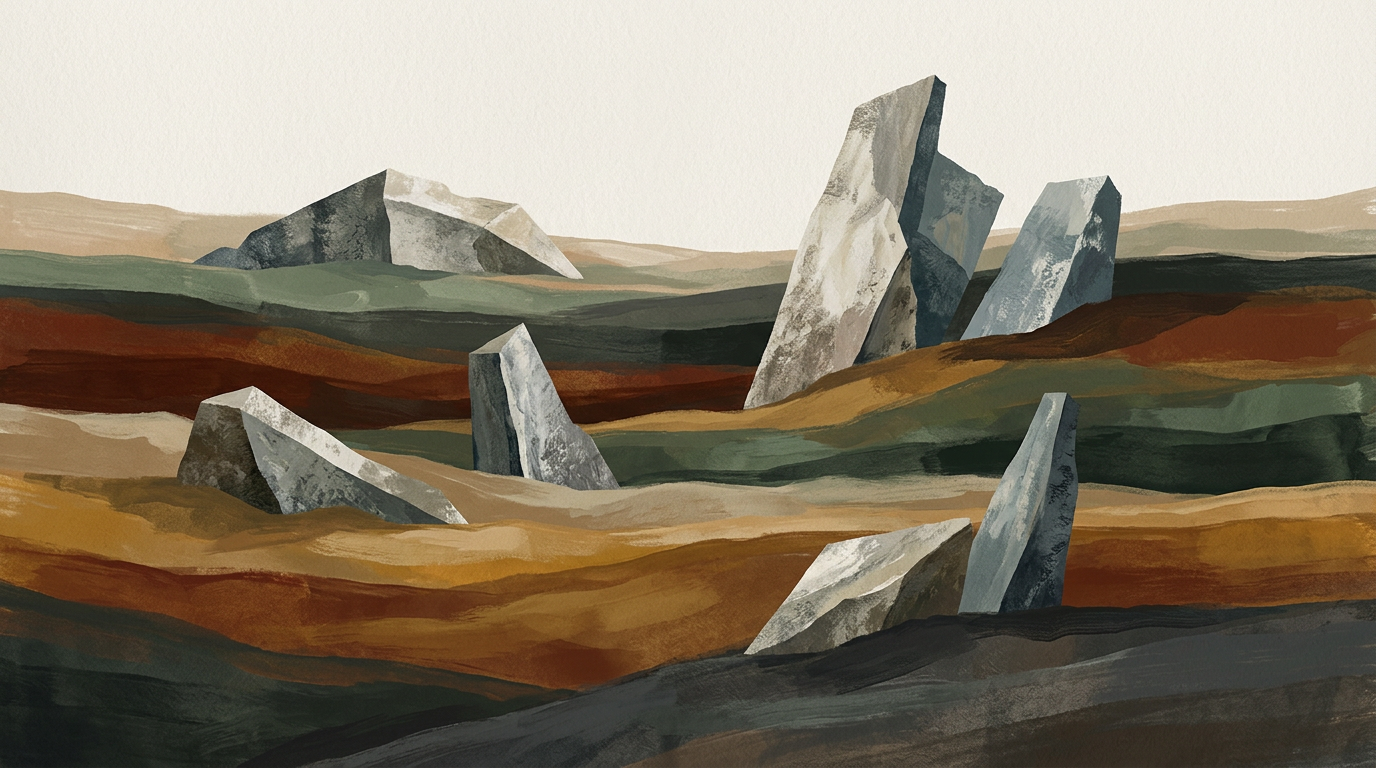
For millennia, the prehistoric communities of western Europe shaped their landscapes with monumental stonework, yet their motivations remain shrouded in mystery. Recent technological advances are finally allowing researchers to peer beneath centuries of soil, revealing that these ancient constructions were far more extensive and intricate than previously imagined. Nowhere is this more evident than at Carnac in Brittany, where early agriculturalists arranged roughly three thousand granite monoliths across a four-kilometre stretch. The layout was deliberate: smaller markers lined the eastern boundary while towering pillars, reaching nearly four metres, dominated the western edge. These formations also included curved and square enclosures, alongside hearth remnants and subterranean tombs dotting the terrain.
Historically, scholarly interest in Carnac leaned heavily towards conservation rather than systematic digging. Sporadic excavations occurred before the twentieth century, followed by limited investigations between the nineteen twenties and early forties. The site's international importance was formally recognised when UNESCO added it to its World Heritage roster in twenty twenty-five. Despite this status, much of the ground remains untouched. A recent study published in Archaeological Prospection changes that narrative. Guillaume Bruniaux and his team at ArchéoSolution applied non-invasive geophysical surveys to a two-and-a-half-hectare sector. Their data uncovered hidden stone rows extending beyond known boundaries, additional tumuli, and ancient cooking depressions. These findings confirm the complex spans a significantly wider area, offering fresh clues about the cultural practices of its creators.
Similar breakthroughs are reshaping our understanding of megalithic networks across the continent. In southern Spain, researchers have turned to aerial surveying to map the rugged topography surrounding the Fardes River. Led by Juan Antonio Cámara Serrano from the University of Granada, the project utilised drone-mounted LiDAR systems to penetrate dense valleys and ravines. The initial scan highlighted forty distinct ground irregularities. Field verification confirmed that approximately half contained human activity, yielding burial cairns, structural foundations, and defensive earthworks. Such remote sensing techniques prove invaluable in regions where traditional excavation would be prohibitively difficult.
Meanwhile, in central Europe, digital reconstruction methods are breathing new life into weathered artefacts. At Holíč in Slovakia, construction work during the late eighties exposed more than forty megaliths, with two subsequently reinstated near a local castle. Ivona Dlábiková and her colleagues at the Technical University of Ostrava focused on three heavily eroded specimens. By employing high-resolution 3D laser scanning, they successfully recovered faint incisions invisible to the naked eye. The restored imagery depicts a humanoid form gripping an implement alongside a quadruped silhouette, both framed by radiating rings. Scholars note striking parallels with Neolithic decorative traditions documented in Italy, France, and Scotland. This suggests that central Europe once hosted a vibrant monument-building culture long considered absent from the region.
Across the continent, these prehistoric architects left behind no textual archives to decode their symbolism or explain their engineering ambitions. Without written records, interpretation relies entirely on material evidence and comparative analysis. Yet every newly identified alignment, every recovered carving, and every mapped enclosure chips away at centuries of speculation. As geophysical tools and digital modelling continue to refine our archaeological toolkit, the silent voices of Europe's earliest stone-shapers are gradually gaining clarity. What began as scattered fieldwork has evolved into a coordinated effort to chart the full extent of ancient communal projects, reminding us that history often lies just beneath our feet.
Related reading

Ana Vaz: The Camera is the Body at Mudam Luxembourg
Mudam stages the inaugural major institutional survey of the Brazilian filmmaker's interdisciplinary practice
An immersive exhibition reimagines cinematic perception through embodied filmmaking, ecological inquiry, and postcolonial critique.
Lovis Corinth: Then Came Berlin!
How a mid-life relocation ignited a German modernist revolution
An expansive survey at the Berlinische Galerie traces how Lovis Corinth's 1901 move transformed him into a cornerstone of early twentieth-century avant-garde practice.

Bridging Japanese Craftsmanship and Contemporary Design
How international makers engage with Tokai's industrial heritage at the V&A
An exploration of how global designers collaborate with Japanese artisans to fuse ancestral techniques with modern conceptual frameworks.