
Exhibo Editorial
The Press Release Still Matters: How Galleries Get Covered
A practical 2026 guide to how art galleries earn press coverage
Plenty of galleries have quietly decided the press release is dead. Print arts desks have shrunk, a major merger thinned the editorial ranks of two of the biggest art-media names, and Instagram feels faster than any newsroom. So why spend an afternoon on a formal announcement a journalist might never open? Because the document does far more now than pitch a writer.
The press release stopped being only a pitch and became a single, well-structured account of your show that people, search engines and AI answer engines all read from. The journalist who covers you, the collector who searches the artist six months later, the AI assistant asked "what's on in the Gulf this spring" — all of them can draw on the same document. Get it right and it works for years. This guide covers what counts as news, how to write a release a journalist will actually use, how to pitch it, where to distribute it, and how to turn one announcement into lasting visibility.
Why coverage is harder — and why that helps the prepared gallery
The honest starting point: earned coverage is scarcer than it was five years ago. Arts journalism has contracted, freelance budgets have tightened, and the consolidation of major art-media outlets has reduced the number of staff writers covering galleries at all. A journalist who once received forty pitches a week now receives several hundred, with fewer column inches to give any of them.
That sounds like bad news, and for lazy outreach it is. But scarcity rewards preparation. When most pitches are generic and most releases are an afterthought, the gallery that sends a clean, newsworthy, ready-to-use release stands out by doing the basics properly. Journalists are not hunting for reasons to cover you; they are hunting for reasons not to, because they are overwhelmed. Remove every reason to say no — missing dates, no images, no clear angle — and you have already beaten most of the field.
There is a second shift worth naming. A growing share of "coverage" now happens without a journalist at all. When a collector asks an AI assistant about an artist or a city's gallery scene, the answer is assembled from whatever authoritative, well-structured sources the model can find. A press release published on a credible platform and syndicated to trusted outlets is exactly the kind of source these systems lean on. Earning a place in that answer is a new form of being covered, and the same disciplined release earns it.
What actually counts as news
The fastest way to get ignored is to send a release about something that is not news. Galleries do this constantly, treating any update as press-worthy, and train journalists to skim past their name.
A useful test before writing anything: would someone outside your gallery genuinely care? "We have a new show" is not, by itself, news — galleries always have new shows. The news is the angle inside it. A first institutional solo for an artist. A body of work responding to a specific moment. A notable curator. A record, a rediscovery, a first-of-its-kind collaboration. A regional debut for an internationally known name. If the only reportable fact is that the calendar advanced, the announcement belongs on your own channels, not in a journalist's inbox.
This matters more in 2026 than it used to, because the discipline that wins a journalist's attention also protects your standing with search and AI systems. A history of substantial, genuinely newsworthy releases teaches the algorithms that surface news to treat your gallery as a quality source. A stream of thin "we exist" announcements teaches them the opposite. Quality and restraint compound; volume for its own sake quietly works against you.
The anatomy of a release a journalist will use
A press release is not an essay and it is not an advertisement. It is a structured news document, and journalists trust the structure because it lets them find what they need in seconds. The format below is the one the trade has settled on, and departing from it mostly signals that you do not know the conventions.
Before the parts, one principle ties them together: write it so a busy editor could publish it almost unchanged. The more rewriting your release demands, the less likely it is to run at all.
Headline, summary and the lead
The headline does one job: state the news plainly, in language suited to the outlet. A specialist art magazine will accept a more allusive headline; a city listings page wants the who and what stated flatly. Keep it short, and do not waste it on mood-setting — the angle should be legible at a glance.
Directly beneath, a one-sentence summary expands the headline without repeating it word for word. Think of it as the line a reader sees in a search result or an AI answer: self-contained, specific, built around the single most important fact. This sentence does disproportionate work in 2026, because it is exactly the kind of compact, quotable passage answer engines extract.
Then the lead paragraph — the most important thirty to fifty words you will write. It answers the essentials immediately: who is showing, what the work is, where, and when. A journalist who reads only this paragraph should be able to file an accurate listing. Front-load the substance; never make an editor dig to the third paragraph to learn the dates.
The body: context without the lecture
The two or three paragraphs after the lead give the show its depth. This is where you explain what the work is about, why it matters now, and what a visitor will actually encounter. Keep it informative rather than evangelical — journalists form their own opinions and bristle at copy that tells them what to think. Provide the context; let them draw the conclusion.
Resist the urge to pour the entire intellectual apparatus of the exhibition into the release. Save the deeper material for the wall texts and the visit. The release needs just enough context to make the show legible to someone skimming, and just enough specificity — named works, concrete details, real dates — to be usable. Over-writing buries the facts a journalist needs under prose they will not read.
A strong quote earns its place here. One sharp sentence from the artist or curator gives a journalist something human to drop into their piece, and a self-contained, genuinely insightful quote is also the kind of passage AI systems lift cleanly. A vague quote about being "honoured" and "excited" adds nothing; a specific one about the work does real work.
The boilerplate, the practicals and the contact
The final stretch is unglamorous and non-negotiable. A short, consistent paragraph about the gallery — your boilerplate — states plainly who you are, where you are, and what you focus on. Keep it identical across releases: that consistency is precisely what helps search and AI systems recognise your gallery as a stable entity rather than a series of unrelated mentions.
Then the practical details, stated clearly and correctly: exhibition title, dates, opening hours, address, admission, and any preview or private-view information. These are the lines a listings editor copies verbatim, so an error here is an error that gets published.
Finally, a real contact: a named person, an email, a phone number, and a note on how to request more images or an interview. A release without an obvious way to follow up is a release that quietly dies the moment a journalist's interest is sparked.
How to pitch a release journalists will open
A perfect release sent badly goes nowhere. The pitch — the email that carries the release — is where most galleries lose the coverage they had earned on the page.
The cardinal rule is personalisation. An editor spots a mass blast instantly and deletes it just as fast. A pitch that references the journalist's recent work, explains in one tight paragraph why this show suits this outlet, and gets to the point quickly will out-perform a flawless generic release sent to two hundred addresses.
Build the email around the journalist, not the gallery
Understanding who you are writing to — what they cover, what they have written lately, what their readers want — is the single biggest lever you have. Spend the few minutes it takes to read a writer's recent pieces before you email them. The reference need only be a line, but it proves you are not blasting a list.
Keep the email short and put the key facts in the body rather than hiding everything in an attachment. A journalist should grasp the story without opening anything. Attach or link the full release and a few strong images, because art is visual and an editor needs to see the work to imagine the piece they might write.
Then leave them alone, with one exception: a single, polite follow-up roughly a week before the opening — ideally an invitation to a preview — reinforces the pitch without becoming a nuisance. Beyond that, restraint reads as professionalism, and pestering reads as desperation.
Time it, and treat it as a relationship
Send two to four weeks ahead of the opening, so monthlies, weeklies and listings editors can plan and run it in time. Too late and the window has closed; too early and it slips down the inbox before it is relevant.
Treat every interaction as the start of a relationship rather than a transaction. The journalist you treat well this season — whose preview you make easy to attend, whose questions you answer fast — is the one who covers you unprompted next season. Earned media compounds through trust, and trust is built one considerate exchange at a time.
Keep a working list of the writers and outlets that fit your programme, with notes on what each covers and links to pieces they have run. Over a couple of seasons that list becomes one of the most valuable assets a small gallery owns, far more useful than any bought media database.
What journalists quietly hold against you
A few avoidable habits get galleries quietly filed under "ignore". Sending the same pitch to a critic and a listings editor as if they want the same thing. Burying the dates. Attaching a 20MB image pack with no in-body summary. Following up three times in four days.
Most damaging is treating the journalist as a free advertising channel rather than someone with their own readers and standards. A release written as a sales pitch — superlatives, no real information, a tone that assumes coverage is owed — signals that you do not understand the relationship. The fix is simple: give them something genuinely useful and let them do their job.
The galleries that get covered repeatedly are not the ones with the biggest budgets. They are the ones who make a journalist's job easier than the gallery down the road did.
Distribution: from your own press room outward
Writing and pitching reach the journalists you know. Distribution extends the same release to audiences and databases you could never reach by hand — and, increasingly, to the search and AI systems that quietly decide how visible your gallery is.
The principle that governs all of it: publish the canonical version on your own press room first. When the definitive copy lives at a stable URL you control, every syndicated copy elsewhere can point back to it as the original source. That backlink is where the lasting search value accrues, which is why the order of operations matters — your own page should be the recognised origin before the release goes anywhere else.
From there, distribution scales by ambition and budget. Exhibo's press room is built around exactly this logic, with editorial review before every release goes live and tiers that widen the reach in clear steps:
Package | Price (one-time, per release) | Reach |
|---|---|---|
Exhibo | $10 (introductory, until 31 Dec 2026) | Canonical release on Exhibo with RSS syndication; no external wire. All tiers. |
US National & Databases | $400 | Everything in Exhibo, plus US national syndication and finance/media databases — AP News, the USA TODAY Network, CBS/NBC/FOX/ABC affiliates, Bloomberg Terminal, MENA FN, Crunchbase, Moody's, Muck Rack and more. |
MENA Extended | $1,800 | Everything above, plus Gulf editorial reach across 25 MENA regional platforms, including Khaleej Times. |
Global Premium | $4,000 | Everything above, plus tier-one global business and Gulf outlets — Business Insider and Gulf News. |
A note on expectations, because it is where galleries most often misjudge distribution. Syndication is not the same as a journalist choosing to write about you, and a wide blast does not guarantee a single original article. Its real value is threefold: it puts your news in front of databases and aggregators a small gallery cannot reach alone, it builds the brand and entity signals that search and AI systems read, and it occasionally seeds a story a journalist then pursues independently. One earned editorial article on a respected outlet is worth more than a thousand identical syndicated copies — but the syndication is often what makes that one article happen, and a database presence such as a Crunchbase entry or a Bloomberg mention is itself a durable authority signal.
Turning one release into lasting visibility
The biggest waste in gallery PR is treating a release as disposable — live for a week, then forgotten. The galleries that compound their coverage treat each release as a permanent asset, and a few habits separate them from the rest:
Keep the canonical release live indefinitely. Long after the show closes, that page keeps ranking for the artist's name, the exhibition's themes and the works shown, and keeps feeding the AI systems that answer questions about your programme.
Build an archive, not a feed. A back catalogue of past releases, each left up, becomes one of the quietly best-ranking parts of a gallery's whole online presence.
Recirculate to your own channels. Share each release through your newsletter, social and site — not as the end of the story but as another indexed path back to the canonical page.
Measure the downstream effects. Track which outlets picked it up, which new referring domains appeared, and whether the way AI assistants describe your gallery shifts in the weeks after. These after-effects routinely outlast the release itself.
Treated this way, a single announcement stops being a one-day event and becomes a permanent block in the structure of how your gallery is found.
Frequently asked questions
Do press releases still work in 2026, or is it all social media now?
They work, but their job has changed. A release is no longer just a pitch to journalists; it is a structured, authoritative document that supports earned coverage, builds your search and AI-search visibility, and lives on as a permanent record of the show. Social media drives immediate attention and is excellent at it; the press release does the slower, compounding work that social cannot.
How long should a gallery press release be?
Short. Roughly four to six paragraphs, fitting on a single page, in the region of 400 to 600 words. Journalists skim, so front-load the essentials in the headline, summary and lead, and keep the deeper context for the wall texts and the visit.
How far in advance should I send a release?
Two to four weeks before the opening for most outlets, which gives weeklies, monthlies and listings editors time to plan and publish. For a preview or private view you want covered in person, the invitation should go out in the same window, with a single polite follow-up about a week before.
Should I pay for distribution or just email journalists directly?
Both, for different jobs. Direct, personalised pitching is how you earn original articles from journalists who know your scene. Paid distribution extends the same release to databases, aggregators and outlets you cannot reach by hand, and builds the entity signals search and AI systems use. Publish the canonical version on your own press room first, then distribute outward at whatever tier fits the news and the budget.
What makes a press release good for AI search, not just journalists?
The same things that make it good for journalists, plus a little discipline. Lead every section with substance rather than throat-clearing, keep your gallery's name and description consistent across releases so systems recognise the entity, include a self-contained quotable sentence or two, and host the canonical copy at a stable URL. Clean structure a human editor can use is also the structure an AI engine can extract and cite.
Is the press release dead now that arts journalism has shrunk?
No — if anything the contraction raises the value of doing it well. Fewer staff writers and more pitches mean the clean, newsworthy, ready-to-use release stands out more, not less. And as more discovery moves to AI answers assembled from authoritative sources, a well-distributed release earns a kind of coverage that does not depend on a shrinking pool of journalists at all.
Galleries mentioned
Exhibitions mentioned
Related reading
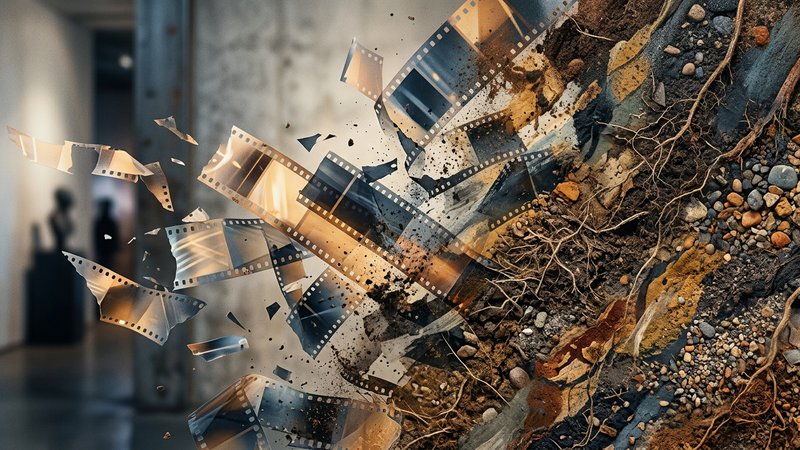
Ana Vaz: The Camera is the Body at Mudam Luxembourg
Mudam stages the inaugural major institutional survey of the Brazilian filmmaker's interdisciplinary practice
An immersive exhibition reimagines cinematic perception through embodied filmmaking, ecological inquiry, and postcolonial critique.
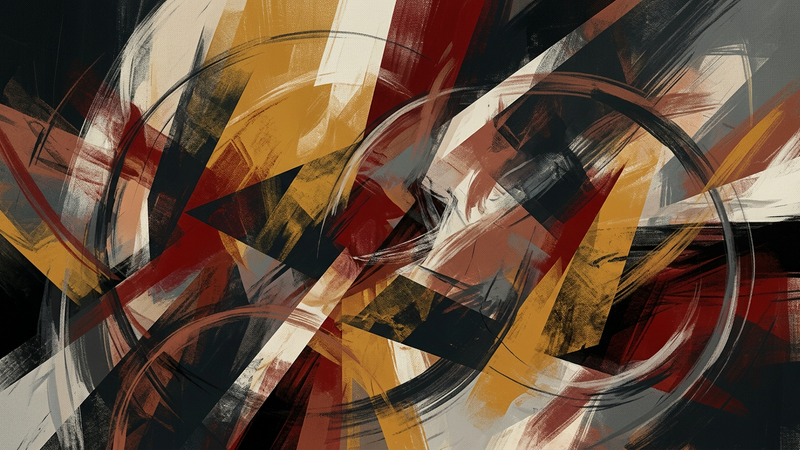
Lovis Corinth: Then Came Berlin!
How a mid-life relocation ignited a German modernist revolution
An expansive survey at the Berlinische Galerie traces how Lovis Corinth's 1901 move transformed him into a cornerstone of early twentieth-century avant-garde practice.

Bridging Japanese Craftsmanship and Contemporary Design
How international makers engage with Tokai's industrial heritage at the V&A
An exploration of how global designers collaborate with Japanese artisans to fuse ancestral techniques with modern conceptual frameworks.