
London · United Kingdom
Rudy Loewe: Intimacies of Care—Spaces of Grief and Possibility
Wellcome Collection presents new commissions examining mental health care through community collaboration
Reimagining Care Through Community Practice
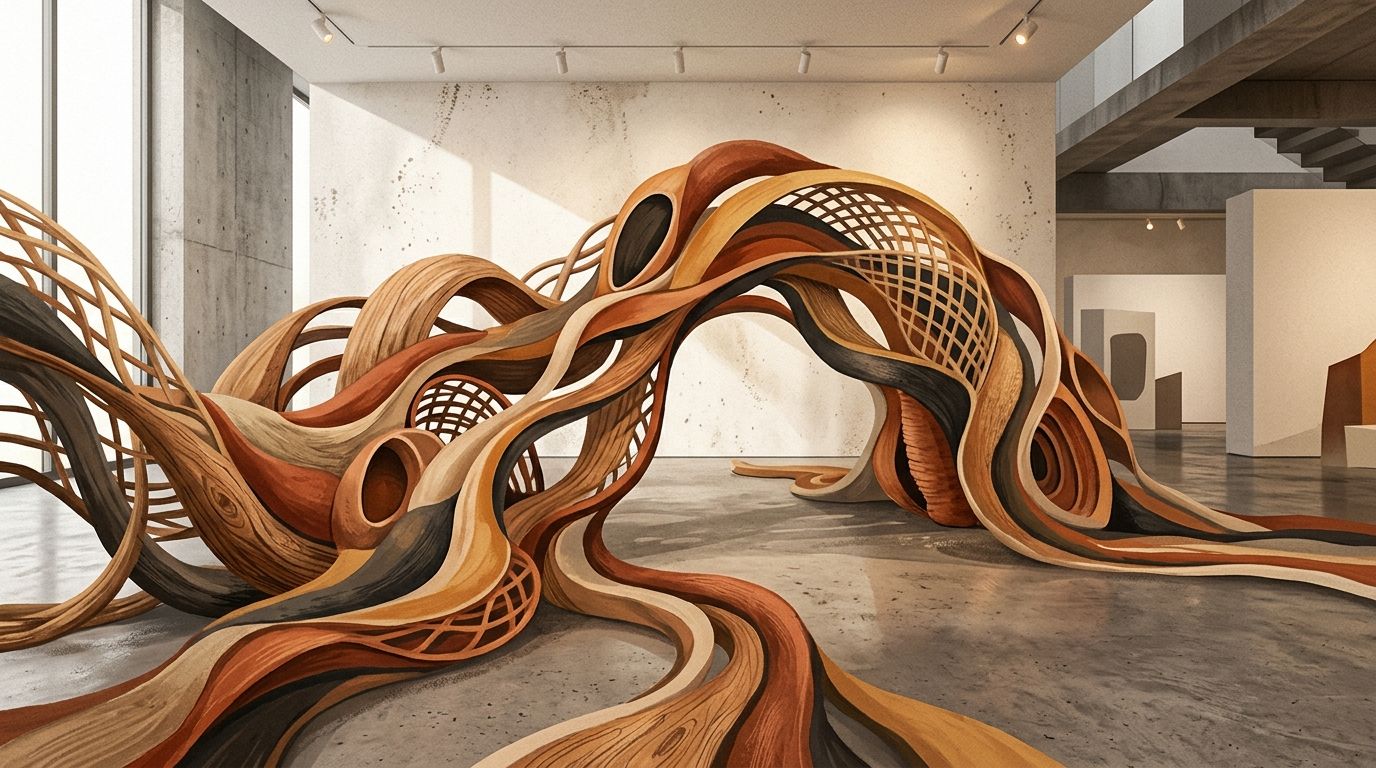
Rudy Loewe's latest exhibition at Wellcome Collection offers a compelling examination of mental health care in Britain through the lens of lived experience. Opening on 10 July 2026, Intimacies of Care—Spaces of Grief and Possibility brings together new sculptural commissions, paintings and sound works that challenge prevailing narratives around psychiatric support.
Born in 1987, Loewe works across multiple mediums to create what they describe as spaces of hope—environments where alternative models of care might take shape. The exhibition emerges from sustained collaboration with grassroots organisations including ADHD Babes, the Black Trans Foundation, and Black and Neurodiverse, whose members contributed directly to the development of several key works.
A Living Monument to Healing
At the heart of the exhibition stands Activation Sculpture (2026), a large-scale installation incorporating plants and herbs such as tinder fungus and damiana. These materials, traditionally associated with healing and sustainability, become integral to both the sculpture's physical form and its function as a site for intimate live events. The work transforms the gallery into a place of gathering and reflection, where visitors might consider how care could be reimagined beyond current institutional frameworks.
Two text-based pieces emerge directly from workshops with community partners. The Search for Care / The Lack of Care (2026) and List of Demands (2026) translate conversations around access, discrimination and aspiration into sculptural and painted forms that articulate both current barriers and future possibilities.
Vibrant Testimonies
Loewe's new paintings employ bold, vibrant colour palettes to explore themes of healing and resistance. And Here We Found One Another (2025) depicts two Black figures engaged in spiritual healing, drawing upon folkloric symbolism that recurs throughout the artist's practice. In Rage (2025), flame-like forms surround a solitary figure encircled by multiple police officers, visualising the intersection of mental health crisis and state violence.
These works sit alongside archival materials and documentation of the collaborative process, making visible the often-invisible networks of mutual support that emerge when formal care systems fail. Statistics underscore the urgency: Black people in the UK are four times more likely to be detained under the Mental Health Act than their white counterparts, yet frequently denied appropriate support when seeking help.
Curatorial Vision
Wellcome Collection Curator Madeleine Kennedy notes that the exhibition aligns with the institution's commitment to imagining health differently. By centring Black people's experiences and community practices, Loewe demonstrates how art might model alternative approaches to care that are both just and abundant.
The exhibition will operate with extended opening hours and dedicated accessibility sessions, including Lights Up and Low Stimulation periods, ensuring the space remains welcoming to neurodivergent visitors and those with sensory sensitivities.
Historical Context
Running concurrently, The Surviving Exhibitions presents the first museum survey of Audrey Amiss (1933–2013), whose extensive archive entered Wellcome Collection's holdings in 2014. Amiss's work similarly advocated for those harmed by psychiatric systems, creating a dialogue between historical and contemporary approaches to mental health advocacy.
The pairing illuminates how artists have long challenged medical orthodoxy, proposing instead frameworks rooted in lived experience and collective care.
Conclusion
Through Intimacies of Care, Loewe invites audiences to envision mental health support that moves beyond pathologisation toward genuine community care. The exhibition runs until 7 February 2027, offering London visitors a space to rest, reflect and reimagine what healing might look like.
Related reading
Bridging Japanese Craftsmanship and Contemporary Design
How international makers engage with Tokai's industrial heritage at the V&A
An exploration of how global designers collaborate with Japanese artisans to fuse ancestral techniques with modern conceptual frameworks.
Why Heidi Gallery Has Traded Berlin for London's Maddox Street
Pauline Seguin explains the economic and cultural drivers behind Heidi's transcontinental move.
From shrinking municipal budgets to shifting collector habits, the dealer details why Berlin's appeal has faded and London's allure endures.
Mohammad Alfaraj: The Heart Is a Bird's Nest, the Brain Is a Spider Web
First European institutional solo explores cross-species kinship and domestic ecologies
Mohammad Alfaraj's latest showcase at the Delfina Foundation merges multimedia installations with regional folklore to reimagine shared habitats.