
Umeå · Sweden
Nina Mangalanayagam and Anneli Furmark at Bildmuseet
Contemporary Swedish artists investigate history, narrative, and place across two concurrent shows running through spring 2027.
Unearthing Colonial Echoes
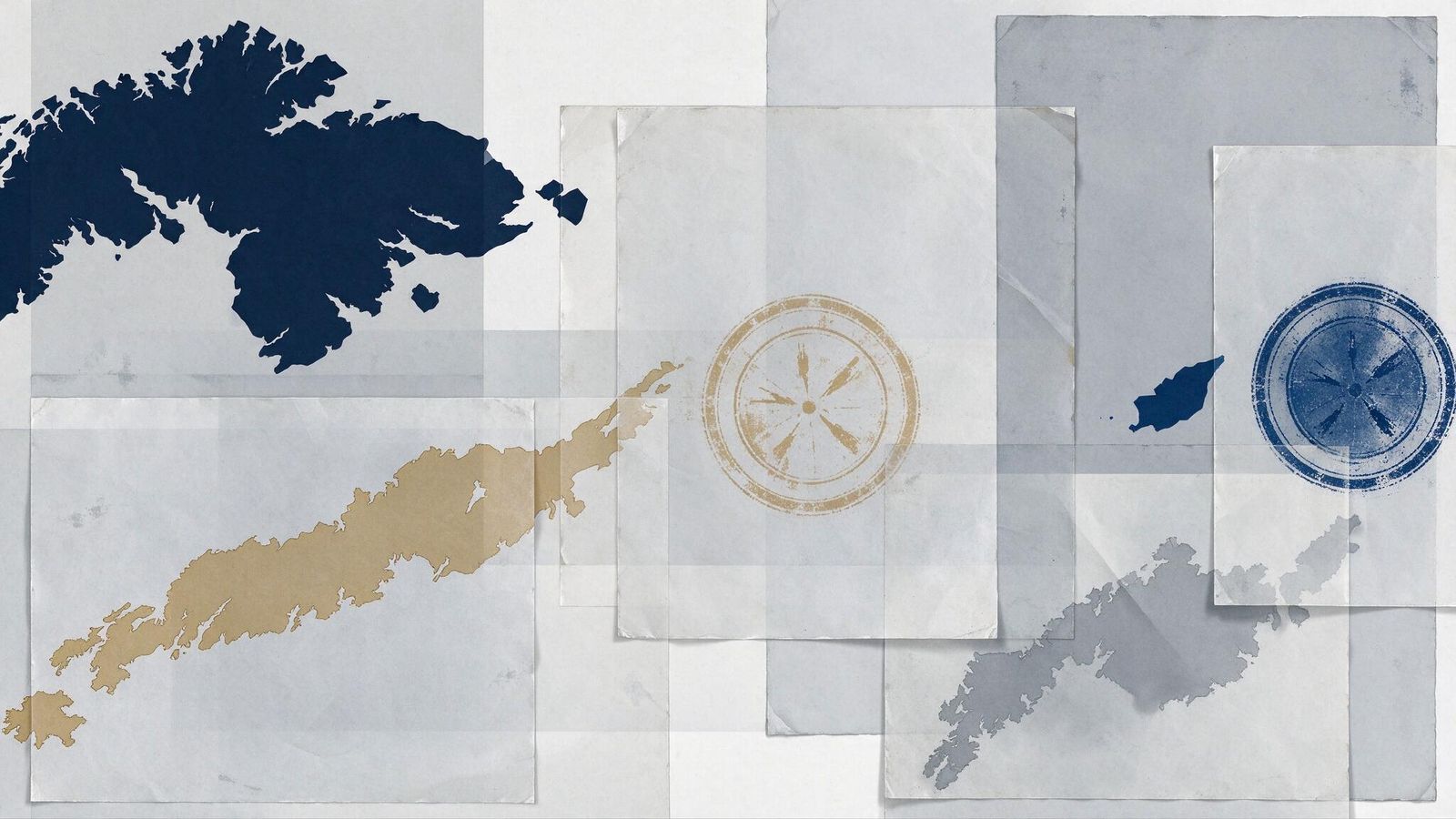
Nina Mangalanayagam's latest presentation, titled Tomma ark [Blank Pages], utilises photography, moving image, and audio to interrogate themes of displacement and hybrid identity. Drawing heavily on autobiographical elements, the artist turns her attention to Sweden's historical involvement in overseas territories. The show centres on fragments recovered from Saint Barthélemy, adopting the perspective of a 'free Black' woman as its conceptual anchor. Through the figure of Ulrica, a historical subject lifted from institutional records, Mangalanayagam navigates the silences and contradictions embedded within official historiography. Her methodology relies significantly on scholarship by Fredrik Thomasson, whose team has digitised and preserved delicate documents originally stored in Aix-en-Provence. By traversing repositories in France, Sweden, and the Caribbean island itself, the practice reconstructs how archival absence informs present-day cultural memory. Born in 1980 to Danish and Sri Lankan heritage, Mangalanayagam trained at London's Royal College of Art before earning a doctorate from Westminster University. She currently lectures at Gothenburg's HDK–Valand Academy, where her studio-based inquiries continue to develop. The exhibition operates less as a traditional showcase and more as an active site of scholarly dialogue, inviting viewers to consider how inherited narratives fracture under contemporary scrutiny.
Cartographies of Narrative
Running alongside this investigation is Anneli Furmark's survey, You Are the Centre of the Earth, which spans drawings, comic strips, paintings, and personal sketchbooks accumulated over fifteen years. Known for situating human interaction within stark northern environments, Furmark's visual language frequently foregrounds domestic architecture and regional topography. The gallery display includes a newly commissioned cinematic work, wherein performers articulate vignettes adapted from her published graphic fiction. Raised in Luleå and now residing in Umeå, Furmark graduated from the local fine arts academy in 1997. Since then, she has cultivated a prolific career spanning illustrated books, editorial commissions, and solo presentations. Her debut volume appeared in 2002, followed by numerous collections that have garnered critical acclaim, including multiple Urhunden Prizes and selections for Angoulême. Recent publications such as Walk Me to the Corner and Catgirl and Other Stories demonstrate her capacity to blend subtle psychological tension with everyday encounters. Several titles have been rendered into French, English, Spanish, Finnish, and Tamil, underscoring her international readership. Her approach to sequential art proves equally suited to institutional display, translating intimate storytelling into a spatial experience that resonates beyond the printed page.
Institutional Context
Both programmes are mounted by Bildmuseet at Umeå University and remain open until early April 2027. Mangalanayagam's project emerges from academic funding secured by the Swedish Research Council, reflecting a sustained commitment to practice-led inquiry. Furmark's retrospective benefits from curatorial oversight by Brita Täljedal, while Cecilia Andersson guides the former presentation. The gallery's flexible white-cube environment allows both practitioners to manipulate spatial perception, turning corridors into transitional zones between past and present. Together, these initiatives offer visitors a layered encounter with contemporary Swedish art, bridging historical documentation and speculative fiction through distinct yet complementary visual vocabularies. The dual programming highlights how regional institutions can function as laboratories for cross-disciplinary experimentation, allowing archival research and graphic narrative to occupy the same physical space without diluting their respective methodologies. For scholars and casual observers alike, the pairing provides a timely reminder that artistic practice remains one of the most vital mechanisms for processing collective memory.
Related reading
Kiasma Outlines a Robust 2027 Season Featuring Major Surveys and Prize Showcase
Helsinki's Museum of Contemporary Art Kiasma unveils a comprehensive schedule balancing institutional retrospectives, immersive solo projects, and regional award programmes.
The 2027 calendar at Kiasma positions spatial experimentation and critical historiography at the forefront of Nordic contemporary practice.
Ana Vaz: The Camera is the Body at Mudam Luxembourg
Mudam stages the inaugural major institutional survey of the Brazilian filmmaker's interdisciplinary practice
An immersive exhibition reimagines cinematic perception through embodied filmmaking, ecological inquiry, and postcolonial critique.
Lovis Corinth: Then Came Berlin!
How a mid-life relocation ignited a German modernist revolution
An expansive survey at the Berlinische Galerie traces how Lovis Corinth's 1901 move transformed him into a cornerstone of early twentieth-century avant-garde practice.