
Amsterdam · Netherlands
Edible Structures and Post-Occupation Cycles: Hartwig's 2026 Gingerbread Competition
Interrogating structural lifecycles through edible media
Edible Architecture and Post-Occupation Cycles
The Hartwig Art Foundation has launched its second international call for the Gingerbread Competition, positioning edible media at the intersection of architectural speculation and festive programming. Hosted at Hartwig Proxy—the interim venue preceding the permanent Hartwig Museum in Amsterdam—the initiative invites creators to interrogate the lifecycle of constructed environments. Submissions are accepted between 21 October and 1 December 2026.
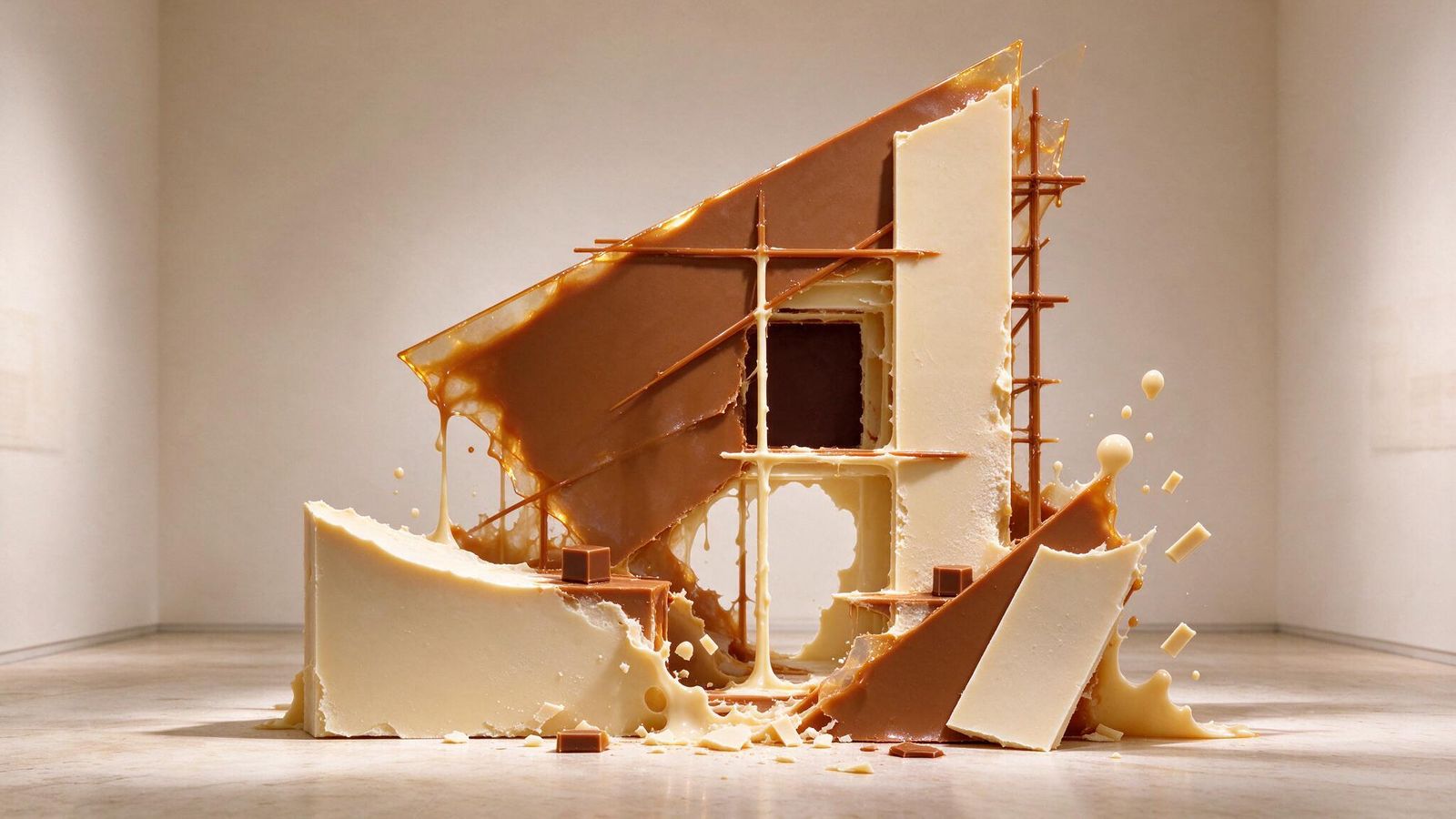
Rather than focusing solely on decorative confectionery, this year's brief centres on structural transition. Participants are asked to consider what follows construction: maintenance routines, shifting occupancies, gradual decay, or adaptive reuse. The medium itself operates as a conceptual catalyst. Unlike conventional building supplies, sugar-based dough exists simultaneously as shelter and sustenance. It invites questions about preservation versus consumption, permanence versus ephemerality, and how communities interact with fragile infrastructures. By stripping away the expectation of durability, the prompt encourages makers to explore vulnerability as a design feature rather than a flaw.
Submission Parameters and Judging Framework
Entrants may be practicing professionals, academic researchers, design students, or independent makers working across disciplines. Each entry must be delivered digitally through the foundation's portal, adhering to strict technical specifications. Proposals should be formatted as PDF, JPG, or PNG files under ten megabytes. Crucially, the core concept must fit onto a single A3 page, which will serve as the public-facing documentation during the exhibition window. Additional supporting documents can accompany the main file, though the selection panel reserves the right to focus exclusively on the primary sheet.
An expert committee, convened under the direction of Hartwig's director Beatrix Ruf, will evaluate the entries. Their verdict determines the primary victor, whose concept will be translated into a scaled physical model at Hartwig Proxy throughout 2027. Concurrently, visitors attending the proxy space on 10 December will vote for a public favourite award. Both recipients will receive commemorative trophies, a seasonal pastry shipment, and an exclusive preview tour of the upcoming museum facility. The dual selection mechanism balances professional curation with audience engagement, reflecting a broader shift towards participatory decision-making in contemporary arts funding.
Continuity and Curatorial Context
Building upon last year's inaugural edition, the foundation continues to treat temporary installations as laboratories for spatial theory. Previous recipients included Tom Biddulph, who reinterpreted utilitarian corrugated structures through a consumable lens, and ADRA Studio, whose avian habitat explored non-human agency in material degradation. These projects remain under fabrication ahead of the winter season, demonstrating how playful prompts can generate serious architectural discourse.
Hartwig Proxy functions as an experimental hub rather than a traditional gallery. Designed to foster community interaction and critical dialogue before the institution's official opening, the space prioritises participatory formats and iterative making. By framing gingerbread as a legitimate architectural medium, the competition challenges established hierarchies between high culture and seasonal craft. It also reflects a growing interest in material temporality within contemporary practice, where objects are valued precisely because they resist lasting preservation.
Creators interested in contributing should prepare their digital dossiers promptly. The closing window arrives at 23:59 CET on 1 December, followed shortly by the public display period running from 10 to 13 December. All correspondence regarding eligibility or technical requirements can be directed to the foundation's proxy email address. Ultimately, the exercise underscores how seemingly ephemeral materials can anchor profound conversations about resilience, adaptation, and the shared responsibility we hold toward the spaces we inhabit.
Related reading

Toledo Museum of Art Launches Africa Art Library Initiative
A transcontinental book donation programme reshaping scholarly access and institutional ethics
Fermata: Hong Kong in Venice
Exploring urban rhythms and forgotten details at the 61st Venice Biennale

Monet's Monumental 'Iris' Commands €50m in Paris
A landmark auction results in a new domestic benchmark for Impressionist masterworks