
Schwandorf · Germany
HNTRLND, On Idylls and Their Contradictions at Kebbel Villa
Mapping rural myths, infrastructure and shifting identities across contemporary European landscapes
Beyond the Urban Myth
The Kebbel Villa opens its doors on 29 November 2026. It will remain active until 28 February 2027. A group show called HNTRLND, On Idylls and Their Contradictions gathers sixteen artist groups there. Curators Jonas Höschl, Leonie Rösler and Marlene Sichelschmidt assembled the roster. Jürgen Dehm oversees the institution. It's a familiar premise, though contemporary discourse still reduces complex regional dynamics to simplistic nostalgia or economic decline, particularly when policymakers ignore local testimonies. We tend to picture the countryside as a quiet counterweight to metropolitan noise. Stability. Authenticity. Manageable horizons. The reality proves messier. Peripheral zones carry structural neglect alongside political fracture. They also host vibrant exchange and ecological shift. The exhibition refuses a simple binary. City versus country splits under scrutiny.
Landscapes Under Scrutiny
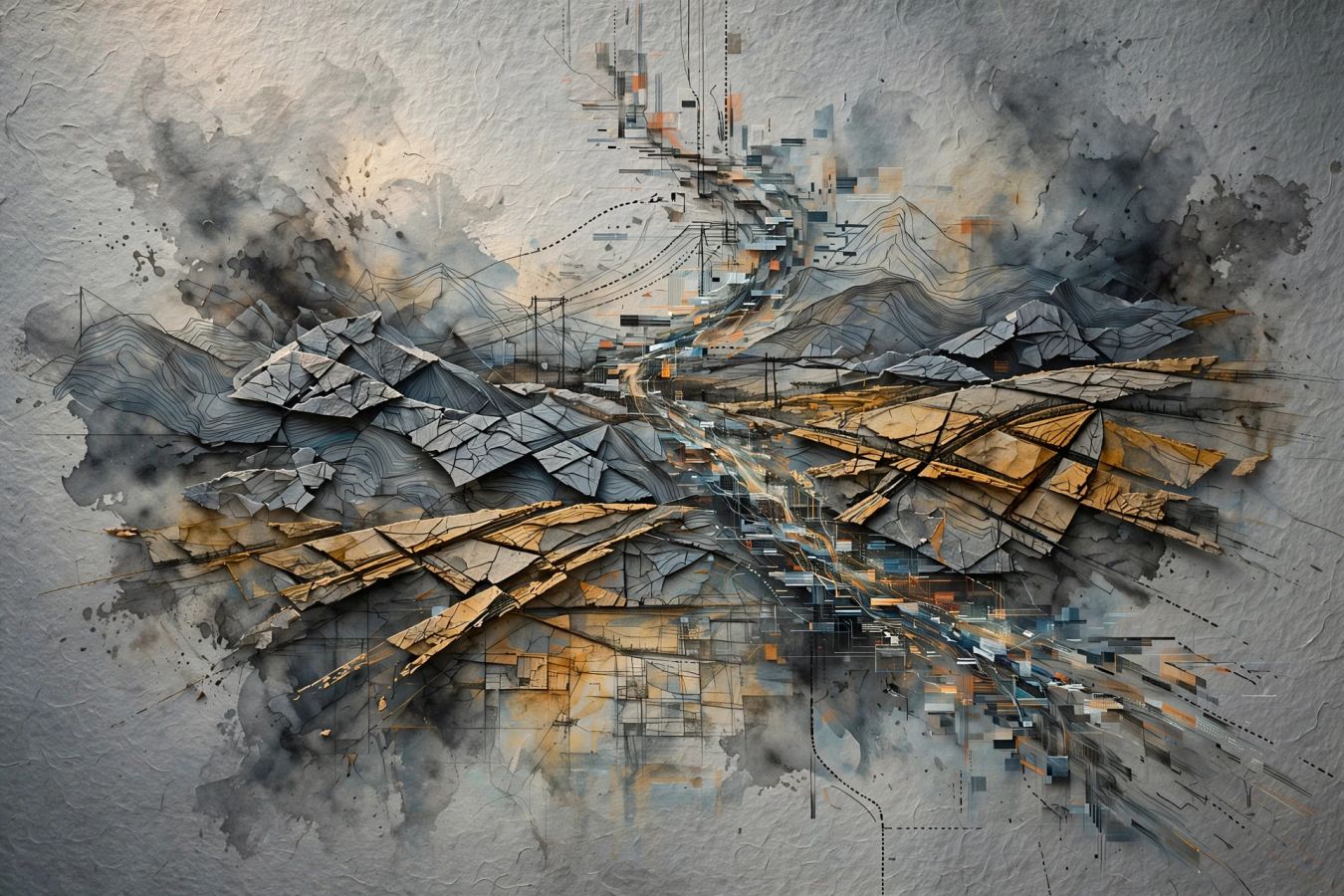
Market occupies the central position here, functioning as an active participant rather than passive scenery waiting for poetic interpretation, since historical cultivation, transport networks and economic demands constantly carve these territories. Social memory settles into soil and sky alike. Artists probe how digital migration and local tradition intersect across mapped coordinates. Structural change leaves visible marks. You can trace them through painting, sculpture and new media, even if the techniques don't always align with traditional gallery expectations, forcing viewers to reconsider how material culture survives environmental stress. The work avoids romanticising distance. It also rejects cynical dismissal. Both approaches flatten complex terrain. Instead, the gallery presents overlapping viewpoints. Some pieces highlight infrastructure. Others focus on inherited folklore. All acknowledge that remote spaces function as projection screens for contemporary anxieties. Concepts of belonging get layered onto fields and forests without warning.
Jonas Höschl contributes alongside Cana Bilir-Meier, Chana Boekle and Silvia Troian. Jonas Fahrenberger, Sebastian Jung and Leon Kahane bring distinct methodologies. Jens Klein, Jody Korbach and Laura Leppert examine spatial boundaries. Kalas Liebfried, Eric Meier and Erik Niedling investigate material archives. Fabian Reetz teams with Juro Carl Anton Reinhardt. Jonas Maria Ried, Finja Sander and Silke Schönfeld round out the selection. Each practice engages with the term hinterland differently, and they're quick to dismantle romanticised visions of provincial life, replacing pastoral clichés with documented evidence of industrial adaptation. Geographical distance matters less than cultural perception. What falls outside immediate sightlines often attracts intense ideological framing. Media representations reinforce outdated tropes. Political polarization migrates along transit routes rather than staying put. Openness flourishes in provincial towns too. Diversity arrives via remittance networks and cross-border trade. The show maps these flows quietly.
Persistent Narratives
Historical narratives sit beside current events. Archives meet algorithmic feeds. Rural economies adapt to global supply chains. Ecological pressures reshape agricultural routines. Memory operates as both anchor and distortion field, so visitors shouldn't expect tidy resolutions when navigating overlapping historical timelines, especially as institutional archives struggle to capture grassroots movements. Visitors encounter works that question who gets to define peripheral identity, while the curatorial framework treats geography as a living archive of competing claims. Economic development alters water tables. Tourism transforms village squares. Digital connectivity bridges isolation while introducing new vulnerabilities. Nothing remains static. The exhibition title acknowledges this tension directly. Certain images persist despite contradictory evidence. They continue shaping policy and personal worldview alike.
Funding comes through the BBK Bayern Verbindungslinien programme, backed by the Bavarian State Ministry of Science and the Arts, ensuring institutional stability during a period of rapid cultural recalibration. Press inquiries route through standard channels. The gallery website holds additional documentation. Opening hours follow standard seasonal adjustments. Staff await visitors on the first weekend. Tickets remain available through the official portal. The final piece hangs near the exit corridor. It depicts a weathered fence post against a grey sky. Rust bleeds into damp earth. No caption accompanies it.
Related reading
MAXXI BVLGARI PRIZE 2026: New Commissions by Bersani, Dieye, and Moscardini
Three women finalists present site-specific works at Rome's national museum
Budapest's Cultural Rebirth: Ten Essential Works Across Its Major Institutions
Political shifts have reopened doors to masterpieces spanning Raphael, Goya and Vasarely
Gauguin, Van Gogh and the Montpellier Detour
How a brief winter trip reshaped Post-Impressionist networks