
Seoul · South Korea
Es Devlin's Korean Debut Explores Presence and Shared Space
The designer-turned-artist transforms Futura Seoul with immersive installations spanning three decades
Operating within the Bukchon district, Futura Seoul hosts the inaugural South Korean solo presentation by the British creator, running between late summer 2026 and early winter 2027. Originally hailing from Britain, she initially carved out her reputation staging operatic productions at London's premier venue before translating those theatrical ambitions into concert tours for global pop icons. She subsequently directed spectacle for massive public celebrations, notably orchestrating the finale of the 2012 Olympic Games and choreographing the American football league's mid-game entertainment segment two years later. Transitioning towards gallery contexts over the past decade, she treats architectural interventions as collaborative platforms where spectators actively mould the atmosphere rather than passively observe static objects. This methodology revolves around what she terms a fleeting community, emerging whenever groups converge within a unified environment.
Spanning three decades of interdisciplinary experimentation, the current programme synthesises theatrical design, sculptural forms, literary references, and digital media specifically adapted for the host venue's layout. Her creative workflow consistently begins with transcribing textual fragments and sketching recollections, eventually crystallising into multi-sensory compositions that merge illumination, acoustics, and built structures. The curatorial framework positions presence as a relational phenomenon rather than mere physical occupancy. It draws upon archival texts, reflective surfaces, shifting daylight patterns, and ecological interconnectedness to suggest that consciousness arises through engagement.
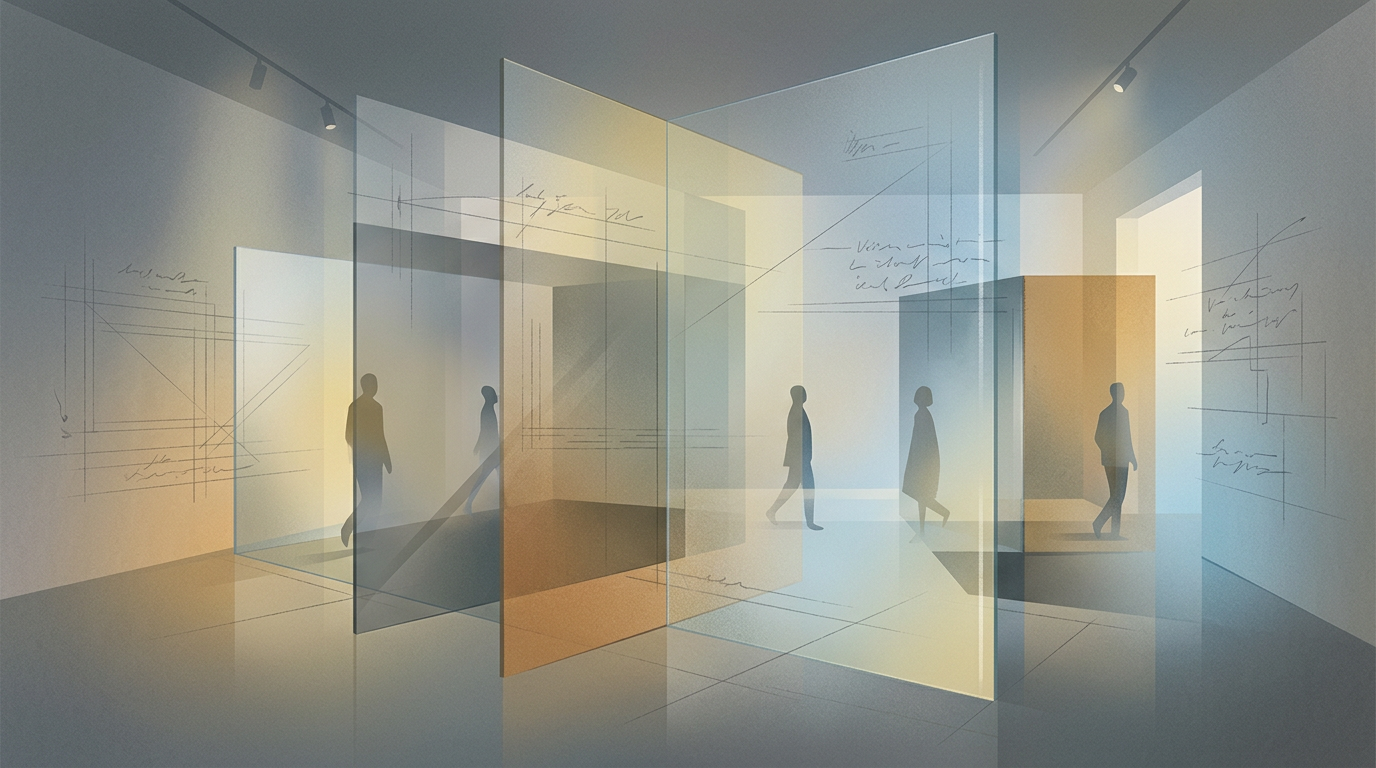
Visitors navigate a carefully orchestrated route that transitions from literary archives to optical illusions. The opening installation arranges inverted volumes across shelving units while projected imagery animates their spines, effectively voicing historical narratives into the immediate moment. Passing through this illuminated threshold leads into a chamber constructed entirely from polished glass panels, where fragmented reflections dissolve fixed perspectives. Moving toward the rear courtyard, a separate composition bridges interior illumination with exterior daylight, aligning precisely with the building's architectural circulation paths.
On the upper level, a massive digital display aggregates hundreds of personal notebooks accumulated throughout her career. Animated sequences reveal preliminary sketches and collaborative annotations before dissolving, after which attendees may select a single page to retain. This gesture deliberately blurs the boundary between institutional display and private collection. Adjacent to this offering, another project layers vocal performances recorded alongside urban wildlife from both metropolitan hubs, encouraging participants to articulate endangered biodiversity through communal singing. Finally, a large communal desk facilitates reciprocal sketching sessions where strangers document mutual encounters, allowing the accumulating artwork to mutate organically until the closing date. Such participatory mechanisms reinforce the notion that artistic meaning remains perpetually unfinished without public contribution.
Related reading
Koo Jeong A: OUSSSMOS Redefines Institutional Space Through Ephemeral Phenomena
Ephemeral forces and spatial fluidity converge in a landmark survey at Seoul's premier contemporary art institution
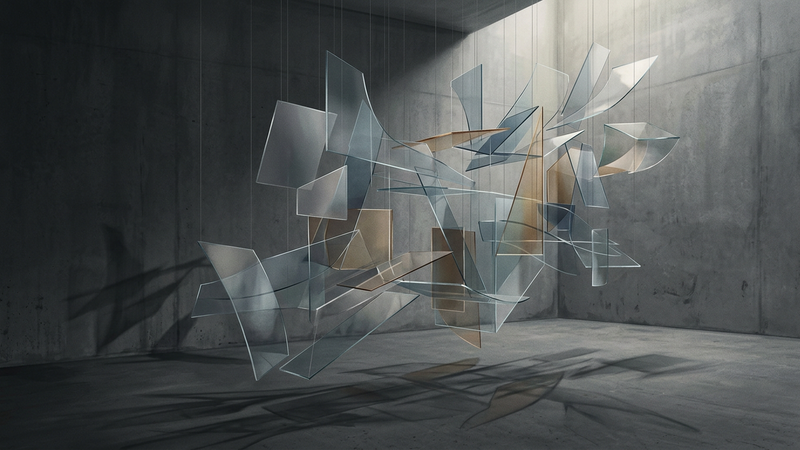
The Leeum Museum of Art hosts the artist's largest Korean solo show, dispersing installations across unconventional zones to challenge linear viewing habits.
Five Essential Exhibitions During Seoul Art Week
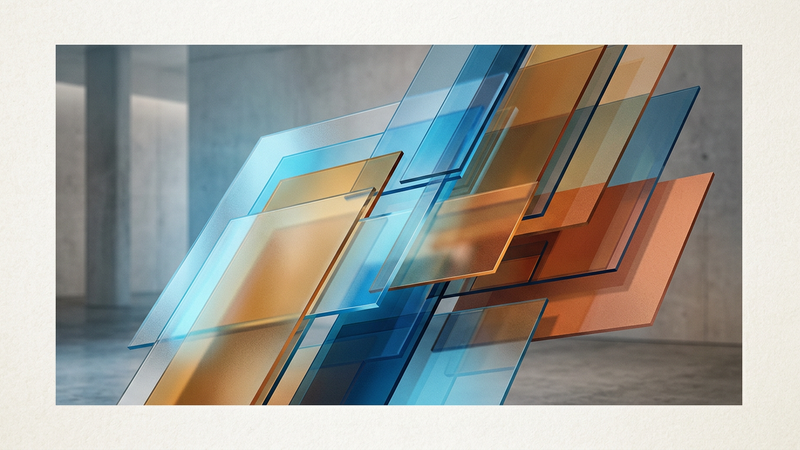
From Martin Parr's photographic archives to Do Ho Suh's textile architectures, a guide to the capital's defining cultural moments.
A curated overview of the key gallery presentations, museum surveys, and cinematic programmes defining this year's Seoul Art Week.
Christine Sun Kim: Have Many Dumb Fights Against Rock
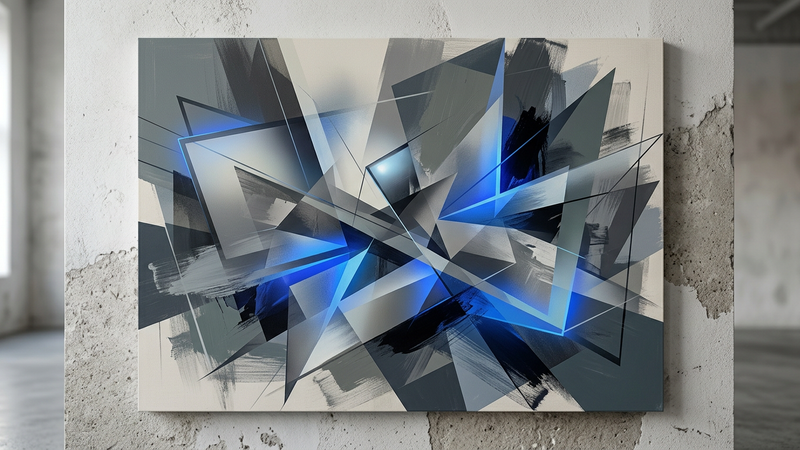
Reframing digital discourse through immersive OLED installations at MMCA Seoul
The Korean American artist explores communication barriers and digital polarisation in a new site-specific commission for the national museum.