
New York · United States
Historic WPA murals at risk as Manhattan shelter faces demolition
Bellelevue Men's Shelter closure leaves fate of New Deal-era artworks uncertain amid structural decay and stalled redevelopment
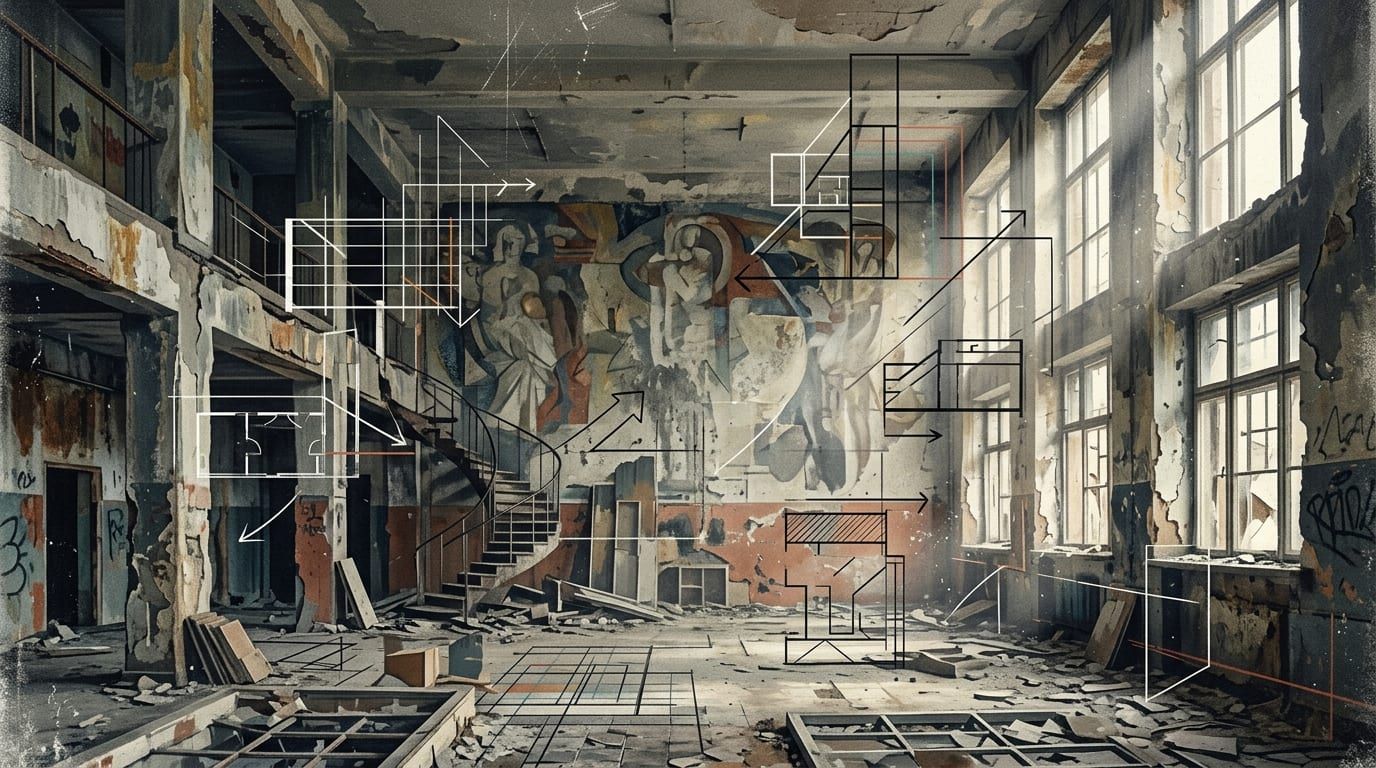
Murals hidden beneath decades of paint
The fate of several historic murals inside a recently shuttered homeless shelter in Manhattan hangs in the balance as New York City assesses whether the dilapidated structure can be salvaged or must be torn down. The Bellevue Men's Shelter, which had fallen into severe disrepair over several decades, closed earlier this year after mayor Zohran Mamdani's administration pledged to develop a long-term redevelopment plan and temporarily relocate its residents.
The building was designed in the Italian Renaissance style by Charles B. Meyers and opened in 1933 as the Bellevue Psychiatric Hospital, later absorbed into the wider Bellevue Hospital complex. It was repurposed as a shelter for men experiencing homelessness in the mid-1980s. Starting in the mid-1930s, archival records indicate that several murals were painted on its walls under the Works Progress Administration's Federal Art Project. Those works have since been painted over.
Photographs published by the Public Design Commission of the City of New York reveal at least six WPA mural projects by Emilio Amero, Luis Arenal, Agnes Tait, Ryah Ludins, Lily Furedi and Nunzio LaSpina.
Stalled plans and mounting decay
The city's Department of Design and Construction commissioned the architecture firm Marvel to redesign the campus in 2017. The proposal included a green roof, overhauled facilities and public spaces, and the restoration of an auditorium to its "historic use and grandeur". The project never secured the necessary funding and the building remained in continuous use. A Marvel representative confirmed the firm has not been engaged since.
Building Conservation Associates (BCA) was subsequently tasked with assessing the historic fabric of the structure, much of which had largely vanished. The building is not a designated historic landmark, meaning it had not been subject to the rigorous consultation and compliance processes that typically govern alterations to listed sites.
"At the time, there were no visible murals at all in the building—whether they had been painted over or removed," Michele Boyd, director of BCA, told The Art Newspaper. "Because it was a hospital, the building was altered over time to improve it and change its function. This may have happened long before the murals had historic status."
BCA's research faced significant obstacles. The murals had not been digitised, forcing researchers to rely on historic photographs and written records documenting their existence in specific locations. Limited interior access—the building was still operating as a shelter at the time—alongside a restricted budget and timeframe, further constrained the investigation.
"We could obviously see the entire exterior but had limited access to the interior because it was actively being used as a shelter," Boyd said. "There were people sleeping there, so we couldn't study the entire building in depth."
Only a small portion of the firm's research focused on the art; the broader report examined masonry and other decorative elements. BCA's recommendations ultimately stressed that a more specialised analysis would be needed to determine the extent and condition of the artworks.
Demolition looms as most cost-effective option
Following the failed capital project, the city contracted Superstructures Engineers and Architects in 2019 to develop a temporary stabilisation programme. The firm recorded extensive deterioration and emergency conditions. More recently, Acheson Doyle Partners Architects conducted a forensic investigation that uncovered "severely corroded steel columns and other widespread deterioration", concluding that "demolition and replacement was the most cost-effective long-term solution".
A 2015 oversight report from the city's comptroller's office found that the shelter, which housed nearly 400 people at its closure, had not been certified since 2004 due to its inability to meet requirements. The certification was not renewed because the building was in such poor condition that "conditions could not be addressed by a traditional plan of corrective action". The report also noted that closing the shelter was not considered viable at the time given the population it served. Despite several upgrades, the building never regained certification.
NYC Health + Hospitals, which manages the site, has not disclosed further details on redevelopment plans.
A representative stated: "The city is aware of the WPA murals at the 30th Street Intake Shelter and is working with conservationists to determine which ones can be salvaged."
A precedent for recovery
There is some cause for cautious optimism. In the 1990s, the city oversaw the redesign of another Bellevue Hospital building that contained a monumental fresco mural by David Margolis titled Materials of Relaxation (1939–41), which had been covered sometime after the space was abandoned in the mid-1940s. Because Margolis had applied a protective wax coating, the work was fully restored. Whether the same outcome is possible for the artworks inside the former Bellevue shelter remains to be seen.
Related reading
New York's Museum Building Boom Continues
How institutional expansions are reshaping the city's cultural geography
From avant-garde venues in the Lower East Side to historic collections scaling up across Manhattan, New York's architectural ambitions are fundamentally altering how audiences experience visual culture.
Taking Back Our Space: MoMA's Photographic Survey on Body Politics
How a 1970s feminist archive inspires contemporary photographers to rethink spatial inequality
A new exhibition at MoMA pairs Marianne Wex's pioneering street photography with seven modern creators exploring gender, race, and Indigenous sovereignty through the lens.

Ellie Rines Gallery Opens Tribeca Flagship
A strategic relocation consolidates operations and secures a new downtown venue
The dealer leaves Chinatown for Walker Street, streamlining operations and debuting a sculptural series.