

New York · United States
A Substantial Birthday Gesture Reshapes Harlem's Art Scene
How a major endowment supports architectural renewal and curatorial independence
A Substantial Birthday Gesture Reshapes Harlem's Art Scene
On 4 September, marking her forty-fifth year, the global music icon Beyoncé chose to celebrate her birthday with a substantial financial contribution to New York's Studio Museum in Harlem. Alongside the release of a remastered edition of her influential 2006 record, she transferred two million dollars to the institution. The gesture underscores a longstanding personal commitment to visual culture, particularly work emerging from Black creative communities.
In a formal statement, the artist emphasised how cultural narratives often remain out of reach for wider audiences. She highlighted the venue's dedication to embedding itself within local neighbourhoods, noting that numerous emerging talents have emerged through its programming. By framing the gallery as a space where varied perspectives converge, the donation aligns with a broader push to democratise access to contemporary practice.
This financial support arrives shortly after the venue completed a major architectural transformation. Reopening to the public just months prior, the facility now occupies a freshly constructed eighty-two-thousand-square-foot structure along one hundred and twenty-fifth Street. The project was led by Adjaye Associates, with Cooper Robertson serving as executive architects. The total expenditure reached three hundred million dollars, reflecting a significant investment in infrastructure dedicated to showcasing works connected to the African diaspora.
Inside the renovated premises, curators have reconfigured circulation routes to accommodate larger canvases and sculptural installations. Dedicated areas now support the renowned residency scheme, which has historically nurtured experimental practices across generations. An elevated outdoor terrace and additional communal zones further extend the gallery's footprint beyond traditional exhibition walls, encouraging dialogue between visitors and creators.
Thelma Golden, who serves as both director and chief curator, acknowledged the timing and scale of the contribution. She noted that the endowment will reinforce initiatives targeting local residents alongside international visitors. The museum's founding mandate centred on restructuring institutional hierarchies and expanding representation within mainstream galleries. Such backing provides tangible resources to sustain that mission during a period of heightened market scrutiny.
The donor's interest in visual arts extends well beyond charitable giving. Together with her spouse, the rapper Jay-Z, she has assembled a notable assemblage featuring pieces by Andy Warhol, Richard Prince, George Condo, and Laurie Simmons. Their collaborative audiovisual projects have occasionally utilised historic European archives, including filming sequences within vacant Louvre halls. Within their private holdings reside two pivotal Jean-Michel Basquiat canvases executed during his highly coveted 1982 period: the orange-and-black urban composition Mecca and the musical tribute CPRKR.
Few public collections retain substantial Basquiat works, given how rapidly secondary market valuations escalated during the late twentieth century. The Studio Museum remains an exception, preserving Bayou, painted in 1984, within its enduring inventory. That substantial piece featured prominently when doors reopened last year, illustrating how institutional stewardship can preserve critical artistic legacies despite commercial pressures.
Celebrity philanthropy frequently draws attention to underfunded cultural organisations, yet sustained impact relies upon structural capacity rather than singular injections of capital. The Harlem venue's recent expansion demonstrates how strategic planning and architectural innovation can amplify curatorial ambitions. With enhanced facilities and renewed financial stability, the institution appears well positioned to continue championing voices that have historically operated outside commercial centres. As collecting patterns evolve, such partnerships highlight the growing intersection between popular culture and institutional preservation.
Museums mentioned
Related reading
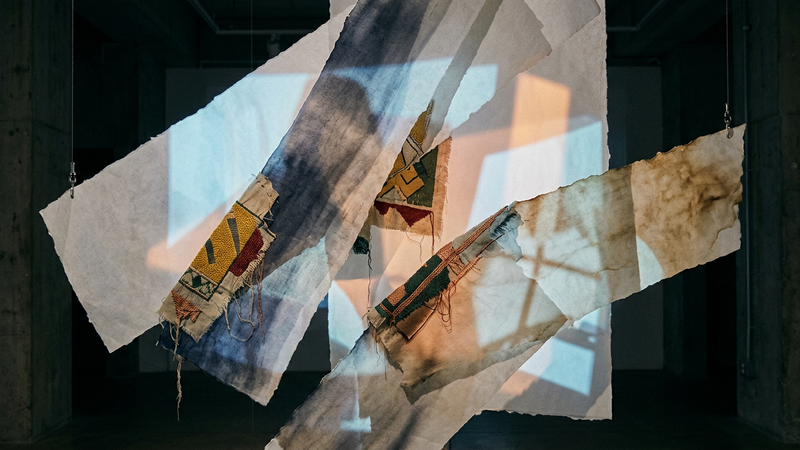
Ukrainian Museum Celebrates Half-Century With Community-Led Lobby Project
Molly Gochman transforms archive fragments into a projected collage marking five decades of cultural preservation
Mourning Keepsakes: Victorian Hairwork Arrives in Brooklyn
From Missouri to Brooklyn: preserving Victorian mourning crafts
New York's Museum Building Boom Continues
How institutional expansions are reshaping the city's cultural geography