
Mexico City · Mexico
Ancient Maya Remains and Ceramics Unearthed in a Mexican Cenote
Preservation efforts and archaeological analysis advance following a significant discovery in Quintana Roo
Submerged Heritage in the Yucatán
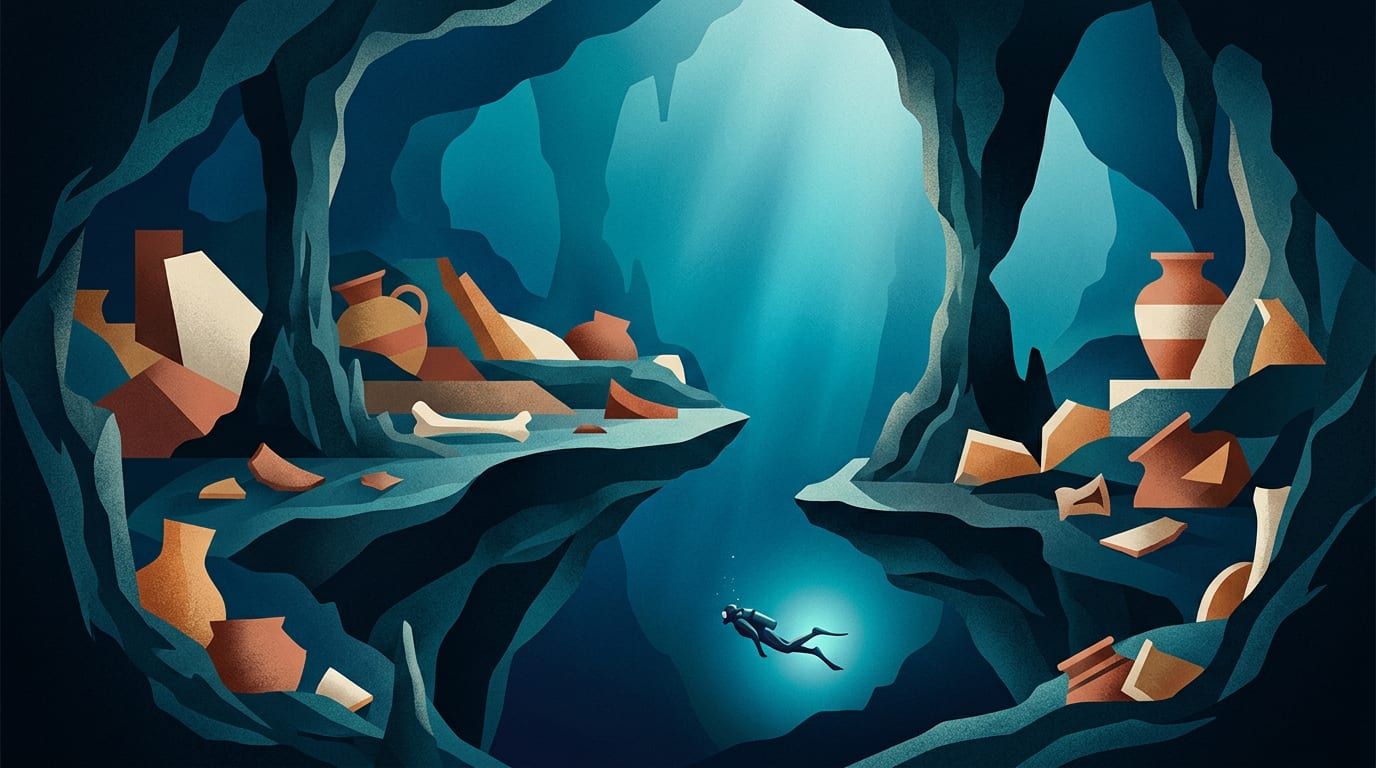
Recent explorations within the Yaakun cenote, situated near Playa del Carmen in Quintana Roo, have uncovered a remarkable assemblage of archaeological material. Excavation teams have recovered suspected pre-Columbian skeletal fragments and faunal bones, accompanied by three distinct pottery pieces. This find has prompted a fresh investigative initiative coordinated by the national heritage body (INAH). The agency aims to establish precise chronologies and conduct thorough material analysis. The Yucatán Peninsula hosts over eight thousand similar karst formations, many of which have yielded palaeontological fossils, pre-Hispanic artefacts, and even nineteenth-century weaponry from the regional Caste War.
These subterranean water systems function as vital components of the peninsula's extensive aquifer network. Historically, they provided essential hydration and shelter, while also holding profound cosmological significance. Indigenous populations routinely connected these water-filled depressions with the underworld, conducting elaborate ceremonies that left behind abundant material traces. Painted murals, ritual deposits, carved reliefs, and ceramic fragments collectively demonstrate that these locations functioned as sacred spaces long before European contact.
Stratigraphy and Ritual Significance
The unique microclimate inside these flooded caverns—characterised by stable temperatures, minimal light exposure, and consistent humidity—creates ideal conditions for organic preservation. Recognising this, the agency launched a comprehensive underwater archaeological register in two thousand. By the close of twenty twenty-five, the catalogue had documented one hundred and sixty-one submerged contexts. Roberto Junco, who directs the institute's underwater division, notes that the registry remains an essential instrument for cataloguing submerged cultural heritage, expanding steadily as new sites surface.
Initial reports from property owners and technical divers emerged in late twenty twenty-five, prompting official registration of the eighty-metre depression. Survey teams mapped the seabed between forty-two and fifty-three metres down, noting that the artefacts and skeletal fragments lie roughly thirty metres apart. Junco cautions that current interpretations remain provisional, suggesting the faunal bones likely predate the human remains, which in turn precede the pottery.
Preliminary osteological assessment indicates the human bones probably belong to a young woman aged between eighteen and twenty-five. Researchers intend to extract dental samples during twenty twenty-seven, a procedure that could yield mitochondrial DNA and refine the chronological framework. Meanwhile, Gustavo García García, an INAH underwater archaeologist, explained that the three pottery pieces—one complete, two broken—likely originate from Eastern Coast Maya communities dating to the Late Postclassic era, spanning twelve hundred to fifteen hundred and twenty-one AD. Laboratory analysis of a detached shard continues.
Conservation and Contemporary Threats
Protecting these submerged assets requires careful stewardship. The site owners have agreed to leave everything undisturbed, a compromise acknowledged by the institute through the symbolic naming of the human remains Yatzil, translating to loved one in the Maya language, mirroring the cenote's own name which signifies affection. Junco emphasises that collaborative frameworks between local stakeholders and heritage authorities strengthen preservation efforts.
Nevertheless, the region's karst systems face mounting pressures. Agricultural runoff, urban expansion, intensive livestock farming, and large-scale infrastructure developments threaten water quality. Environmental campaigners have highlighted concerns regarding the Maya Train, noting that construction involved driving one hundred and twenty-five support columns directly into sensitive sinkholes. Diver José Urbina observes that this particular location maintains pristine water conditions and supports vulnerable endemic species, including three Damas Blancas fish. However, navigating the site demands passing through dense hydrogen sulphide layers, underscoring the technical difficulty of accessing these fragile archives.
Mexican heritage legislation designates all discovered antiquities as national property, yet physical degradation remains a persistent risk. Cracked cranial fragments at Yaakun suggest prior disturbance, prompting experts to warn against handling or relocating any material. Recreational and technical diving have occasionally caused harm; last April, visitors marred fifteen-thousand-year-old puma fossils within the Hoyo Negro cavern near Tulum, a site already famous for containing Naia, one of the oldest American human skeletons.
Moving forward, INAH prioritises public education and community engagement alongside scientific investigation. Junco confirms that additional field projects will examine specific underwater environments, yet stresses that sustained awareness campaigns remain vital for safeguarding centuries-old submerged heritage.
Museums mentioned

Related reading
Diego Rivera's Monumental Stadium Relief Set for Conservation in Mexico City
A multi-institutional campaign targets the artist's unfinished stone facade at UNAM alongside works by Siqueiros and O'Gorman

Álvaro Urbano: Helen
Site-responsive sculptures and archival fragments reimagine a mid-century Mexican landmark

The Philadelphia Museum of Art's New Pedagogical Ambition
How a major philanthropic gift is reshaping institutional pedagogy