
Exhibo Editorial
A New Cultural Campus Rises Beside Inhotim in Brazil's Minas Gerais
Collector Bernardo Paz prepares a 311-acre museum and botanical reserve echoing his original foundation's pioneering model
A New Landscape for Contemporary Art
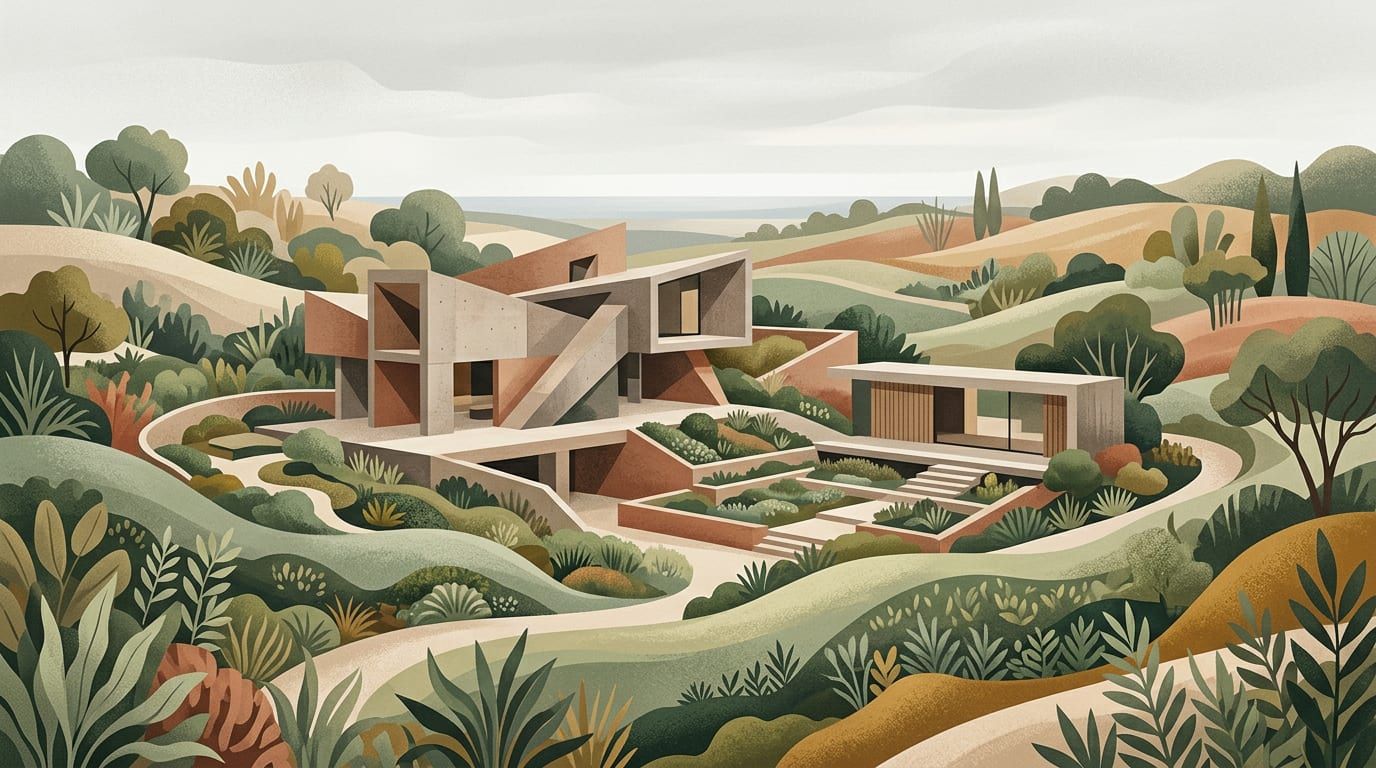
Brazilian collector and former mining executive Bernardo Paz is preparing to launch a substantial cultural institution adjacent to his original foundation. Situated on a three hundred eleven acre plot bordering Inhotim in Brumadinho, Minas Gerais, the upcoming complex will function as both a museum and a living botanical reserve. Although Paz has formally withdrawn from administrative duties at the original venue, which celebrated two decades of public access last year, this latest venture deliberately mirrors the pioneering spatial strategy that established its predecessor's reputation across Latin America. The initial wave of exhibition spaces is slated to welcome visitors during September twenty twenty seven.
Pavilion Architecture and Botanical Integration
Financial projections circulating within domestic media have suggested a capital outlay nearing one hundred ninety five million dollars. Project representatives have dismissed these estimates as inflated, declining to confirm any precise financial ceiling. The forthcoming programme will showcase approximately three thousand objects drawn from Paz's private holdings, complemented by acquisitions spanning recognised global figures and emerging voices from South America. Opening selections will highlight sculptural interventions by American practitioner Michael Heizer, alongside significant paintings and installations by Brazilian creators Anna Maria Maiolino and Sonia Gomes. Additional commissions remain under negotiation. Designed to accommodate up to forty distinct structures, the campus will distribute artworks across enclosed galleries and open-air environments, reinforcing the symbiotic relationship between horticultural preservation and visual culture. This approach echoes the mid-twentieth century tradition of integrating sculpture gardens with native flora, yet updates it through a distinctly contemporary curatorial lens.
Curatorial Leadership and Institutional Framework
Strategic guidance for the initiative rests with a trio of experienced professionals. Allan Schwartzman, who helped conceptualise the original site, continues to serve as lead artistic consultant. Joining him are Paulo Miyada, departing São Paulo's Tomie Ohtake Institute following a decade and a half of service, and Fernanda Arruda, who brings extensive background from her time assisting curators at the neighbouring foundation. While official branding remains unconfirmed, industry observers frequently reference Instituto Bernardo Paz or Museu das Árvores as potential identifiers. Operating entirely as a charitable entity, the organisation is currently drafting its administrative protocols, with Paz maintaining sole financial responsibility during this developmental stage. The emphasis on cross-disciplinary collaboration suggests a deliberate move away from traditional white-cube formats, favouring instead an environment where ecological systems and artistic production mutually inform one another.
Historical Context and Legal Precedents
The founder's trajectory includes notable legal complications. Following a lower court ruling in twenty seventeen concerning financial transfers linked to corporate entities associated with both himself and the original institution, Paz faced serious allegations. Those proceedings were successfully appealed, resulting in a complete acquittal by federal judges in twenty twenty. Subsequently, in twenty twenty two, he transferred roughly three hundred thirty artworks, together with the surrounding estate and exhibition halls, to the registered charity Instituto Inhotim. Since that transaction, he has maintained strict distance from day-to-day management. Meanwhile, the original venue has pivoted toward ecological stewardship, prioritising adaptive reuse of existing infrastructure and extended programming over constructing dedicated artist-specific buildings. This divergence highlights how institutional legacies evolve independently once foundational leadership steps back.
Looking Ahead
This expansion underscores a persistent commitment to situating contemporary practice within immersive natural settings. By separating operational control while retaining artistic vision, Paz aims to cultivate fresh dialogues between local residents and international audiences. As construction progresses toward the autumn twenty twenty seven milestone, the art world will observe whether this sister institution can carve an independent identity while honouring the botanical ethos that defines the region's cultural geography. The project also reflects broader shifts in Brazilian cultural patronage, where private philanthropy increasingly drives large-scale environmental and artistic initiatives outside metropolitan centres.
Related reading
Diego Rivera's Monumental Stadium Relief Set for Conservation in Mexico City
A multi-institutional campaign targets the artist's unfinished stone facade at UNAM alongside works by Siqueiros and O'Gorman
Local conservators will lead a phased preservation effort for Diego Rivera's volcanic stone relief at Mexico City's Olympic stadium, supported by the World Monuments Fund and US diplomatic grants.

Van Lévé: Sovereign Caribbean Visions Take Shape at Harvard
A transnational survey charts twenty-five years of Creole and Maroon artistic practice across the French Caribbean and Amazonia.
Harvard's Alain Locke Gallery presents a landmark survey tracing contemporary production from Guadeloupe, Martinique, Guyane, and Haiti since two thousand and one.

Vancouver Establishes Cultural Land Trust Amid Artist Housing Crisis
A new municipal framework seeks to secure long-term studio space and prevent creative displacement.
Vancouver's council has approved a structural mechanism to retain artists and nonprofits as soaring property costs threaten the city's creative sector.