Monastery of St Anthony
Among the oldest Christian monasteries in the world, at the foot of the cave of St Anthony — with wall paintings of 1232–33.
The father of monks
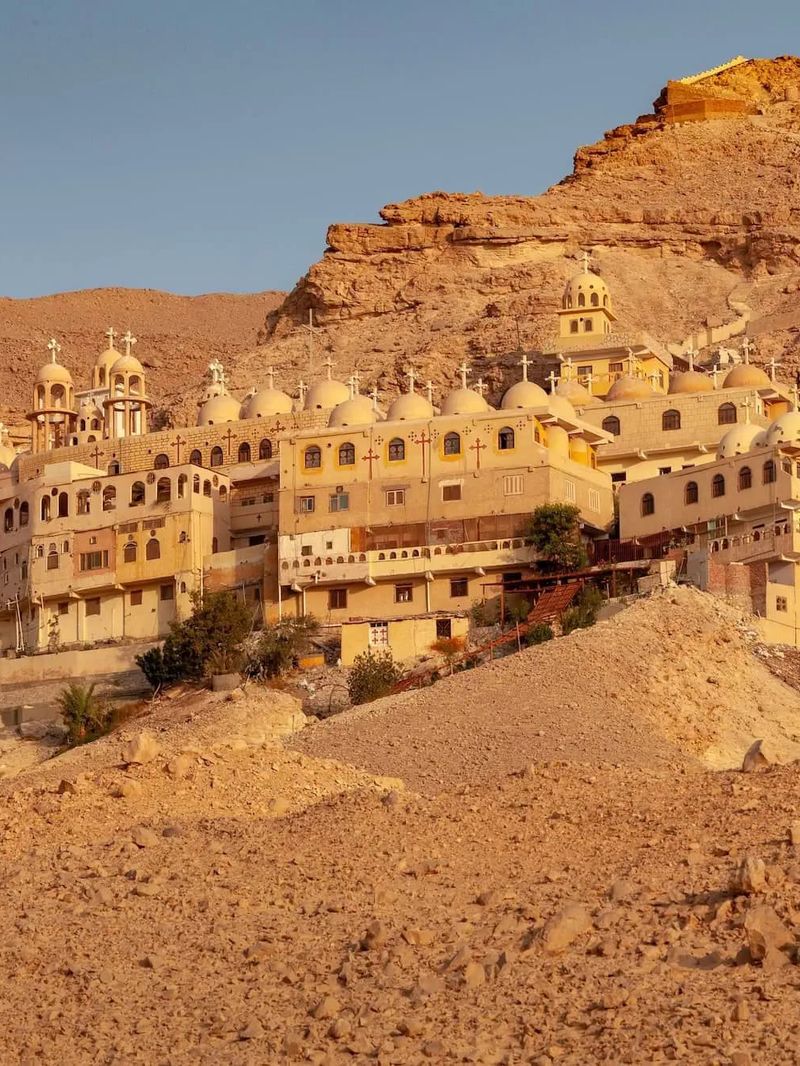
The Monastery of St Anthony stands in the Eastern Desert, in the mountains of the South Galala plateau, about 35 kilometres inland from the Red Sea coast near Zafarana. It is regarded as one of the oldest Christian monasteries in the world. St Anthony the Great, born around 251 in Middle Egypt, gave away his possessions to live as a hermit in the desert and became the model for Christian monasticism; he spent the last decades of his long life in a cave in the cliffs above this site, where he died in 356. His disciples settled at the foot of the mountain, and the monastery grew around the spring that sustained them.
A walled community
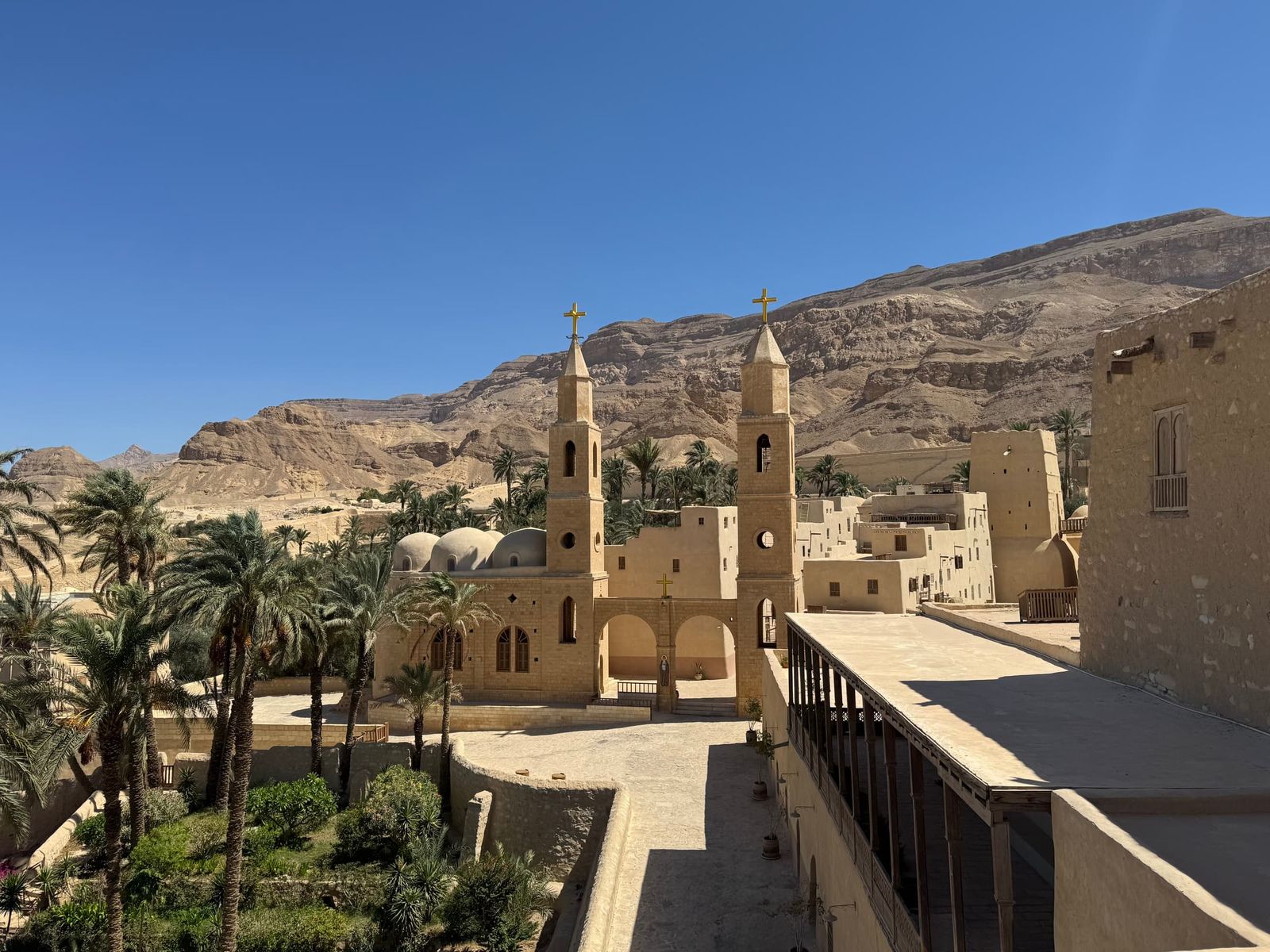
Over the centuries, the monastery was attacked and rebuilt several times, and it is enclosed by high walls. Inside are several churches, a keep, a mill, a bakery, gardens irrigated by the spring, and monks' cells. The monastery belongs to the Coptic Orthodox Church and remains an active community of monks.
The wall paintings
The Church of St Anthony preserves one of the most important cycles of medieval Coptic wall painting, executed in 1232–33 by a painter named Theodore and his team: figures of patriarchs, monks, saints, warrior saints on horseback, prophets and Christ in majesty, in vivid colours. Between 1996 and 2002, a conservation project led by the American Research Center in Egypt with Italian and Egyptian conservators cleaned the paintings, revealing their original brilliance and earlier layers beneath. A stairway of more than a thousand steps leads up the cliff to the cave of St Anthony, high above the monastery, with views over the desert towards the Red Sea.
Exhibo editorial
The approach is all desert — a road winding inland from the Red Sea into bare mountains — until the green of palm trees and the domes of the monastery appear at the foot of the cliffs. Inside the walls, life moves at a monk's pace: a garden fed by Anthony's spring, a bakery, bells, visitors guided by a brother in black.
The paintings in the old church are extraordinary: warrior saints on red horses, hermits with long white beards, all glowing again after their restoration. And if your legs allow, climb the steps to Anthony's cave at dawn or late afternoon — the silence and the view explain, better than any book, why the desert drew the first monks.
How to find it
From Zafarana on the Red Sea coast, drive west along the road towards Beni Suef and take the signposted turn-off south to the monastery, about 45 km in total. Enter through the main gate; the old Church of St Anthony is inside the walls, and the steps to the cave start outside the monastery on the cliffside.