Monastery of St Bishoy (Deir Anba Bishoy)
The largest of the Wadi Natrun monasteries, founded in the fourth century — relics of St Bishoy and the tomb of Pope Shenouda III.
The desert of Scetis
Wadi el-Natrun, the ancient Scetis, is a desert depression north-west of Cairo, between Cairo and Alexandria, named after the natron salt collected from its lakes. From the fourth century AD, after St Macarius the Great settled here around 330, thousands of hermits and monks lived in its desert, making it one of the most important centres of early Christian monasticism, whose sayings and example spread throughout the Christian world. Of the many monasteries that once existed, four survive and are still inhabited: St Bishoy, the Syrian Monastery, Baramus and St Macarius.
St Bishoy
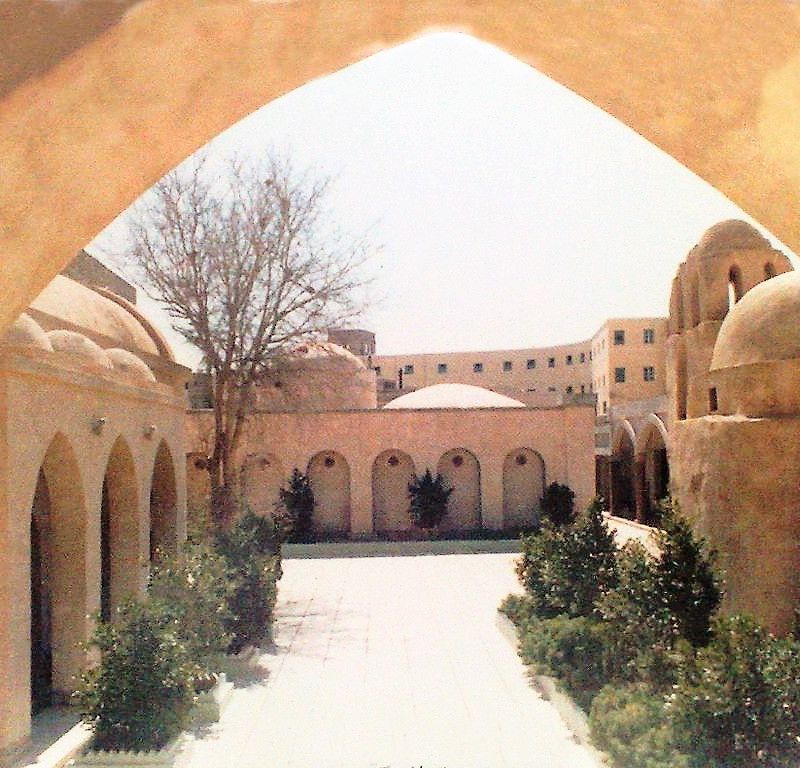
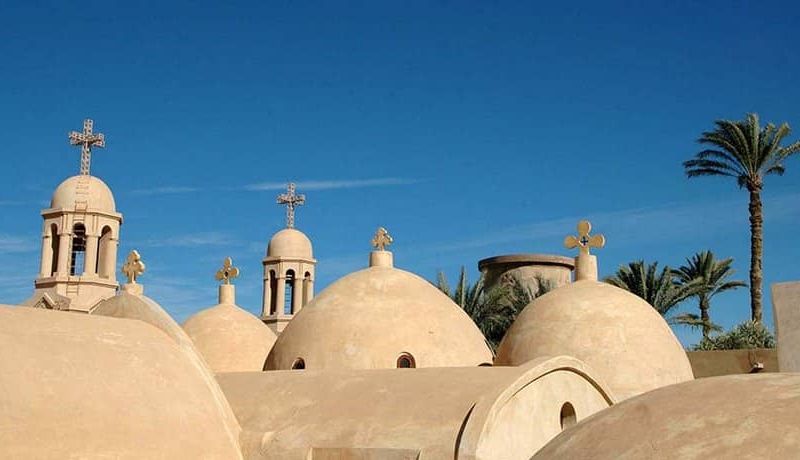
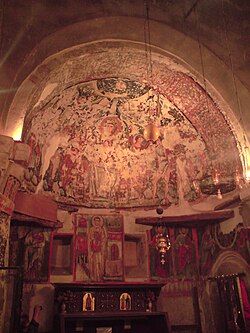
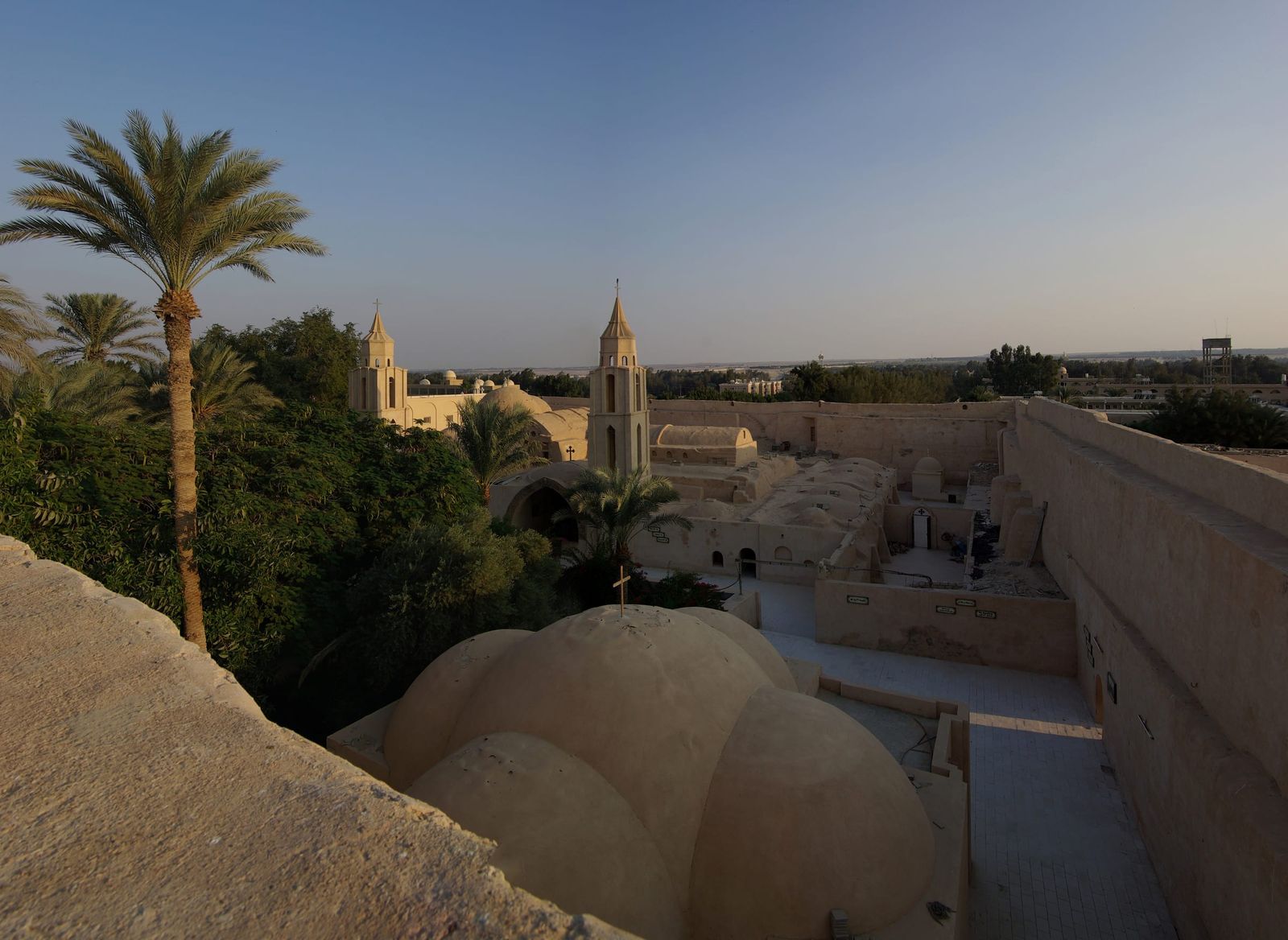
The Monastery of St Bishoy (Anba Bishoy, or Pishoy) is the largest of them. It was founded in the fourth century by St Bishoy, a disciple of Macarius, whose relics are preserved in the main church; according to tradition, his body remains incorrupt. Inside its walls stand several churches, a fortified keep (qasr) with a drawbridge, built to protect the monks from Bedouin raids, a refectory and a well. In recent decades the monastery has grown greatly, with new buildings, gardens and farms.
Pope Shenouda III
The monastery was the favourite residence of Pope Shenouda III, patriarch of the Coptic Orthodox Church from 1971 to 2012, who spent the years of his internal exile here between 1981 and 1985, and who was buried in the monastery after his death in 2012. His tomb has become a major place of pilgrimage.
Exhibo editorial
The modern road between Cairo and Alexandria runs past it, but step through the gate of Anba Bishoy and you are in another time: domes of mud plaster, a keep with a drawbridge, monks in black walking between churches where candles burn before relics more than sixteen centuries old.
It's a living monastery, busy with pilgrims, especially at the tomb of Pope Shenouda. Visit on a weekday, dress modestly, and if a monk offers to guide you, accept — the stories of the desert fathers are best told here.
How to find it
Wadi el-Natrun lies about 100 km north-west of Cairo along the Cairo–Alexandria Desert Road, about 1.5 hours by car. Leave the highway at the Wadi el-Natrun exit and follow the signs to Deir Anba Bishoy; the Syrian Monastery is a few hundred metres away.