Temple of the Oracle of Amun, Aghurmi
The desert oracle that proclaimed Alexander the Great son of Amun — on a rock above Siwa's palm groves.
The oracle of the desert
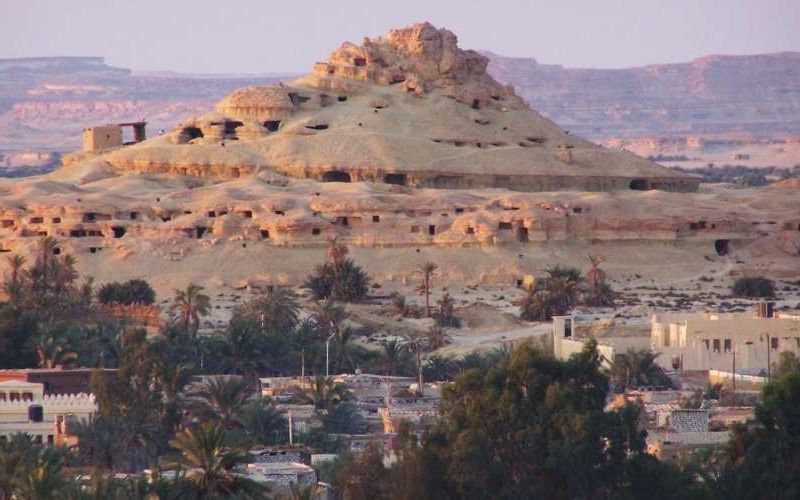
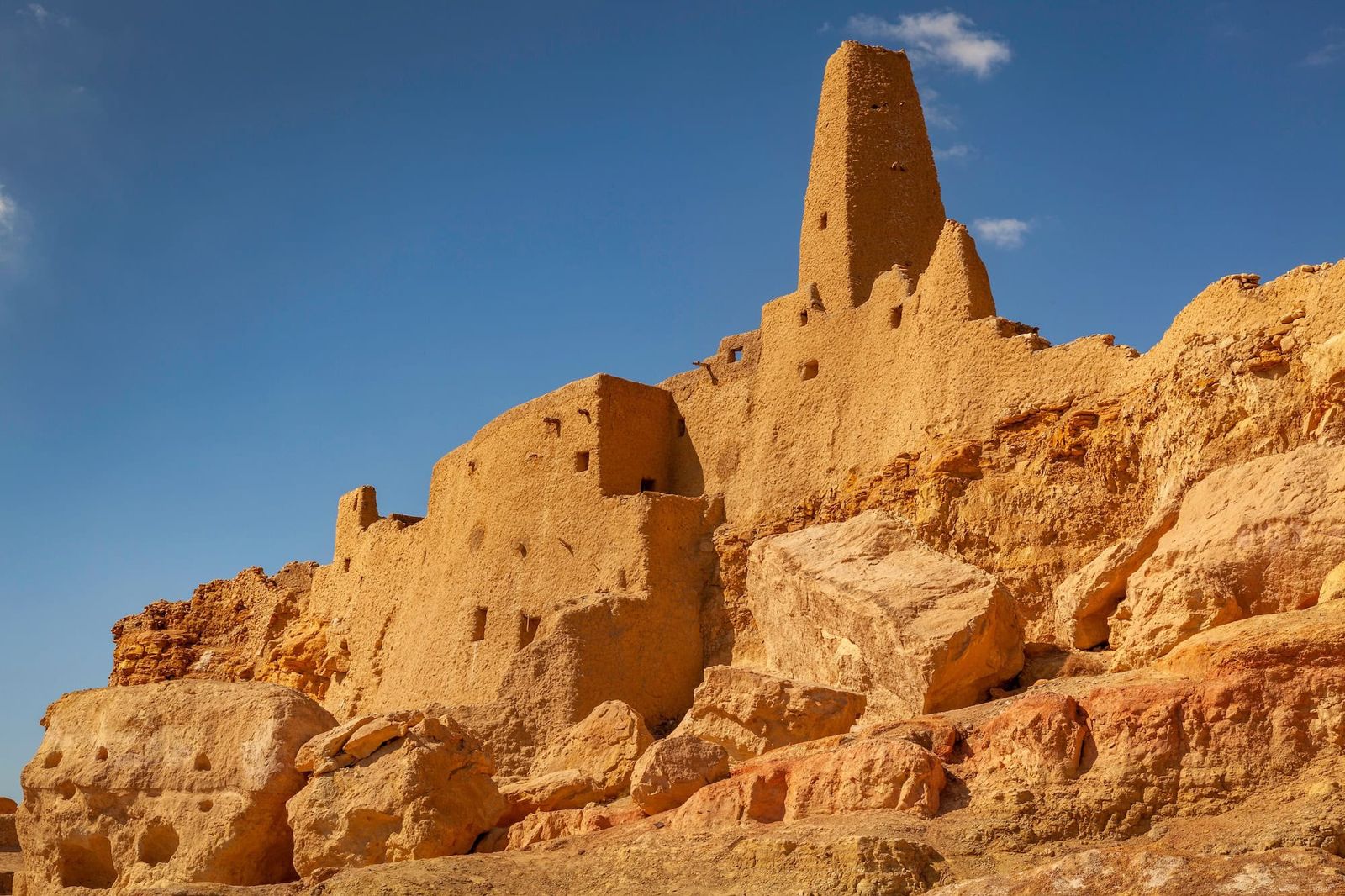
The Temple of the Oracle of Amun stands on the rocky hill of Aghurmi, about four kilometres east of the town of Siwa, above the palm groves of the oasis. Built in the sixth century BC, during the Twenty-sixth Dynasty, traditionally under the pharaoh Amasis (Ahmose II), it housed one of the most famous oracles of the ancient world. Pilgrims from Greece and across the Mediterranean consulted the god, whom the Greeks identified with Zeus as Zeus-Ammon, and the oracle's reputation rivalled that of Delphi.
Alexander and Cambyses
According to Herodotus, the Persian king Cambyses sent an army of fifty thousand men across the desert in 524 BC to destroy the oracle, which had predicted his downfall; the army vanished in a sandstorm and has never been found, giving rise to one of the most enduring legends of the Sahara. In 331 BC, after founding Alexandria, Alexander the Great made the difficult journey across the desert to consult the oracle; ancient historians report that the priests greeted him as the son of Amun, a recognition that strengthened his claim to rule Egypt and that he cherished for the rest of his life.
The temple today
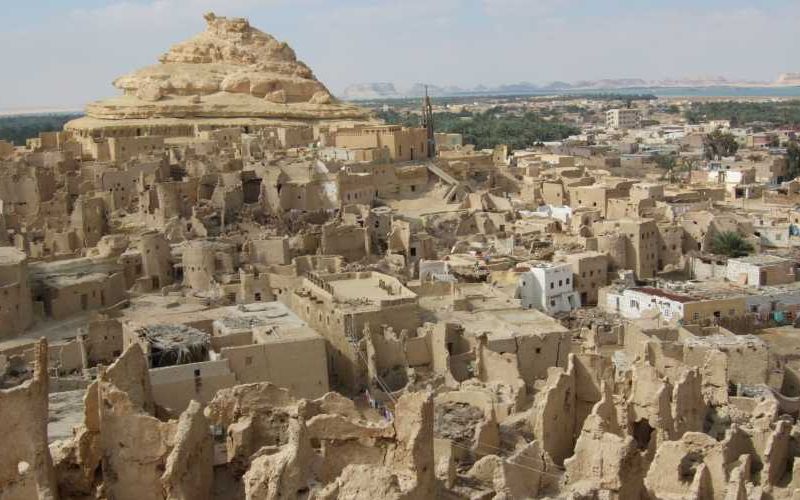
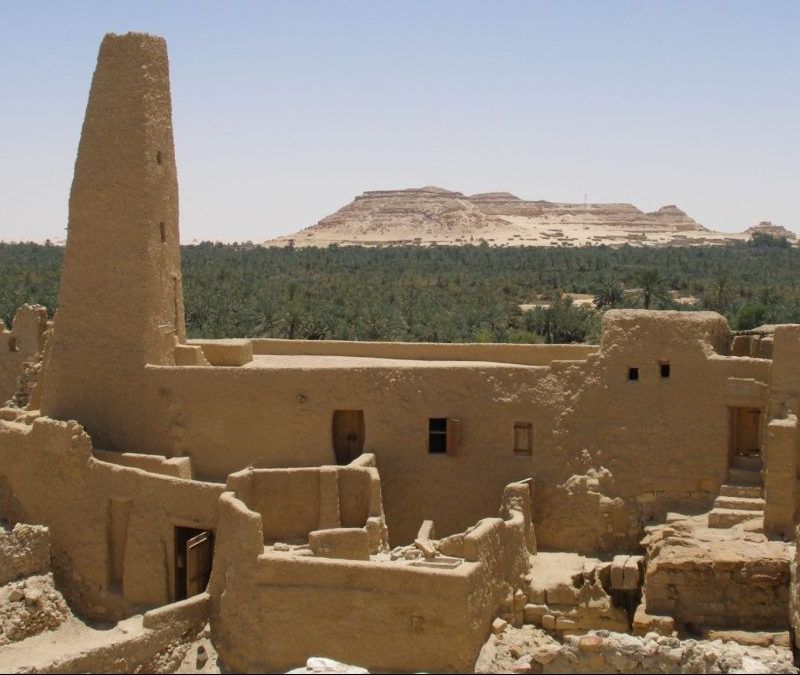
The temple, partly restored, stands within the ruins of the old fortified village of Aghurmi, built of mud and stone on the rock. Its plain stone walls enclose a courtyard, a hall and the sanctuary, with a narrow passage beside it thought by some to have allowed priests to speak as the voice of the god. From the top of the rock, the view stretches over a sea of palms, salt lakes and the desert hills around the oasis. A short distance away are the remains of the temple of Umm Ubayda.
Exhibo editorial
Climb the path up the rock of Aghurmi in the late afternoon and you are following, step by step, Alexander's route to the oracle that told him he was the son of a god. The temple itself is small and austere — bare stone walls, a dark sanctuary — but the setting is overwhelming: the crumbling mud village around it, and below, the palm groves of Siwa running to the edge of the salt lakes.
Stay for sunset. As the light goes gold over the oasis, it's easy to understand why the ancient world believed a god spoke here, and why a young conqueror crossed the desert to hear him.
Gallery
How to find it
From Siwa town, take a tuk-tuk, bicycle or car about 4 km east to the village of Aghurmi. From the ticket office at the foot of the rock, a path climbs through the ruins of the old village to the temple at the top.