
Mons Claudianus
A Roman imperial granite quarry in the Eastern Desert — fort, workers' settlement and giant abandoned columns.
The emperor's quarry
Mons Claudianus lies deep in the mountains of the Eastern Desert, inland from Safaga, between the Red Sea and the Nile. In the first to third centuries AD, it was one of the most important quarries of the Roman Empire, worked under direct imperial control for its grey granodiorite, a stone used for columns and architectural elements in Rome's grandest buildings. Columns from Mons Claudianus are thought to have been used in imperial projects of the second century, including the portico of the Pantheon in Rome and other monuments of Trajan and Hadrian.
A desert settlement
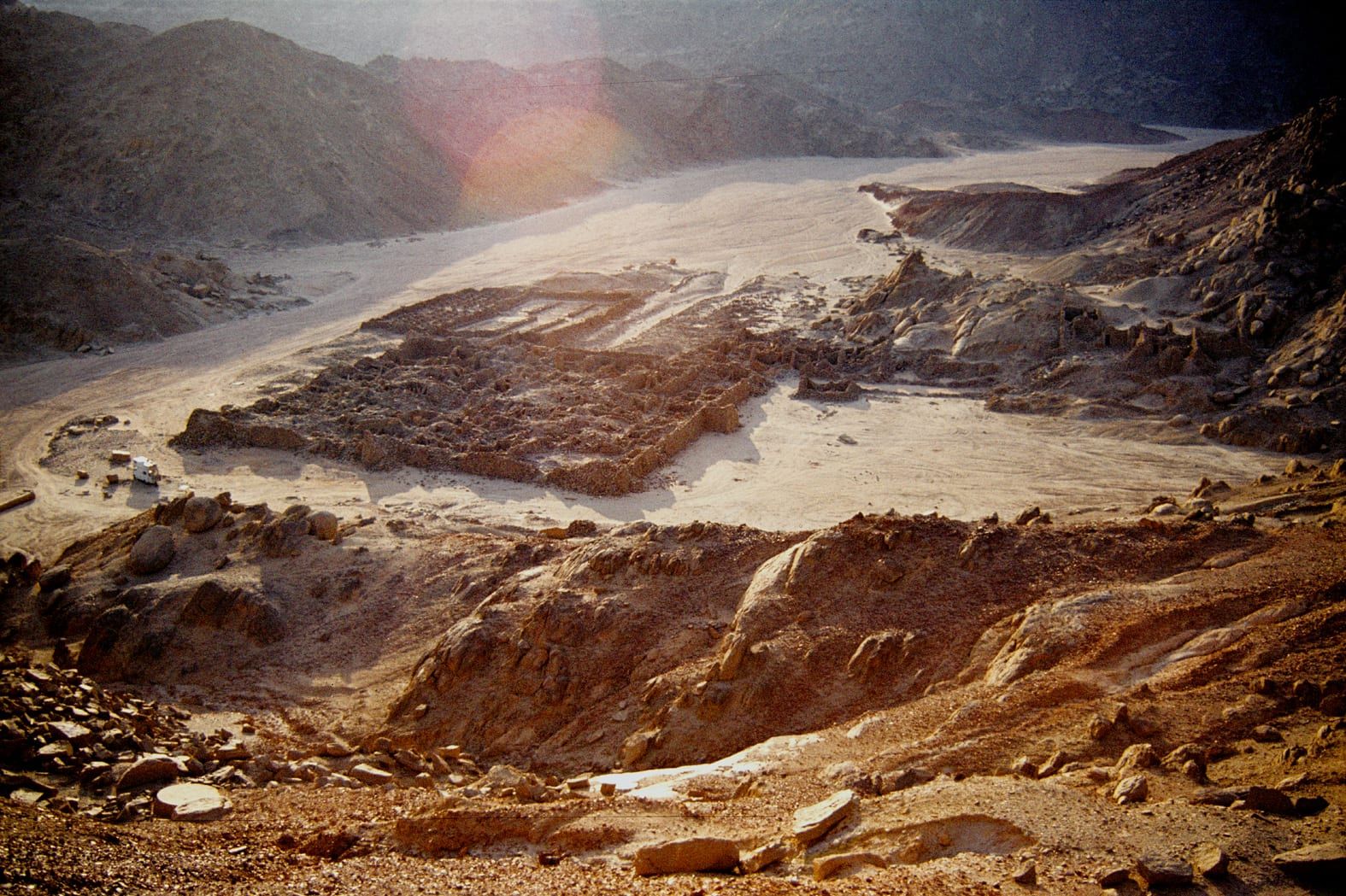
The site preserves a remarkably complete Roman quarrying settlement: a fortified camp with stone walls and towers, barracks, workshops, a bath house, a small temple dedicated to Serapis, stables, animal lines, wells and cisterns, as well as the ramps and roads used to drag huge blocks down from the quarries. Excavations in the 1980s and 1990s uncovered thousands of ostraca — notes and receipts written on potsherds — that document the daily life of the workers, soldiers and administrators who lived here, their food supplies, letters and complaints.
Abandoned columns
Around the quarries lie columns and blocks abandoned in antiquity, some broken during extraction, including a giant column around eighteen metres long, still lying where it cracked. The site is reached by four-wheel-drive vehicle across the desert, usually on excursions from Hurghada or Safaga.
Exhibo editorial
Far out in the desert mountains, past wadis where nothing seems to grow, you reach a Roman fort with its walls still standing — and beyond it, lying on the hillside, an enormous granite column, cracked during cutting and left behind nearly two thousand years ago. Stone from these hills ended up holding up some of Rome's most famous buildings.
It's a long, dusty trip, best with a reliable desert guide, but few places show so clearly how far the Roman Empire reached, and what it took to build it. Bring water and a hat, and walk up to the quarries for the view.
Gallery
How to find it
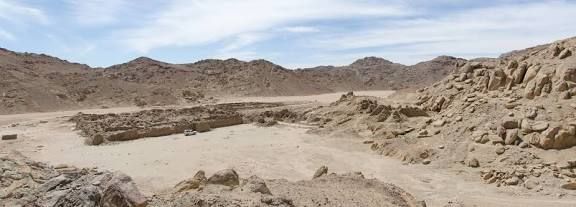
Mons Claudianus lies inland from Safaga, off the Safaga–Qena road, reached by road and desert track. Visits are made by 4x4 with a local guide, usually on organised excursions from Hurghada or Safaga; from the fort, paths lead up to the quarries and the abandoned columns.