
Kom Ombo Temple and Crocodile Museum
A rare double temple of Sobek and Haroeris on a bend of the Nile, with a museum of mummified crocodiles.
Two gods, one temple
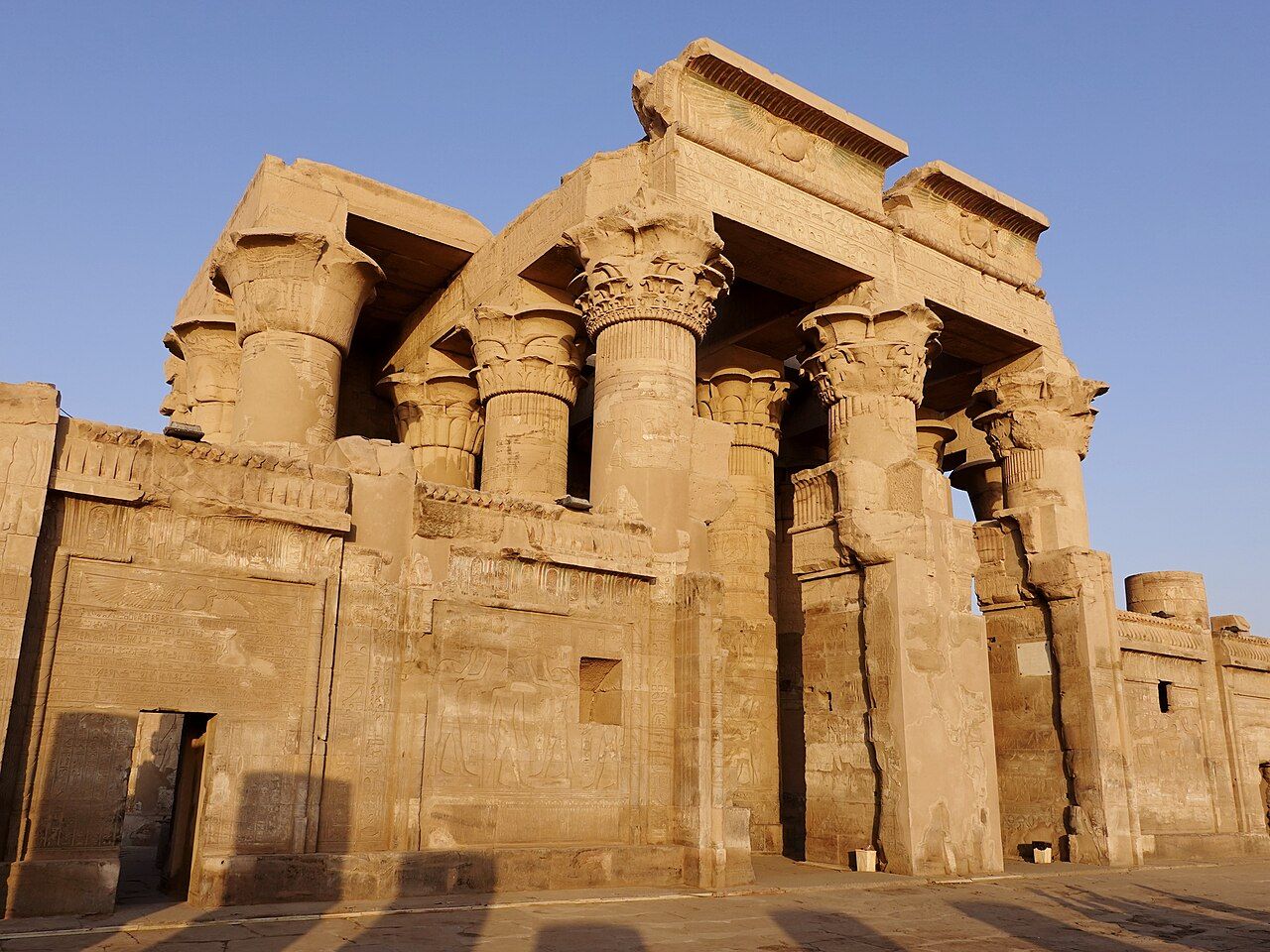
The temple of Kom Ombo stands on a low hill above a bend of the Nile, about 45 kilometres north of Aswan. It is unique among Egyptian temples in being a double temple, perfectly symmetrical along its main axis: the southern half is dedicated to Sobek, the crocodile god of fertility and creation, with his consort Hathor and their son Khonsu; the northern half to Haroeris (Horus the Elder), the falcon god, with his companions. Two parallel entrances, two sets of halls and two sanctuaries run side by side, so that the two divine families shared a single building. The temple was built under the Ptolemies, mainly in the second and first centuries BC, with decoration added under Roman emperors.
Reliefs and details
The columns and walls preserve finely carved reliefs, many still with traces of colour, especially on the ceilings of the hypostyle halls. A well-known relief on the inner enclosure wall shows a set of instruments that has often been interpreted as surgical or medical tools, together with scenes of childbirth; though their exact meaning is debated, they are among the most discussed images of the temple. The complex also includes a nilometer — a well with steps used to measure the height of the Nile flood — and a small chapel of Hathor.
The crocodile museum
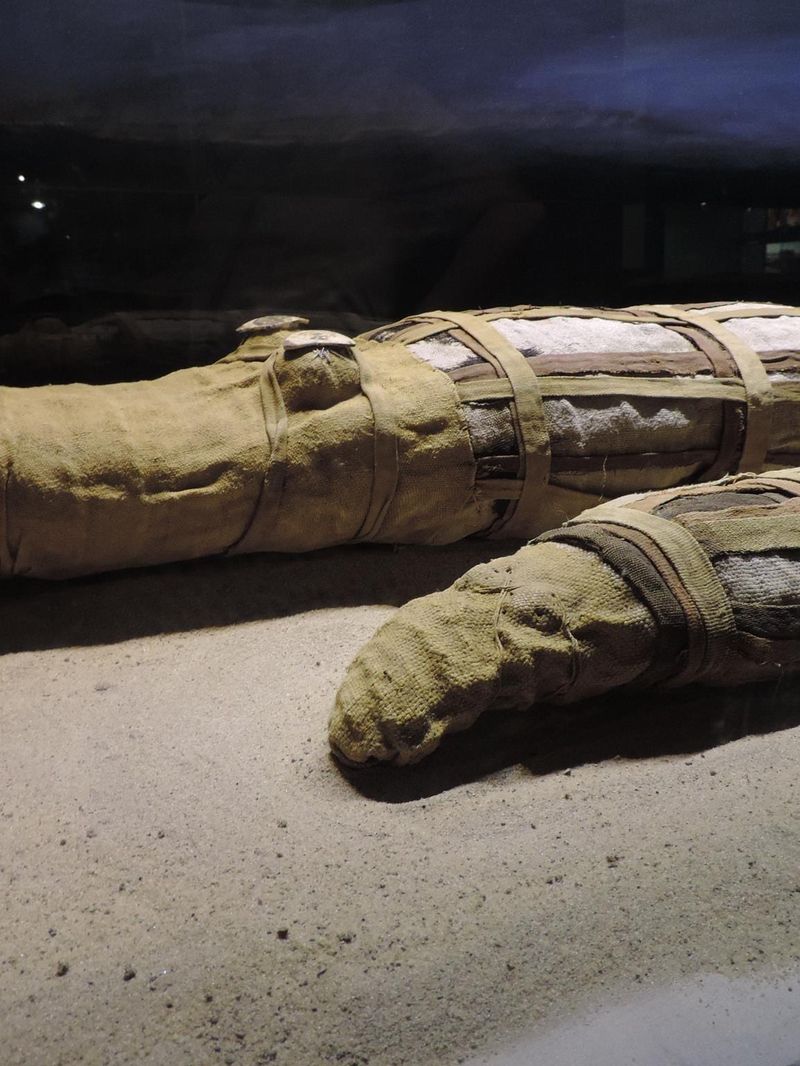
Sacred crocodiles were kept in a pool at Kom Ombo and, after death, mummified and buried in a nearby cemetery. The Crocodile Museum, opened beside the temple in 2012, displays a collection of these crocodile mummies, along with crocodile eggs and embryos, coffins and statues of Sobek, explaining the god's cult.
Visiting
Kom Ombo is a classic stop on Nile cruises and is particularly beautiful in the evening, when the temple is lit and stays open late.
Exhibo editorial
Kom Ombo is best seen the way the cruise boats see it: at dusk, glowing gold on its hill above the river, with the Nile curving around below. Walk the two parallel axes, one for the crocodile god, one for the falcon, and you feel the strange, satisfying symmetry of a temple built for two.
Then step into the little museum next door and meet the crocodiles themselves — mummified, wrapped, laid out in rows, some tiny, some huge. It is one of the most memorable small museums in Egypt, and children usually love it as much as the temple.
Gallery
How to find it
The temple stands on the riverbank about 4 km from the town of Kom Ombo and 45 km north of Aswan, next to the Nile cruise landing. From the visitor centre, walk up to the temple forecourt; the twin entrances are side by side, with Sobek's half on the right. The Crocodile Museum is beside the temple near the entrance.