El-Hawawish Tombs
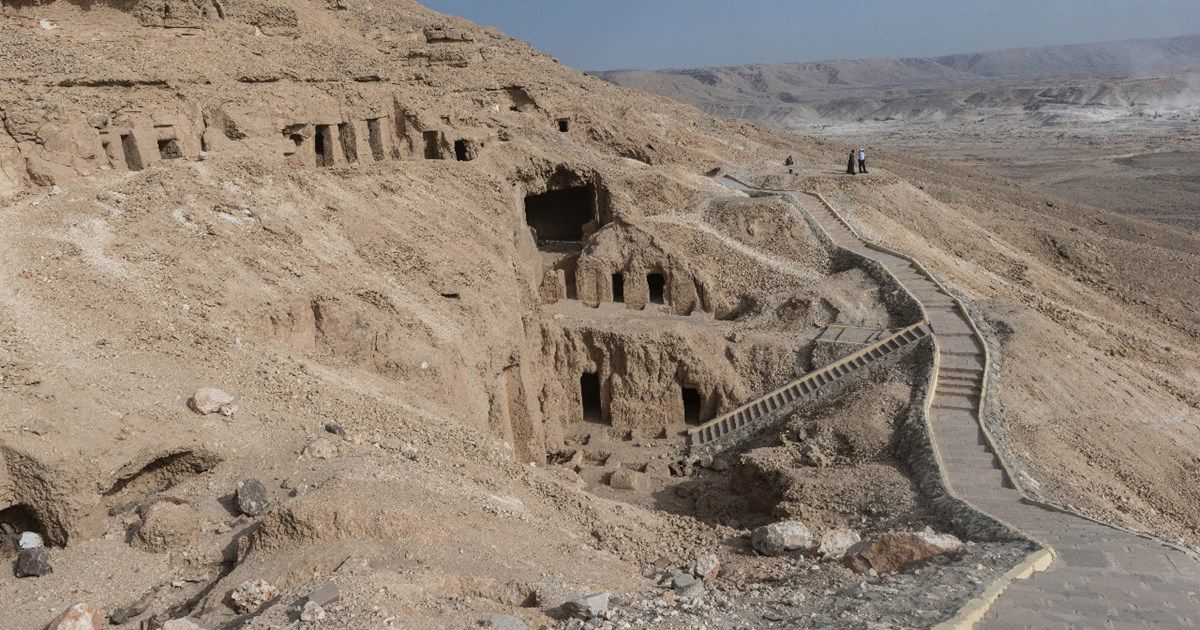
Old Kingdom rock tombs of the governors of Akhmim, cut into the hills above the town.
The necropolis of Akhmim
The necropolis of El-Hawawish lies in the hills on the eastern edge of the town of Akhmim, ancient Ipu or Panopolis, in Sohag Governorate. It contains several hundred rock-cut tombs, the most important of which belonged to the nomarchs (governors) and officials of the ninth Upper Egyptian nome during the Old Kingdom, especially the Fifth and Sixth Dynasties, in the late third millennium BC.
The tombs
The tombs, cut into the limestone cliff, contain chapels decorated with painted reliefs showing the deceased and his family, offering scenes, and episodes of daily life — agriculture, crafts, fishing and hunting — in a provincial style that differs from the art of the royal court at Memphis. They provide important evidence for the administration and culture of the provinces at the end of the Old Kingdom. The necropolis was surveyed and published in detail by the Australian Centre for Egyptology in the late twentieth century.
Visiting
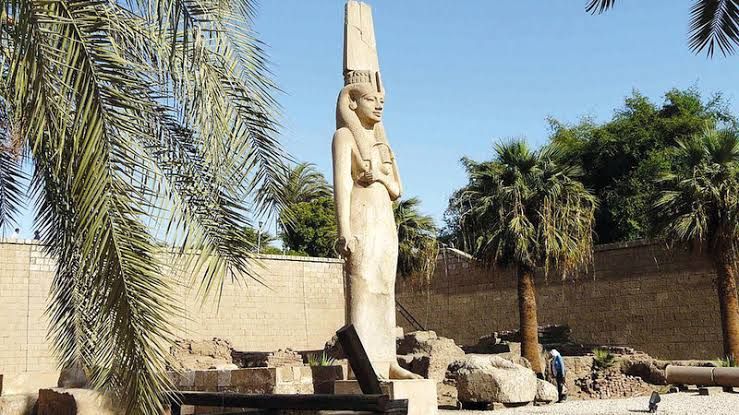
A few tombs are open to visitors. The site is often visited together with the open-air museum of Akhmim, with the colossal statue of Meritamun, and the monasteries near Sohag.
Exhibo editorial
The tombs of El-Hawawish are a reward for the curious: a short climb into the hills above Akhmim, a guardian with a key, and then small chapels where the governors of a distant province had themselves painted in the style of the age of the pyramids, but with a local accent.
It's a quiet, rarely visited site with a view over Akhmim and the Nile valley. Combine it with the statue of Meritamun in town and the monasteries near Sohag for a full day.
How to find it
El-Hawawish lies in the hills a few kilometres east of the centre of Akhmim; ask a taxi for Maqabir al-Hawawish. From the ticket office at the foot of the hill, a path climbs to the open tombs.