
Directory listing — not yet managed by the museum. Spotted something wrong? Suggest an edit →
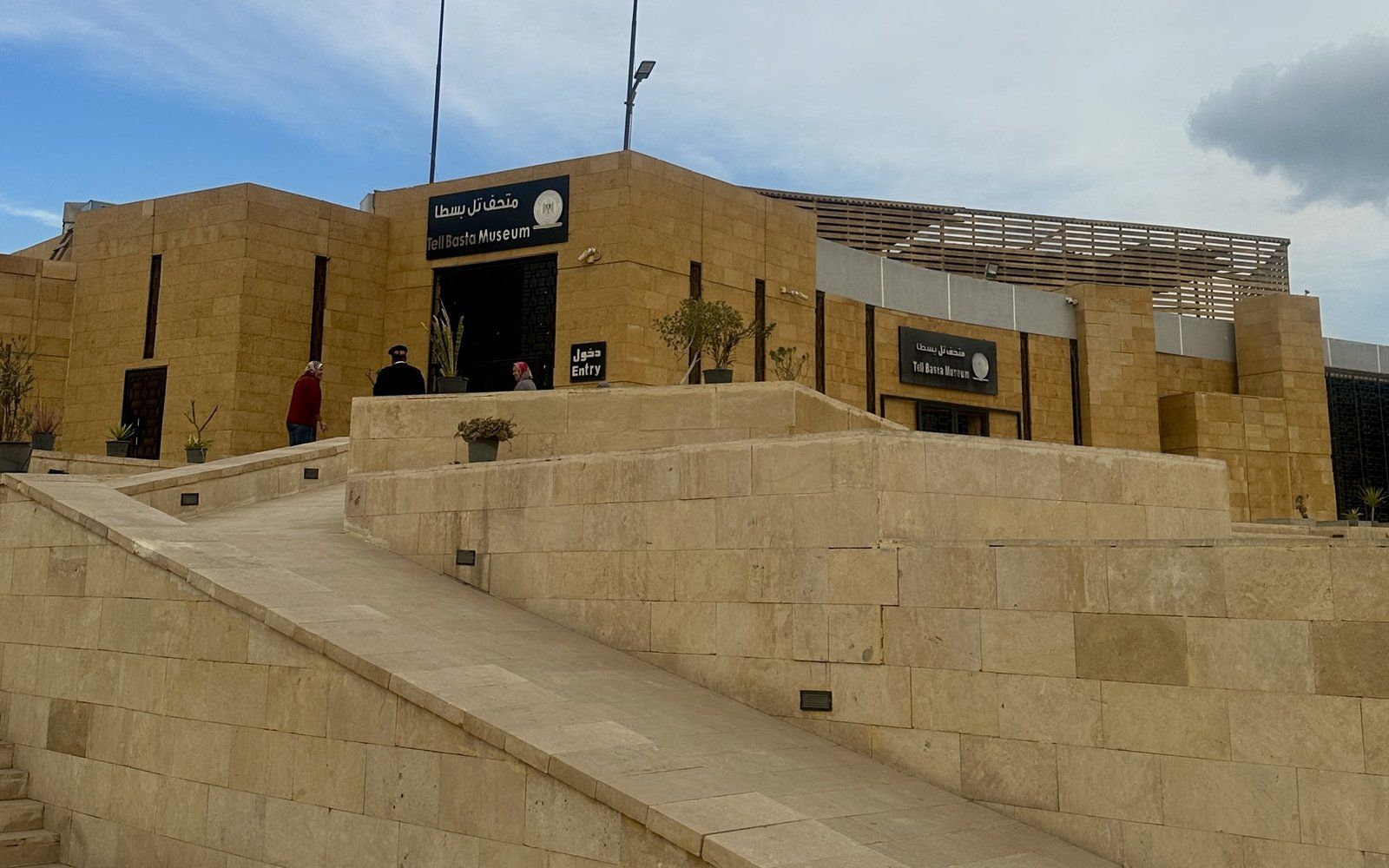
Tell Basta Museum
Finds from Bubastis and other excavations in Sharqia, with a focus on the goddess Bastet
About
The site museum of Bubastis, the ancient city of the goddess Bastet, with finds from excavations across Sharqia.
Tell Basta Museum is the site museum of Bubastis, one of the great cities of ancient Egypt, on the southern edge of Zagazig in Sharqia governorate. It stands inside the archaeological area of Tell Basta and shows objects found in excavations across the governorate. The Ministry of Tourism and Antiquities opened it on 3 March 2018. The building covers about 2,000 square metres on a single floor. The museum took twelve years to finish. Construction began in 2006 and the building was complete by 2010, when the project stopped. Work resumed at the end of 2017 with new showcases, lighting and panels on the history of Sharqia. Minister of Antiquities Khaled El-Enany and Sharqia governor Khaled Saeed inaugurated it, with free entry for the first week. The ancient city was called Per-Bastet, the house of Bastet. It was the capital of the 18th nome of Lower Egypt in the New Kingdom and the capital of the whole country under the 22nd Dynasty, around 945 to 715 BC. It sat on the Pelusiac branch of the Nile near the routes to Sinai, which made it a trading town as well as a religious centre. Bastet was worshipped here as a protector and a goddess of fertility. Until the first millennium BC she was shown as a lioness. Later she became the cat goddess known today and the cats sacred to her were mummified and buried in a cemetery at the site. The collection follows the region from the Pharaonic period to Roman times. There are statues of kings and gods, among them a quartzite king wearing the nemes headdress. One showcase is devoted to Bastet. Osiris, Isis and Thoth have their own displays, with a section on writing and the scribe. Terracotta figures made from local clay in the Greek and Roman periods sit beside canopic jars, shabtis, tombstones and offering tables. Daily life is shown through pottery, oil lamps, incense burners, alabaster perfume bottles, bronze mirrors, coins and jewellery in gold, glass and stone. Outside the museum lies the rest of Bubastis: the granite blocks of the temple of Bastet excavated by Édouard Naville in 1887 to 1889, the temple of Pepi I found by Labib Habachi in 1939, the remains of a palace of Amenemhat III and the standing statue of Queen Meritamun, daughter and wife of Ramesses II. Christian tradition holds that the Holy Family stopped here on its way into Egypt. The museum runs a programme of short temporary exhibitions tied to dates in the calendar, as well as lectures, school visits and workshops. It has a ramp, wheelchairs and Braille cards for blind visitors.
Why this museum matters
Exhibo editorial
Bastet arrives in most people's heads as a sleek bronze cat. In Bubastis she started as a lioness. Only in the first millennium BC did the protector of this town shrink to the size of a house cat. Then the real cats were mummified by the thousand and buried in a cemetery a short walk from this building. That is the reason to come to Zagazig rather than meet Bastet in a big Cairo hall. Here she is at home. Leave the museum and you walk among the red granite of her temple, with the statue of Queen Meritamun standing over the ruins. Inside, give a few minutes to the terracottas. They were made from local clay in the Greek and Roman centuries, cheap and quick. They show the town the way its people saw it, not the way its kings wanted it remembered. The small temporary displays change with the calendar: the ancient New Year in January, Egyptian Women's Day in March. Ask what is on at the desk. One ticket covers the museum and the archaeological site.
Visit
Hours, tickets, and directions for Tell Basta Museum.
Address
Tell Basta archaeological area, Zagazig, Sharqia
Opening hours
- Monday
- 09:00 – 17:00
- Tuesday
- 09:00 – 17:00
- Wednesday
- 09:00 – 17:00
- Thursday
- 09:00 – 17:00
- Friday
- 09:00 – 17:00
- Saturday
- 09:00 – 17:00
- Sunday
- 09:00 – 17:00
Daily 9:00 to 17:00 according to the Ministry of Tourism and Antiquities. The ministry's printed brochure gives 8:00 to 17:00 with the ticket office closing at 16:00. One ticket covers the museum and the Tell Basta archaeological site.
Admission
- Foreign adult — E£150
Museum and archaeological site
- Foreign student — E£75
Museum and archaeological site
- Egyptian adult — E£10
- Egyptian student — E£5