

Directory listing — not yet managed by the museum. Spotted something wrong? Suggest an edit →

Gropius Bau

About

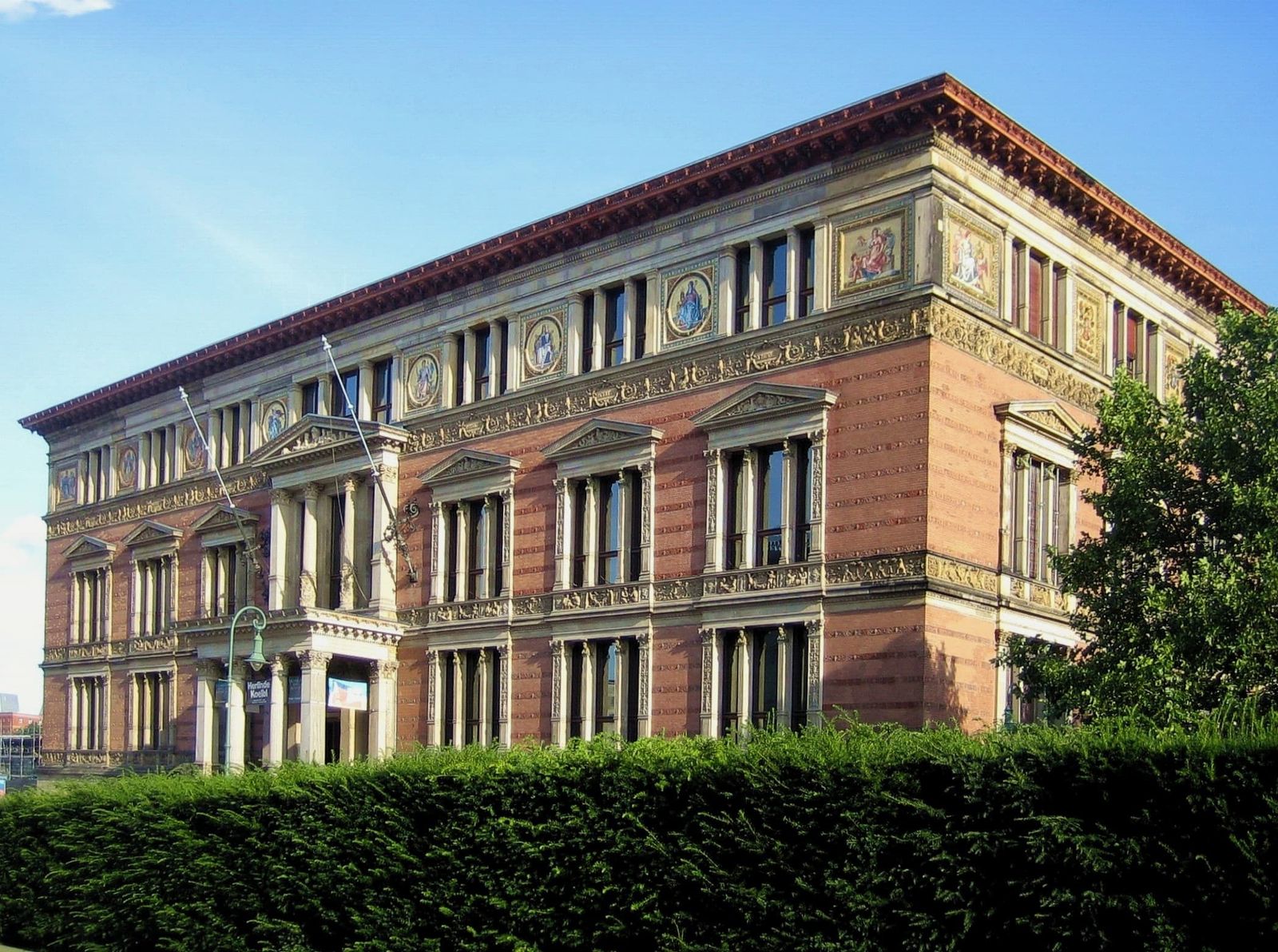
Gropius Bau is one of Berlin’s leading exhibition venues for international contemporary art and cultural history, run by the Berliner Festspiele. The Renaissance-revival building on Niederkirchnerstraße was designed by Martin Gropius and Heino Schmieden and opened in 1881 as a museum of applied arts; heavily damaged in the Second World War, it was restored and reopened in 1981 and has been a listed monument since 1966. Without a collection of its own, it stages large temporary exhibitions alongside performances and a free children’s play space.

Visit

Hours, tickets, and directions for Gropius Bau.

Address

Niederkirchnerstraße 7, 10963 Berlin, Germany

People

Artists

Artists associated with the museum's collection and programme.

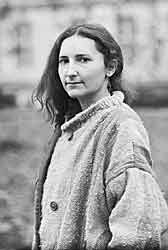
Gabriele Stötzer

Gabriele Stötzer

Gabriele Stötzer (born 1953 in Emleben) is a German writer and artist. While studying in Erfurt she collected signatures in November 1976 against the expatriation of Wolf Biermann; she was arrested by the Stasi and sentenced to a year in prison, which she served in Hoheneck, where she resolved to become a writer. Refusing to leave for the West, she wrote autobiographical and experimental texts seeking a specifically female mode of expression, ran the Galerie im Flur in Erfurt until it was shut down by the Stasi in 1981, and in 1984 co-founded the Künstlerinnengruppe Erfurt. Her work spans writing, performance, Super 8 film, graphics and weaving. In December 1989 she was among the initiators of the first occupation of a Stasi headquarters in the GDR, in Erfurt.

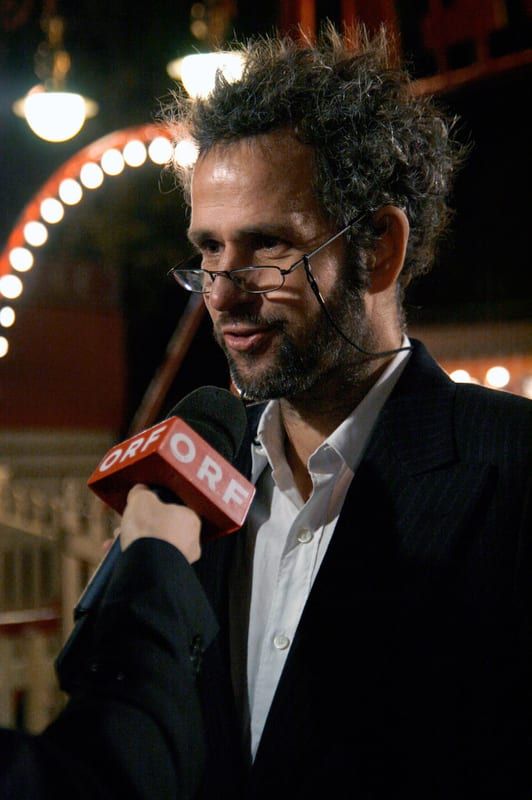
Christoph Schlingensief

Christoph Schlingensief

Christoph Schlingensief (1960–2010) was a German theatre director, performance artist and filmmaker, born in Oberhausen. Starting out as an independent underground filmmaker and assistant to Werner Nekes, he made his feature debut with Tunguska – Die Kisten sind da! (1984) and later staged productions for theatres and festivals, often amid public controversy, including actions such as Chance 2000. In his final years he staged Wagner’s Parsifal at the Bayreuth Festival and worked at several opera houses. In 2011 the German Pavilion presenting his work was awarded the Golden Lion for best national participation at the Venice Biennale.

Vlassis Caniaris

Vlassis Caniaris

Vlassis Caniaris (1928–2011) was a Greek painter, regarded as one of the leading artists of Greek modernism and part of the so-called Generation of the Diaspora. Born in Athens, he abandoned medical studies in 1950 to study at the Athens School of Fine Arts and worked with Yannis Tsarouchis on stage design. He lived in Rome from 1956, where he co-founded Gruppo Sigma in 1959, and in Paris from 1961, where he connected with the Nouveaux Réalistes and Pierre Restany. Forced to leave Greece in 1969 because of his involvement in the resistance to the military dictatorship, he settled in West Berlin in 1973 as a DAAD fellow and devoted himself to the theme of immigrants and migrant labour. In 1975 he became a professor at the National Technical University of Athens; he died in Athens in 2011.

Eduardo Paolozzi

Eduardo Paolozzi

Sir Eduardo Paolozzi (1924–2005) was a Scottish artist known for his sculpture and graphic works, widely considered one of the pioneers of Pop art. Born in Leith, Edinburgh, to Italian immigrants, he studied at Edinburgh College of Art and the Slade School of Fine Art and worked in Paris from 1947 to 1949, where he met Giacometti, Arp, Brâncuși, Braque and Léger. In 1952 he was a founder of the Independent Group, regarded as the precursor of British Pop art. He had a long association with Germany: he worked in Berlin from 1974 on the DAAD Berlin Artist Programme, was a professor in Cologne from 1977 to 1981 and later taught sculpture at the Akademie der Bildenden Künste in Munich.

Eduardo Arroyo

Eduardo Arroyo

Eduardo Arroyo (1937–2018) was a Spanish painter and graphic artist, also active as an author and set designer, and regarded as one of the most important exponents of politically committed realism. He trained as a journalist in Madrid, graduating in 1957, before turning to painting. His colourful works sit at the crossroads of nouvelle figuration, figuration narrative and Pop art. His play Bantam premiered at the Residenztheater in Munich in 1986, and his work has been shown at institutions including the Museo Nacional Centro de Arte Reina Sofía in Madrid.

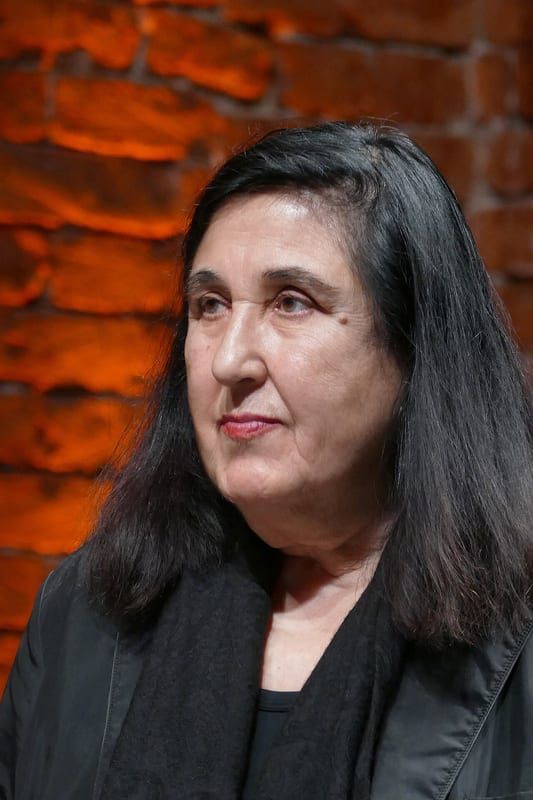
Emine Sevgi Özdamar

Emine Sevgi Özdamar

Emine Sevgi Özdamar (born 1946 in Malatya, Turkey) is a writer, director and actress of Turkish origin who has lived and worked in Germany since 1976. She grew up in Istanbul and Bursa and first travelled to Berlin in 1965, where she stayed as a guest worker. After returning to Germany in 1976 she worked as a director’s assistant to Benno Besson at the Volksbühne. Her work draws on her experiences between Turkey and Germany; in 1991 she won the Ingeborg Bachmann Prize for chapters of her novel Das Leben ist eine Karawanserei, becoming the first author of Turkish origin to receive it.

Sohrab Shahid Saless

Sohrab Shahid Saless

Sohrab Shahid Saless (1944–1998) was an Iranian film director and screenwriter, one of the most celebrated figures in 20th-century Iranian cinema and a pioneer of the Iranian New Wave. His feature A Simple Event (1973) and Still Life (1974), which won a prize at the 1974 Berlinale, established his reputation. From 1976 he worked in Germany and became an important part of the film diaspora there, making films including Time of Maturity, Diary of a Lover, Order (1980) and Utopia (1983), which competed at the Berlin International Film Festival. He died in the United States in 1998.

Antonio Skármeta

Antonio Skármeta

Antonio Skármeta (1940–2024) was a Chilean writer, screenwriter and director, born in Antofagasta. He taught literature at the University of Chile from 1967 until the 1973 military coup, after which he left Chile, living in Buenos Aires and later West Berlin. His 1985 novel Ardiente paciencia (Burning Patience) inspired the Academy Award-winning film Il Postino. He returned to Chile in 1989, hosted a popular television programme on literature and the arts, served as Chile’s ambassador to Germany from 2000 to 2003, and received the Chilean National Literature Prize in 2014.

Harun Farocki

Harun Farocki

Azade Köker

Azade Köker

Aras Ören

Aras Ören

Aras Ören (born 1939 in Istanbul) is a writer of Turkish origin who moved to Berlin in 1969. He was an editor at Sender Freies Berlin and head of the Turkish editorial team of Radio Multikulti. He writes in Turkish and helps translate his works into German; they include Was will Niyazi in der Naunynstraße (1973), Privatexil (1976) and Berlin-Savignyplatz (1995). He received the Adelbert von Chamisso Prize in 1985 and has been a member of the Academy of Arts, Berlin, since 2012.