
Paris · 13/10/2026
Yinka Shonibare: The Wind, the Earth and the Fire
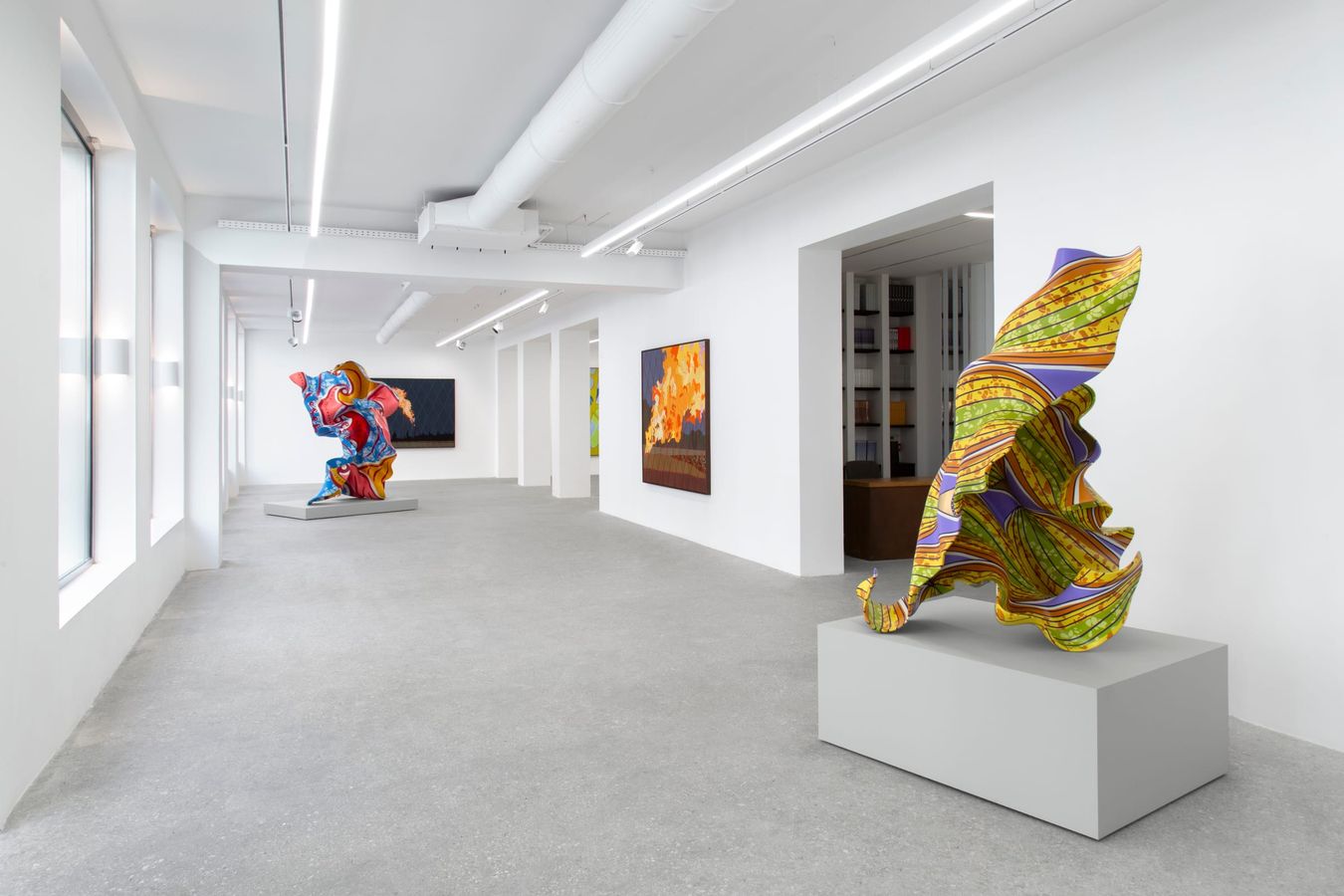
Mennour presents The Wind, the Earth and the Fire, Yinka Shonibare’s first solo exhibition in Paris, at 5 rue du Pont de Lodi. The exhibition brings several ongoing bodies of work into dialogue – new quilts, hand-painted bronzes and textile sculptures – and affirms the multidisciplinary artist as one of the leading voices exploring postcolonialism and hybridity in contemporary art. Born in London and raised in Lagos, Shonibare has always experienced the world by moving between, and in some way bridging, distinct cultures. Decolonial studies continue to show that defining identity and belonging is far more complex than anything a national archive can contain. By tracing the history of Dutch wax textiles, Shonibare uncovers the many layers embedded in them and shows how impossible it is to pin down any artefact as authentic. Rooted in Indonesian textile traditions, hand-crafted wax-resist fabric was appropriated by Dutch colonisers, who began mass-producing it in the 1850s. It failed commercially in Indonesia, where buyers rejected the lower quality of European factory production, but found a thriving market along the colonial trade routes of West Africa. There, embraced by local communities in the post-independence era of the 1960s, it was adapted with regional colours and motifs and ultimately adopted as traditional dress. In his Wind Sculpture series, Shonibare makes bronze sculptures that mimic Dutch wax fabric billowing in the wind. Playing on the contradiction between the heaviness of metal and the weightlessness of cloth, they capture fabric in motion, as if gently swaying in a breeze. They also evoke the movement of people across the seas – driven by climate change, trade, conflict, economic hardship or simple curiosity. The flow of air becomes a monument to resilience, and the question remains: can displacement take on tangible form? A close attention to ecology runs through Shonibare’s practice, in particular to the damage colonial extraction has inflicted on natural habitats and regional landscapes. Applying the tradition of landscape painting to quilt-making, his Nature Works depict scenes of fire that appear strikingly beautiful and seemingly innocent. Mythology and religion have long linked fire with renewal and growth, but recent history shows it as a ravaging, destructive force – a tragic consequence of global warming and conflict. Despite their seductive palette and the harmonious arrangement of soft fabrics, the burning gas flares and cash crops in these works point to the devastating impact of industrialisation and Western colonisation – exploitative activities that continue to burn through the natural world, quite literally adding fuel to the fire. Shonibare’s textile works draw together diverse threads of modernism: his designs allude to Pablo Picasso’s harlequin paintings and to the bold colour variations and dynamic asymmetries of African American quilting collectives. The presence of ancestral masks recalls the foundational influence of African artefacts on Western artists such as Henri Matisse and Amedeo Modigliani. These masks watch over endangered species of birds, monkeys and flowers native to Africa. At once a celebration of local fauna and flora and an urgent warning to save them from extinction, the works are tinged with nostalgia for a time when humanity respected biodiversity – the foundation of a mindful, harmonious society. Drawing on the multiple meanings of images and artefacts, the exhibition challenges one-sided thinking and highlights the impact of colonisation on indigenous peoples and on nature. As a closing note, Refugee Astronaut XII stands tall at the back of the gallery, a stark reminder of the global refugee crisis. His clothing recalls the colonial extraction that continues to this day; equipped to navigate ecological and humanitarian crises, this hybrid messenger carries his worldly possessions on his back in search of a safer planet on which to land.