
Paris · 10/10/2026
Pascal Convert
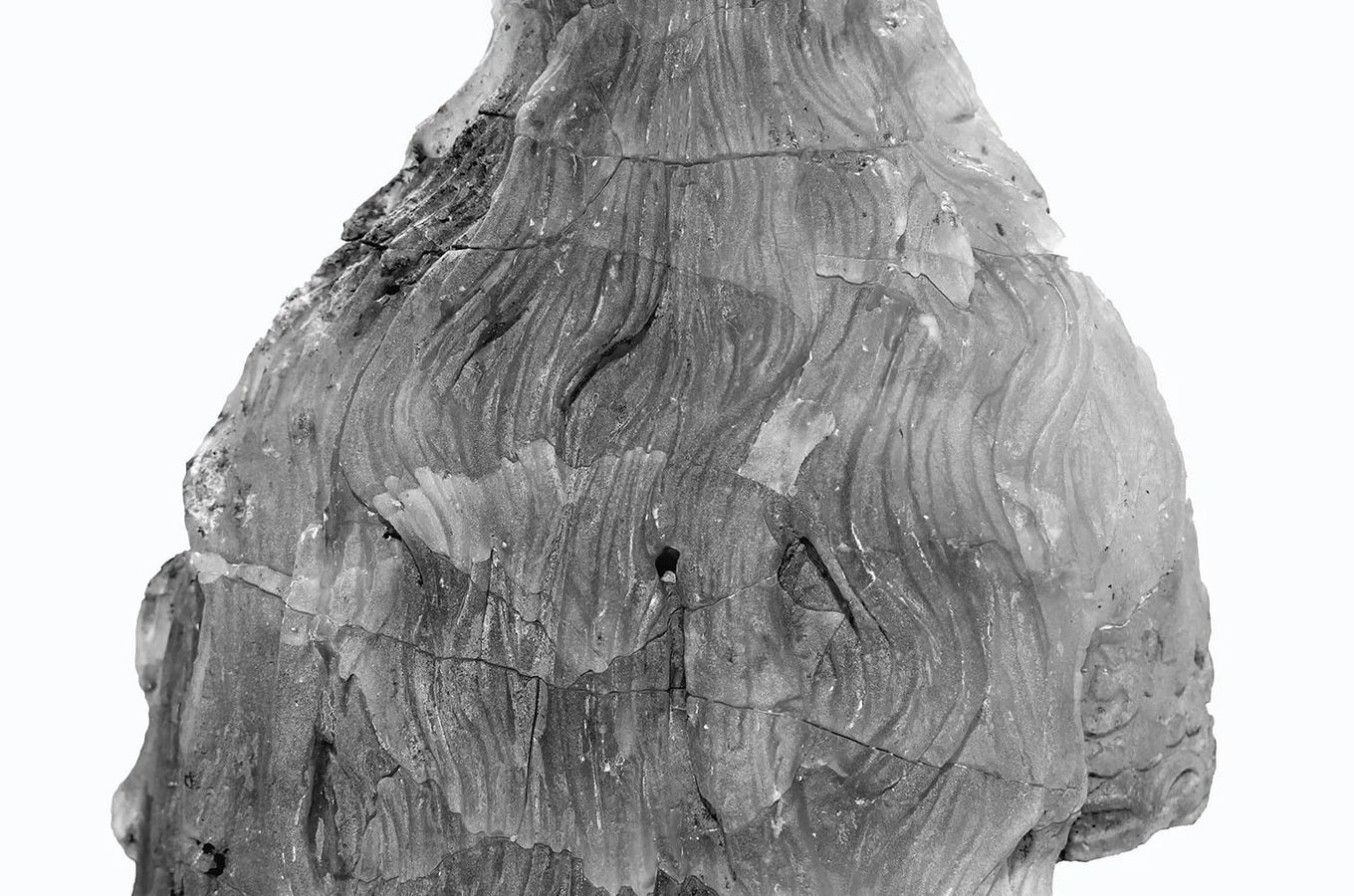
Galerie Christophe Gaillard presents Pascal Convert’s first solo exhibition at its Paris space. The artist introduces it with a text he calls an ode to joy. Imagine that art were child’s play, he writes – and imagine a child, white-haired from birth, who knows that their story will end where it began, at a geometric point with no fixed location; a child who has just spoken of someone who has died, perhaps themselves. Many people look after the living, proud and laughing out loud. Convert counts himself among the few who look after the dead, met each morning by silence: a bird honing its green cry in a tree, the water gently drawing the sunrise towards a sea that rises like an immense tombstone. It is here, governed by the rhythm of the tides, that the legend of glassmaking was born – an alchemy in which fire meets sand like the hope of resurrection. Master glassmakers call red glass “blood of Christians”, in memory of the Passion of Christ, stripped of his divinity to become a poor, suffering man. Mary Magdalene, a musician of silence, keeps watch over him, head bowed, her pearl-grey hair dipped into the rippling waters of the Jordan that envelop the baptised figure. Before her, the sand turns greyish, and from it an immense geoglyph emerges, its graphite coating so glassy it could break teeth. Its dozens of straight and curved lines are the surviving traces of a sitting room lined with glass-covered woodwork – l’Appartement de l’artiste (The Artist’s Apartment) – which, once open to the returning light, has now closed in on itself like a book. Laid out as a floor surrounded by crystal candelabra, it becomes a celebration of silence. Above it, an embroidered shroud from Afghanistan, the graveyard of empires, hangs like a colossal map pointing the way through this geometric labyrinth. A few steps down and across a paved courtyard, visitors enter a space covered in ashen crosses: fragile remnants from the walls of Armenian monasteries, gardens of souls not yet destroyed by the Azerbaijani army when destruction returned – from Nagorno-Karabakh to Ukraine, Gaza and beyond. At its centre, sixteen crystallised books tell the History of France (Histoire de France), a country that has known monarchy, empire, revolution and republic, and now faces its destiny, its past behind it and its future yet to unfold. On a glass photograph, the resistance heroine Lucie Aubrac appears as a child with a diaphanous, silent gaze – one who knows that we must face what is coming, even when darkness reigns, and that in times of resistance art remains an ode to joy.