New York · 30/10/2026
Grace Carney: To the Bone
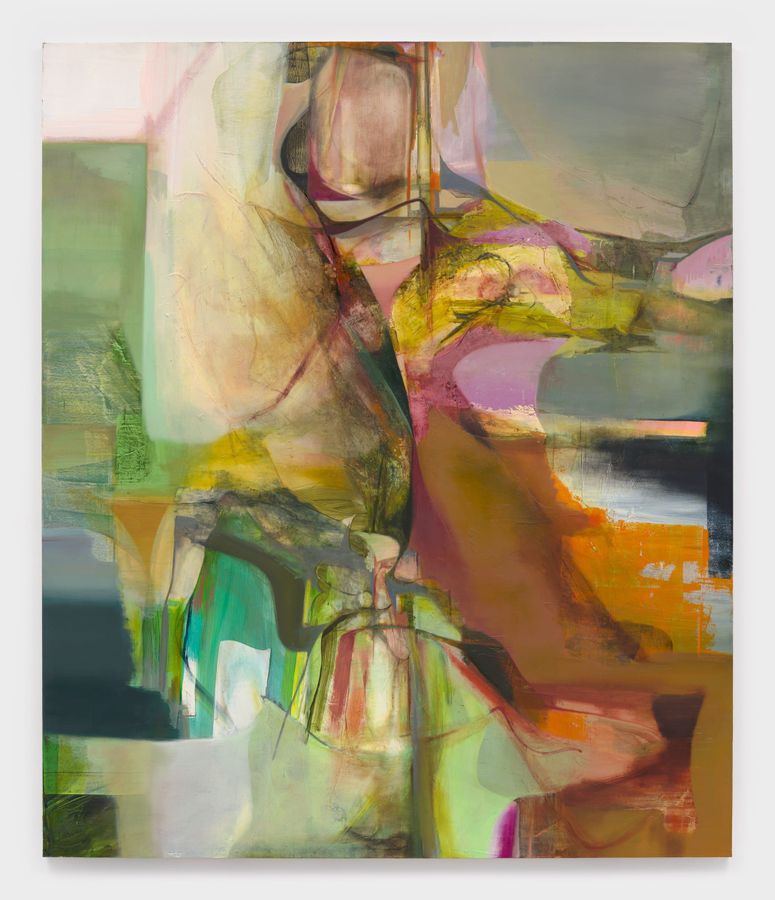
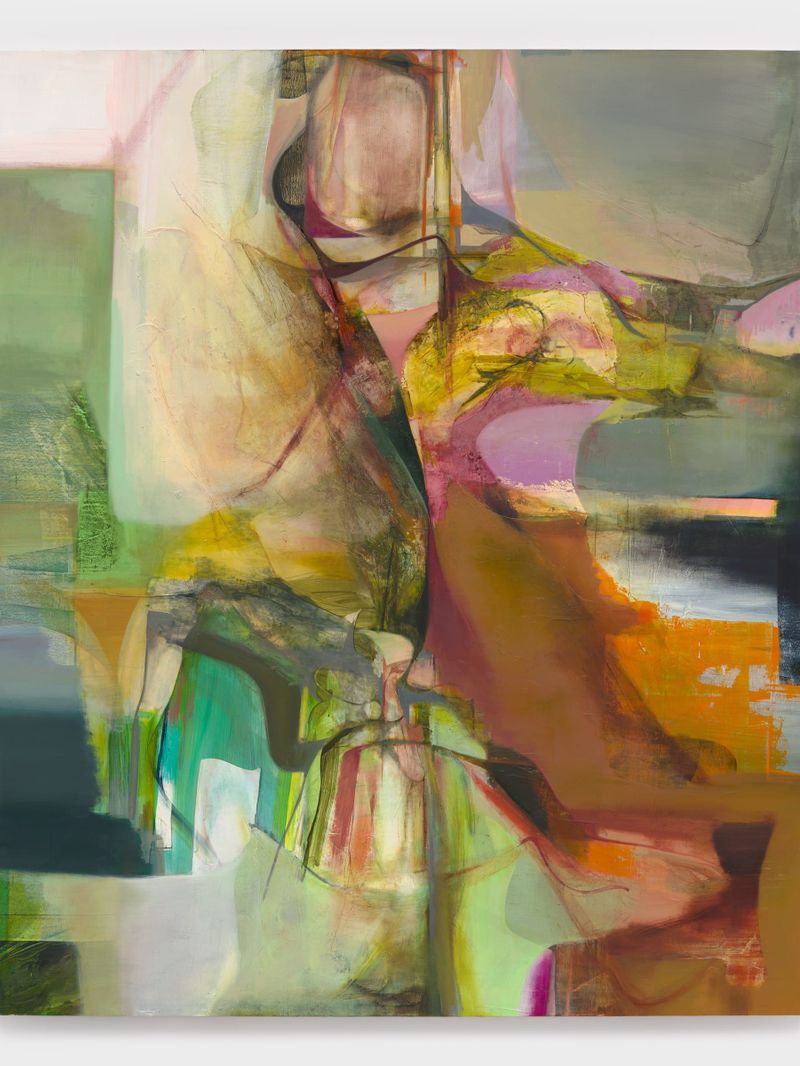
To the Bone is Grace Carney's second solo exhibition with P·P·O·W. Carney begins each painting from a place of discomfort or self-imposed constraint, treating color, light, and composition like an unruly orchestra. Over months, and sometimes years, she labors over each surface with her hands and fingers, brushes, palette knives, and printing tools, balancing opposing forces within the canvas and bringing harmony to moments of dissonance. Drawing on Baroque and Renaissance painting, literature, daily life, and her own body, she grapples with personal narratives, memories, and relationships in a spirit of bold vulnerability, while leaving room for open-ended interpretation and free association. Representing a year of work, the exhibition moves between heaviness and longing before gradually turning toward joy and hope. The earlier paintings are defined by sculptural forms, long shadows, thick impasto, and deep, moody hues; the later canvases are soft, bright, and energetic, built from thin washes of color. The title work, To the Bone (2026), sits at the meeting point of these states. Inspired by the dichotomous symmetries of nature, it finds a shared geometry in the ornate structure of a deer's vertebrae and the intricate bloom of an orchid. Cold, brittle, white weightlessness gives way to a new balance between saturation and lightness at the painting's organic, fleshy center. Where earlier works center on a single bodily form, To the Bone admits moments of clarity in which fragments of life emerge—not only through the body, but in built environments, landscapes, and the passage of time. Elsewhere, Carney cultivates a sense of abject stillness, as in The Thud of Unripe Fruit (2026). Taking its title from a line in Rainer Maria Rilke's Duino Elegies, the painting discovers a splendid whole among elements born of intense lethargy. Starting from a languid figure at its center, Carney builds up repeated layers of paint to evoke the folds of the body, likening them to the rippling forms of draped fabric. Shapes tighten and overlap as they approach the central belly, set against thin veils of color and strong diagonals that sweep across the outer planes of the canvas. Brisk ribbons of lush green and rich rosy red cut through the composition, showing that harmony and vitality can still be found in moments of doubt or discomfort. The exhibition also introduces the beginnings of a new series of small paintings inspired by Renaissance portraiture. Functioning as individual portraits of the larger canvases, these intimate works distill their essence and guiding principles while drawing viewers in to study the individual marks of the artist's hand. In Affable Archangel (2026), burnt umbers and raw siennas carve their way upward from the bottom edge, while traces of cool, milky blues and whites glimmer through the warm haze. Paying tribute to the forces that guide us through difficult times or states of deep concentration, Carney's paintings are at once an inward reflection and an outward look at what lies beyond. Grace Carney (b. 1992) was born in Minnesota. She received her BFA from the Rhode Island School of Design in 2014 and her MFA in Painting from the New York Studio School in 2022, and was awarded the Jane C. Carrol Scholarship (2020–22) and the Hohenberg Travel Grant (2022). Her work is held in the permanent collections of the Fondazione Sandretto Re Rebaudengo, Turin; the Aïshti Foundation, Jal El Dib, Lebanon; Marquez Art Projects, Miami; Pond Society, Shanghai; and the Scharpff-Striebich Collection, Berlin, and has been featured in Galerie Magazine and W Magazine. Group exhibitions include I'm Not Your Mother at P·P·O·W, New York; Three Women: Grace Carney, Jeane Cohen, Abigail Dudley at Steven Harvey Fine Arts Projects, New York; Considering Female Abstractions at the Green Family Art Foundation, Dallas; and Table Manners at Barbati Gallery, Venice. Her solo exhibitions include Wrestle at Beacon Gallery, Munich; girlgirlgirl at P·P·O·W, New York; and Subrisio Saltat at Kiang Malingue, Hong Kong.