
Dubai · 14/11/2026
Jerusalem — Take II
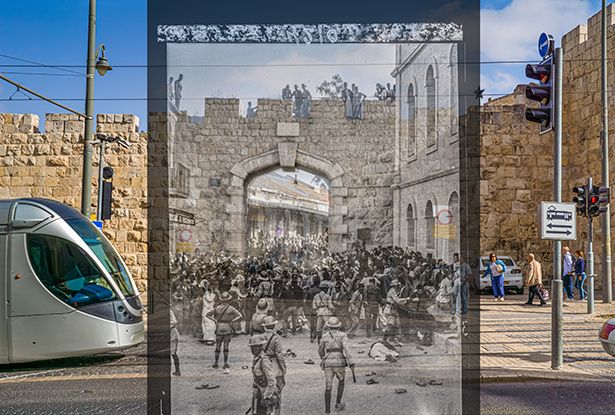
Jack PersekianLocation: Dubai Between Contested Histories and Earthly Paradise Jerusalem’s landscape is a palimpsest of competing histories, ideologies, and claims, where each layer of stone and soil bears witness to the continuous reshaping of the city and its identity. Preservation is never entirely neutral. It is often an act of power, privileging certain histories while obscuring or erasing others. Through a process of visual archaeology, this project attempts to uncover what has been concealed, bring absent histories back into view, and question the ways in which Jerusalem has been represented, reconstructed, and imagined over time. By bringing past and present into a direct visual relationship, the works challenge the nostalgic and often colonial representations of Jerusalem that seek to preserve it in an imagined, mythical past, detached from the realities of its inhabitants. They reveal a city that has never stood still, whose landscape has been continuously transformed by those who have lived in it, ruled over it, or sought to claim it as their own. The project is as much about what has disappeared as it is about what remains, and about the persistence of life in a city where history is constantly being rewritten. Yet, beyond these contested histories and struggles over ownership, belonging, and holiness, there is Jerusalem itself. A city of extraordinary beauty and magnificence, whose charm cannot be reduced to its monuments, sacred places, or historical significance. Its beauty resides equally in the grand scale of its landscape and the smallest details of its lived environment; in the changing colours of its stones, the warm hues of its rooftops, the shadows across its narrow streets, and the unexpected views that open onto distant hills and valleys. It is a beauty shaped as much by the generations who have inhabited the city as by its architecture and natural setting. In the works presented here, colour becomes a way of rediscovering this beauty and bringing it into focus. The subtle variations in the limestone, the richness of the earth tones, the occasional bursts of colour in streets, vegetation, and skies, and the ever-changing light reveal a visual richness that is both monumental and intimate. The scale of the landscape and the intricacy of its details come together to create an extraordinary harmony, where the ordinary becomes remarkable and the familiar takes on an almost otherworldly quality. Perhaps it is no coincidence that, in certain traditions and imaginings, Jerusalem is placed just outside the gates of Eden. Standing before its magnificent panorama or wandering through the intricate fabric of its old streets, one can almost understand how such an association came to be. There is something about the harmony of its colours, the scale of its landscape, the richness of its details, and the life unfolding within it that seems to elevate the city beyond its physical reality, somewhere between the earthly and the heavenly. And perhaps this is where Jerusalem’s true sanctity lies. Not in the competing claims to its holiness, nor in the attempts to possess or reconstruct it according to one particular vision of history, but in the extraordinary beauty of the city itself and the life that continues to unfold within it. A beauty that cannot be claimed by one people or one faith, but belongs to the city and to all those who have contributed to its making. Jerusalem does not need to be imagined as a heavenly place. Its beauty, its magnificence, and the richness of its lived reality are already enough to make it one. PRESS RELEASE