
Edinburgh · Scotland
Edinburgh Art Festival 2026: Archives, Sound and Queer Histories
A sprawling contemporary programme disperses across the Scottish capital, prioritising marginalised narratives and acoustic interventions
Edinburgh's 2026 Visual Arts Programme
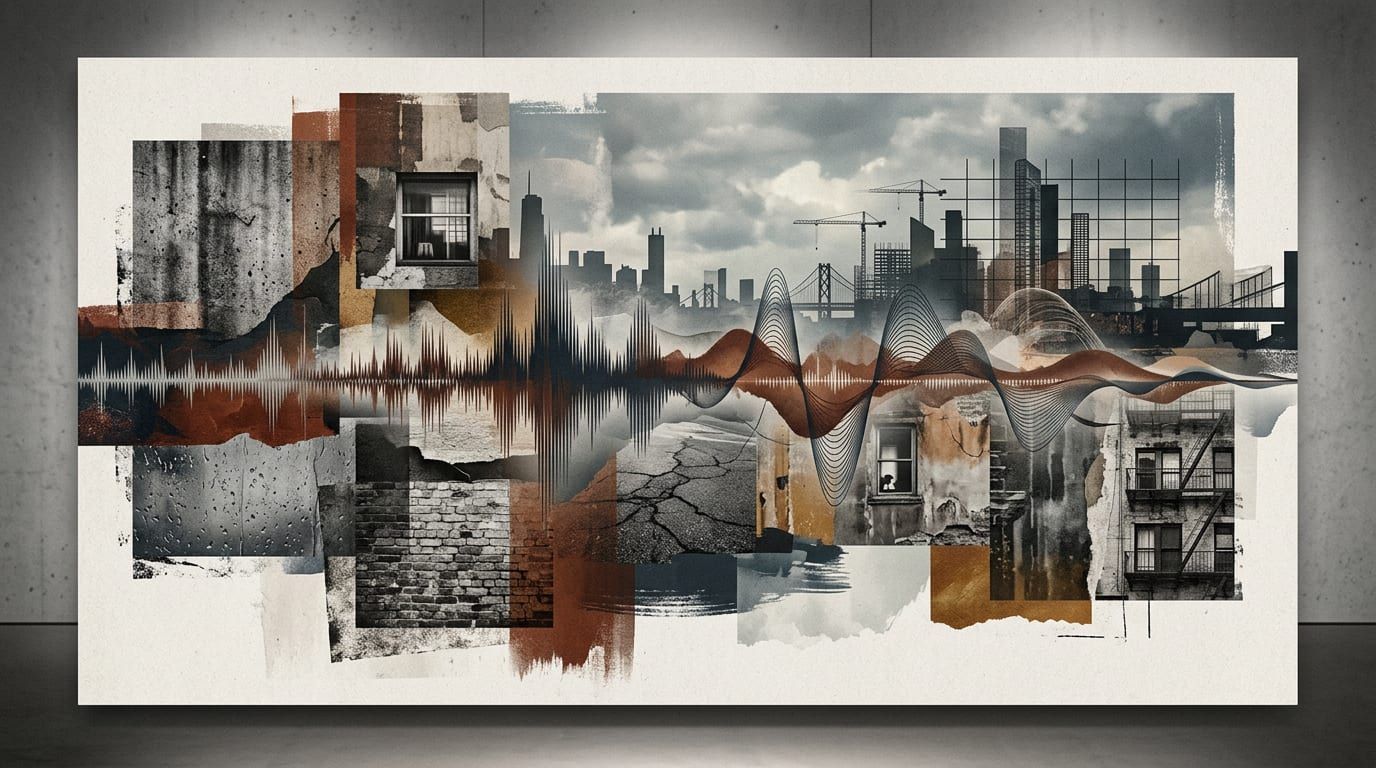
The Edinburgh Art Festival returns this summer with a sprawling programme that treats the city itself as an active archive. Rather than concentrating solely on white-cube institutions, the current iteration disperses across neighbourhoods, historic monuments, and independent spaces. Curatorial priorities lean heavily into queer historiography, sonic experimentation, and the documentation of marginalised communities. What emerges is a festival that privileges lived experience over institutional authority.
Queer Archives and Embodied Histories
A central thread runs through Del LaGrace Volcano's Love Bites Back, currently installed at the festival's new permanent venue on Constitution Street. Drawing from a personal collection of photographs taken across Britain during the late twentieth century, the work interrogates leather dyke culture and embodied resistance. A companion presentation at London's Auto Italia, titled Sensual / Mutual, extends this inquiry back to the early nineteen eighties. Meanwhile, Custom Lane hosts two distinct projects that examine queer lineage. Sadao Hasegawa's Carnal Desires showcases paintings that fuse eroticism with pan-Asian mythologies, while Ellis Jackson Kroese's History is a Home functions as both research archive and communal workspace, positioning trans artefacts as sites of refuge.
Sound, Landscape, and Political Echoes
The festival's engagement with acoustic environments proves particularly urgent. Emii Alrai's Guardian, a large-scale sculpture situated on Calton Hill, confronts the unfinished National Monument by reflecting on archaeological decay and contested heritage. Acoustic concerns also drive Lawrence Abu Hamdan's closing performance, Zifzafa. The piece addresses the environmental and sonic violence inflicted upon the Syrian Golan Heights through proposed wind turbine developments. Co-presented with the Falastin Film Festival, the work will be accompanied by a parallel exhibition in Glasgow. Performance remains a vital component throughout August, featuring Magnus Westwell's endurance-based duet with Océane Robin, alongside a collaborative residency project by Davi Pontes and Sebastião Abreu that bridges ecological themes between Scotland and Brazil. Additionally, a human library initiative focused on sex worker visibility will transition into a city-wide billboard campaign later in the year.
Photography and the Public Record
Photographic practice anchors much of the visual programming. Sandra George's extensive community documentation receives its most comprehensive showing to date at the City Art Centre, developed alongside Craigmillar Now. Lee McCormack's A Magic Lantern offers a similarly grassroots perspective, capturing Scottish community art initiatives from the late twentieth century. Stills presents a major retrospective of Jillian Edelstein's documentary and portrait work, while the National Galleries of Scotland at the Royal Scottish Academy Building hosts Catherine Opie's first major Scottish museum survey. Wendy McMurdo's The Digital Mirror occupies Portrait, tracing two decades of her investigations into childhood and virtual identity. Elsewhere, Sgàire Wood guest-curates the Jupiter Rising initiative and unveils a new solo show at Jupiter Artland, featuring an evening of experimental sound and performance. Sculptural contributions from Anne Hardy and Eva Rothschild appear at the Talbot Rice Gallery and Fruitmarket, complementing Rachel McBrinn and Jonathan Webb's architectural studies. Independent venues round out the programme with Jamie Fitzpatrick's commentary on public monuments, Esther Castle's botanical installation, Kate Power's spatial sound work, and solo presentations by Katie Paterson, Richard Maguire, and Frank Walter.
The 2026 edition reinforces the festival's commitment to situating visual culture within broader socio-political conversations. By distributing exhibitions across the capital, the programme invites audiences to navigate Edinburgh's layered histories through a distinctly contemporary lens.
Related reading
Gustave Fayet: Collector—Artist Designer
A comprehensive survey at the Fondation Louis Vuitton reuniting collected masterpieces with the designer's own studio practice.
The Paris institution expands its patronage series with a dual-focused examination of Gustave Fayet, bringing together hundreds of acquired works and restored creations to chart his impact on early modernism.
Mohammad Alfaraj: The Heart Is a Bird's Nest, the Brain Is a Spider Web
First European institutional solo explores cross-species kinship and domestic ecologies
Mohammad Alfaraj's latest showcase at the Delfina Foundation merges multimedia installations with regional folklore to reimagine shared habitats.
Marlow Moss Steps Out of Mondrian's Shadow in New London Retrospective
The pioneering Constructivist receives her first major UK showcase since the 1970s.
A landmark exhibition at Ward Moretti reclaims the legacy of the overlooked Neoplasticist, whose radical ideas quietly shaped modernism while history credited others.