
The Hague · Netherlands
Delftware's Blue Revolution: From Royal Fads to the Ikea of Its Day
Suzanne Lambooy's new exhibition reimagines Dutch ceramics as a vibrant, human-centric craft rather than cold museum display.
Suzanne Lambooy noticed a pattern while touring European museums. Ceramics displays were empty. Visitors avoided them. The objects felt cold and distanced. Makers remained anonymous behind glass cases.
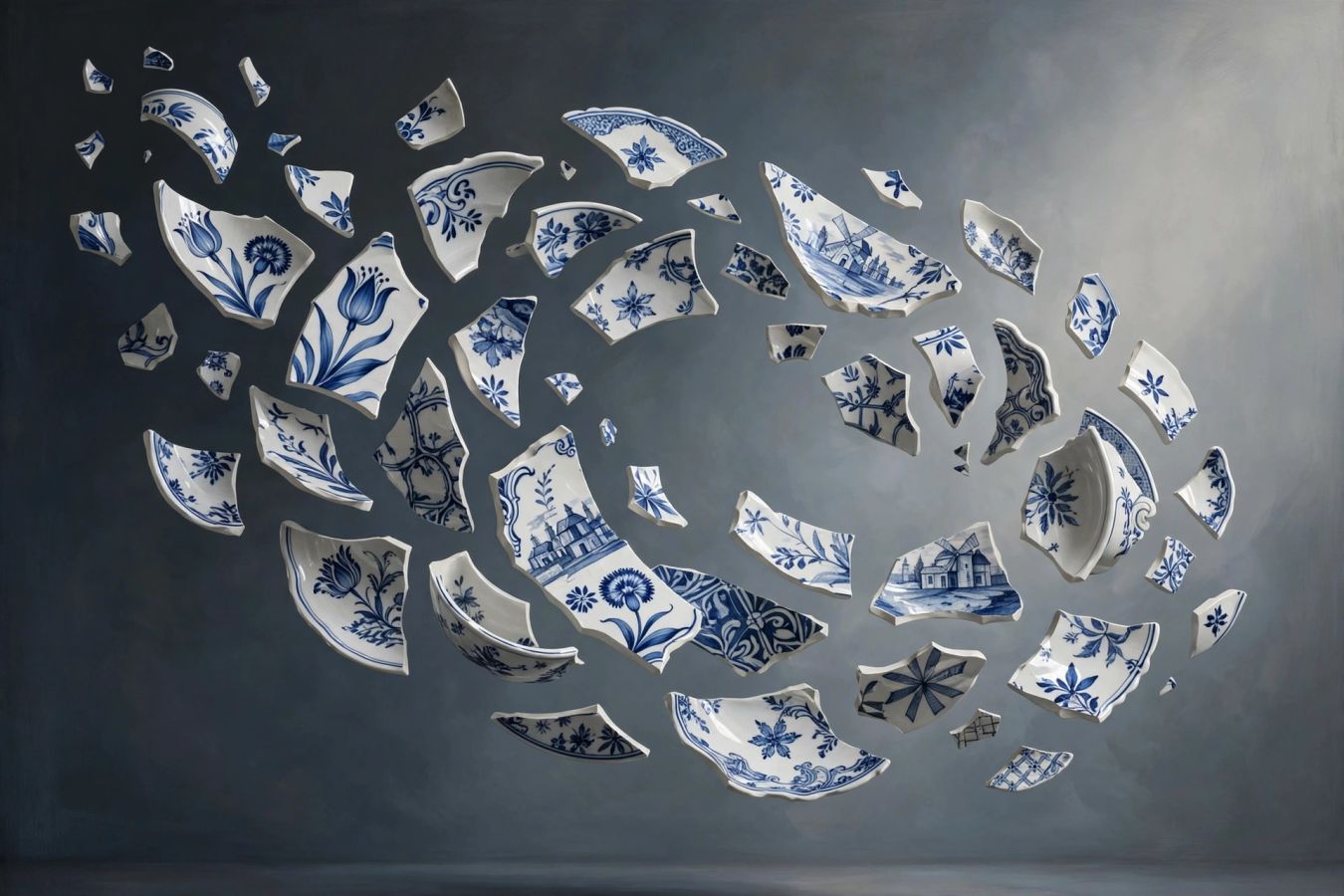
Lambooy refused to accept this detachment. She saw ceramics as a medium for human connection. Her solution is Blue Loves You: The Magic of Delftware. It opens this month at the Kunstmuseum in The Hague. Lambooy serves as curator of decorative arts there. She calls it the most complete Delftware exhibition ever staged.
The show aims to be interesting. It promises enjoyment over academic dryness. "Delftware is so much fun," she says. The goal is to reveal the love craftspeople poured into each piece. The exhibition also provides a platform for contemporary makers inspired by these historical forms.
Approximately one thousand objects will fill the galleries. Vases, teapots, plates, wall plaques, and tiles comprise the bulk of the collection. The Kunstmuseum holds one of the largest holdings of this art form. Delftware stands as perhaps the Netherlands' best-known cultural export.
The display extends beyond antique pottery. It includes Delftware-inspired creations. Queen Máxima wore a blue dress embroidered with Delft-derived flowers during her husband's 2013 investiture. This garment joins the exhibit. Lambooy insists there is more to the tradition than blue and white fridge magnets.
While the porcelain is famous for its colouring, the show features both white and multicoloured examples. The narrative traces back to the seventeenth century. Initially, the style arrived as high-end Chinese imports. Wealthy homes displayed these rare treasures. Local factories in Delft soon began producing their own versions.
This shift transformed the object entirely. It became an on-trend, functional brand. Prices dropped. Every home could afford it. Lambooy describes it as the Ikea of its day. Janny van der Heijden co-curates the long-term show. She is a television presenter and judge on the Dutch version of The Great British Bake Off.
The quintessential Delftware piece was the tulip pyramid. Some of the finest examples were made for King William III and Queen Mary II. They ruled England, Scotland, and Ireland jointly in the late seventeenth century. William was born in The Hague. Mary exported Delftware to Britain. Lambooy calls her the most important woman in the porcelain's history.
The exhibition also addresses darker threads. Dutch colonialism shaped the industry's supply chains. Floral artist Natasja Sadi contributes an installation of sugar flowers. Her family originates from Suriname, a former Dutch colony. Her ancestors were enslaved. This work contextualises the material within broader historical forces.
Blue Loves You: The Magic of Delftware runs at the Kunstmuseum in The Hague from 28 November to 31 December 2029.
Related reading
The Soldier Returns: Pieter de Hooch's Altered Masterpiece Revealed
Restoration work at The Hague museum recontextualises a seventeenth-century canvas
Munch Museum Names Thorsten Sadowsky as New Director
German museum veteran begins May 2027 tenure at Oslo institution
Rijksakademie Announces Residency Open Call for 2028
Applications open in January 2027 for the Amsterdam-based artist community