
Hamburg · Germany
Hamburg Convicts Simonian Siblings Over Looted Antiquities Proceeds
Landmark verdict targets financial gains from alleged Egyptian artefact trafficking network
Hamburg Court Delivers First European Verdict in Simonian Antiquities Case
A German criminal tribunal has found two siblings guilty of money laundering linked to the alleged illicit trade of Egyptian antiquities. On 24 August, judges in Hamburg ordered the seizure of €32 million derived from commercial transactions involving the family's collection, alongside substantial monetary penalties exceeding €120,000. The ruling marks the inaugural judicial determination in Europe concerning the extensive network operated by Serop Simonian, a Berlin-based dealer long suspected of orchestrating cross-border artefact trafficking.
Although the court withheld the minors' identities, the indictment aligns with proceedings against Abraham Simonian and his sister Alice Simonian Schad. Prosecutors established that both individuals facilitated high-profile acquisitions destined for major cultural institutions. Among the disputed items are a colossal marble bust attributed to Cleopatra, a limestone slab inscribed with Tutankhamun's name, and an elaborate funerary ensemble belonging to an unnamed royal woman. These pieces, alongside a gilded burial container acquired by New York's Metropolitan Museum, formed part of a portfolio transferred to the Louvre Abu Dhabi. Collectively, transactions directed at these two establishments generated approximately €70 million.
Tribunal records confirm that €26 million was seized from Abraham's assets and €6 million from Alice's, accompanied by individual penalties surpassing €90,000 and €30,000. An additional allegation regarding organised crime participation was dismissed due to insufficient proof. Financial documents presented during the trial reveal how profits were allocated across the family enterprise. Court papers indicate that Alice received €6.4 million following the €8.5 million disposal of the pharaonic tablet in 2017. Conversely, Abraham secured the majority of the revenue streams. In 2014, he submitted an invoice to the Abu Dhabi museum for €4.5 million covering wooden sarcophagi and a painted Fayum panel, deliberately framing them as ancestral presents. After intermediary commissions were deducted, €3.8 million was routed into his Hamburg banking institution. A similar pattern emerged in 2018 when the Cleopatra sculpture fetched €35 million, leaving Abraham with €23.5 million. While Abraham has publicly rejected claims of succeeding his father's commercial operations, investigators maintain he assumed operational control from 2013 onwards.
The litigation traces its origins to Manhattan, where Matthew Bogdanos led the initial inquiry into suspicious provenance trails. Evidence suggested that several deals were intermediated by Christophe Kunicki, a French merchant currently facing fraud charges in Paris. Attempts to secure the siblings' transfer to France encountered resistance; German magistrates declined a 2020 European arrest warrant, deeming the documentation inadequate. Meanwhile, proceedings against the octogenarian patriarch have languished within France's congested judiciary. Serop Simonian, aged eighty-four, was released from pre-trial custody in March 2025 and relocated back to northern Germany following procedural collapses.
Law enforcement agencies have systematically dismantled the family's logistical infrastructure. Roughly two hundred objects were relocated to Belgium before being impounded in June 2021, with police registers listing Abraham as the registered owner. Earlier seizures in 2020 yielded €4.6 million spread across multiple financial institutions, alongside property assets valued at €16.5 million. Authorities also recovered ancient coinage, timepieces, and numerous sculptures from his residential premises. Both convicted parties have filed appeals but have remained silent publicly. This judgment represents a pivotal moment for heritage governance, underscoring the growing scrutiny applied to private collectors and the institutions that acquire their holdings. As provenance standards continue to evolve, such rulings will likely influence acquisition protocols and due diligence practices globally.
Related reading
Curating Tomorrow's Archive: Hamburger Kunsthalle Seeks Contemporary Collections Lead
A new permanent appointment will steer the museum's post-1960 holdings across paper, photography, and media formats.
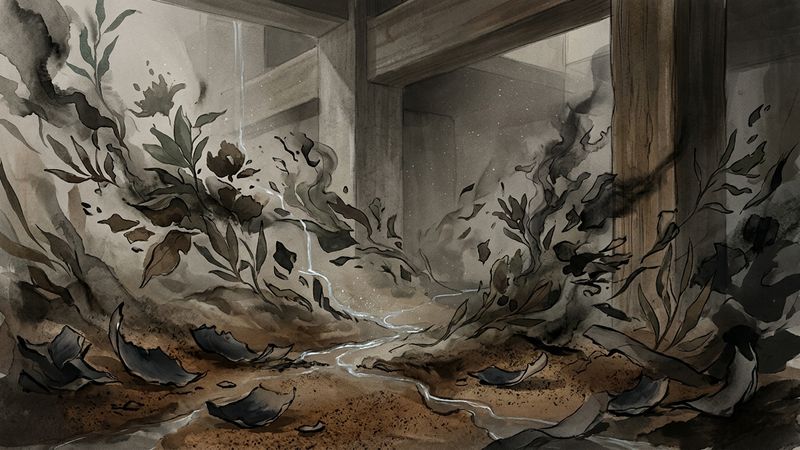
Melike Kara: Whispers
A garden of ash and memory at Kunsthaus Hamburg
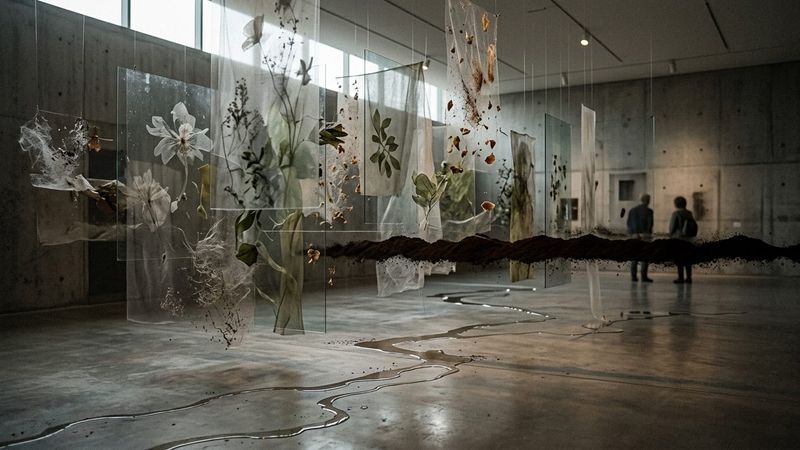
Melike Kara: Whispers
Burning the archive to reimagine identity at Kunsthaus Hamburg