
Düsseldorf · Germany
Zauri Matikashvili: You may not want to be here
Kunsthalle Münster presents the Georgian artist's first institutional solo exhibition, spanning film and sculpture
A First Institutional Survey
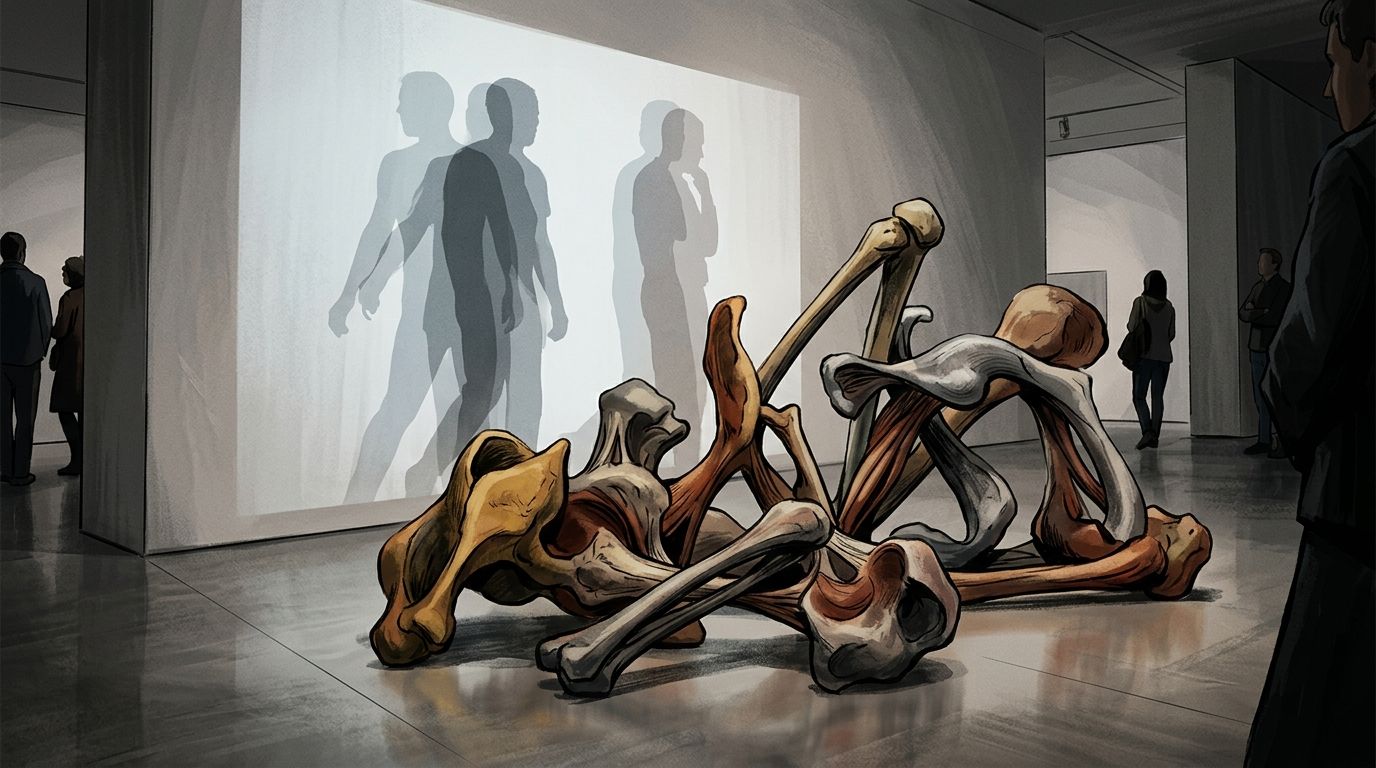
Kunsthalle Münster is staging the first institutional solo exhibition dedicated to Zauri Matikashvili, offering a comprehensive look at the Georgian artist's practice across moving image and sculpture. Titled You may not want to be here, the show runs from 13 June to 13 September 2026 and centres on his latest two-channel installation Passing the Glass (2026), premiering here for the first time. Two earlier films — In Katernberg (2022) and Made in Europe (2023) — are also on view, alongside sculptural works from a series begun in 2024 that shares the exhibition's title and is distributed throughout the gallery spaces.
Camera as Witness
Matikashvili works with the camera as a tool of attestation. His films document social, political and historical realities, interrogating established structures of power from multiple vantage points. Identity, traditional gender roles, segregation, belonging, disunity, racism and rising repression are among the subjects he returns to repeatedly. His lens is drawn to individuals and communities who rarely occupy centre stage — people whose specific circumstances open onto broader socio-cultural and political contexts, often operating just outside major political arenas yet inextricably linked to them.
The artist positions himself as a participant-observer, immersing himself in the environments he films. The resulting works compile distinct and sometimes dissonant voices, producing an ambiguity that resists easy resolution. For much of his career, Matikashvili's subjects were strangers who granted him temporary access to their lives. It is the unpredictable moments within these encounters — the thoughts, opinions and desires that surface unexpectedly — that have consistently driven his practice.
Turning Inward
In his most recent work, the focus has shifted toward family members and their social circles, coinciding with a deeper investigation of Georgia, his country of birth. The nation currently faces profound insecurity on economic, political and cultural fronts, and Matikashvili responds by weaving autobiographical filmmaking with sociological reflection. Born in the Georgian town of Qvareli, he studied fine arts in Münster and Düsseldorf and now lives and works between Münster and Amsterdam.
The Body as Material
The sculptural dimension of the exhibition extends these concerns into three dimensions. The series You may not want to be here comprises objects made from ceramic, porcelain, wax, metal and found natural materials, some coated with earth, metals or dust. The starting point was Matikashvili's own thyroid gland — a deeply personal origin that broadens into a meditation on the body's functioning and malfunctioning, on existence and transience. Across the series, the original anatomical reference mutates beyond recognition. These growths and transformations provoke unease, yet the forms and materials hold a simultaneous fascination.
The interplay of closeness and distance that defines Matikashvili's filmmaking carries through to the sculptures, though expressed through material and form rather than narrative. Objects sit in dialogue with the projected images, creating an environment in which the personal and the political, the corporeal and the societal, remain in constant tension.
Context and Urgency
Against a backdrop of democratic erosion, the rise of authoritarian populism, a widespread shift to the political right and deepening social inequality, Matikashvili's work acquires a particular urgency. It offers a counterpoint to polarising and reductive positions that disregard or distort facts, instead insisting on complexity, multiplicity and the quiet persistence of lived experience.
The exhibition is curated by Merle Radtke with curatorial assistance from Heiko Lietz, and is supported by Kunststiftung NRW.
Galleries mentioned
Related reading
Gustave Fayet: Collector—Artist Designer
A comprehensive survey at the Fondation Louis Vuitton reuniting collected masterpieces with the designer's own studio practice.
The Paris institution expands its patronage series with a dual-focused examination of Gustave Fayet, bringing together hundreds of acquired works and restored creations to chart his impact on early modernism.
Mohammad Alfaraj: The Heart Is a Bird's Nest, the Brain Is a Spider Web
First European institutional solo explores cross-species kinship and domestic ecologies
Mohammad Alfaraj's latest showcase at the Delfina Foundation merges multimedia installations with regional folklore to reimagine shared habitats.
Marlow Moss Steps Out of Mondrian's Shadow in New London Retrospective
The pioneering Constructivist receives her first major UK showcase since the 1970s.
A landmark exhibition at Ward Moretti reclaims the legacy of the overlooked Neoplasticist, whose radical ideas quietly shaped modernism while history credited others.