

Copenhagen · Denmark
Rebuilding Copenhagen's Historic Exchange After the 2024 Fire
Restoring a 17th-century landmark through heritage conservation and modern fire safety
Rebuilding Copenhagen's Historic Exchange After the 2024 Fire
On the morning of 16 April 2024, a blaze engulfed the Old Stock Exchange in Copenhagen. The Danish Chamber of Commerce, which holds the title to the seventeenth-century structure, watched as more than half of the Dutch Renaissance edifice collapsed. The disaster claimed the distinctive copper roof and the famous spire crowned with four interlocked dragon tails. Despite the devastation, emergency crews and local volunteers managed to extract nearly every artwork housed within the premises. Only two percent of the collection was lost.
Preserving a National Collection
The rapid evacuation effort relied on a pre-established priority list created ten years prior. Conservators from the National Museum arrived swiftly to evaluate water-damaged pieces, transporting them to climate-controlled storage for careful drying or freezing. Eva Bøje Nielsen, head of conservation at the museum, noted that the coordinated response prevented widespread deterioration. Among the rescued items was Peder Severin Krøyer's celebrated 1895 canvas depicting early nineteenth-century Danish merchants. While most objects emerged unscathed, a soot-covered marble bust of industrialist C. F. Tietgen required extensive cleaning, and a zinc sculpture of King Christian IV was destroyed. A large portrait of the same monarch has already been returned to the site.
Architectural Restoration and Craftsmanship
Restoration architects Leif Hansen and Praksis are now directing the reconstruction, targeting a complete reopening by 2029. Insurance payouts and a DKK200 million contribution from Danish foundations are covering the costs. The project has drawn heavily on strategies developed during the Paris Notre-Dame restoration. Early site visits to the French cathedral taught the Danish team the importance of immediate material procurement and structured communication. Because the exchange is legally protected, the rebuild must mirror the original design. Specialists have located 886 pine trunks from the historical realm of Christian IV, including timber from Sweden's Gotland island. Plans are underway to fire 800,000 period-accurate bricks, while melted roof copper is being repurposed in Finland.
Finding artisans capable of recreating the dragon-tailed spire proved difficult. Only two Danish firms possess the required expertise, both currently occupied with church restorations. A Thyholm-based workshop has been commissioned for the task. To foster future talent, the chamber is mandating the inclusion of junior craftspeople. Fire safety protocols are also being upgraded. Inspired by French recommendations, the structure will feature additional firewalls and compartmentalised zones to limit potential damage. A temporary sculpture of a juvenile water dragon will guard the site until the original spire returns in 2029.
Looking Ahead
The Danish Chamber of Commerce aims to surpass the five-year timeline achieved in Paris. New contemporary pieces, including works documenting the 2024 blaze, will join the permanent collection. Lars Daugaard Jepsen, deputy director, emphasised that this restoration represents a fresh start for a building that has anchored Danish commerce for four centuries. The ambition is to secure its legacy for another millennium.
Related reading

Gustave Fayet: Collector—Artist Designer
A comprehensive survey at the Fondation Louis Vuitton reuniting collected masterpieces with the designer's own studio practice.
The Paris institution expands its patronage series with a dual-focused examination of Gustave Fayet, bringing together hundreds of acquired works and restored creations to chart his impact on early modernism.

Mohammad Alfaraj: The Heart Is a Bird's Nest, the Brain Is a Spider Web
First European institutional solo explores cross-species kinship and domestic ecologies
Mohammad Alfaraj's latest showcase at the Delfina Foundation merges multimedia installations with regional folklore to reimagine shared habitats.
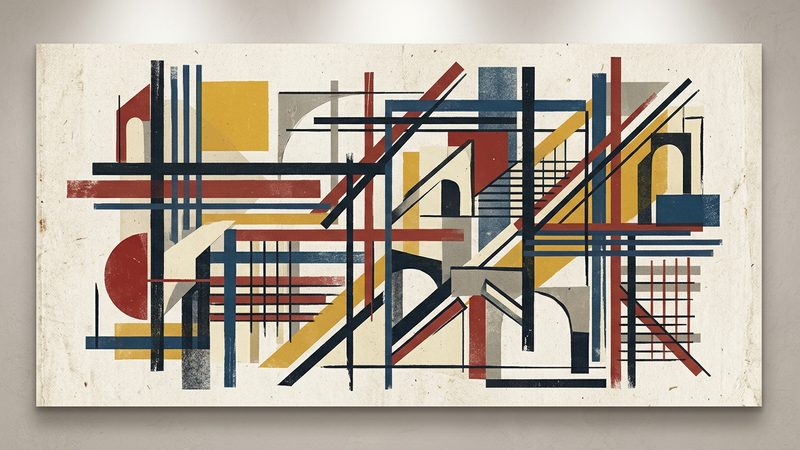
Marlow Moss Steps Out of Mondrian's Shadow in New London Retrospective
The pioneering Constructivist receives her first major UK showcase since the 1970s.
A landmark exhibition at Ward Moretti reclaims the legacy of the overlooked Neoplasticist, whose radical ideas quietly shaped modernism while history credited others.