
Vienna · Austria
Erna Rosenstein: Memory and Loss in Focus at Vienna's Belvedere
A major retrospective brings renewed attention to the Polish artist whose haunting visual language addresses trauma and remembrance
A Life Marked by Displacement
Erna Rosenstein (1913-2004) occupies an unusual position in post-war European art. Though recognised in Poland and neighbouring countries, her influence has remained largely contained to central and eastern Europe. Born in Lviv—then part of Poland, today Ukraine—she pursued studies in Vienna during the early 1930s before returning to Kraków, where she engaged with left-wing avant-garde circles. The Nazi occupation brought unimaginable hardship: Rosenstein survived by adopting false identities and moving across Poland, while witnessing her parents' murder. This trauma became the emotional core of her artistic production, sustained over five decades until her death in Warsaw.
The Exhibition
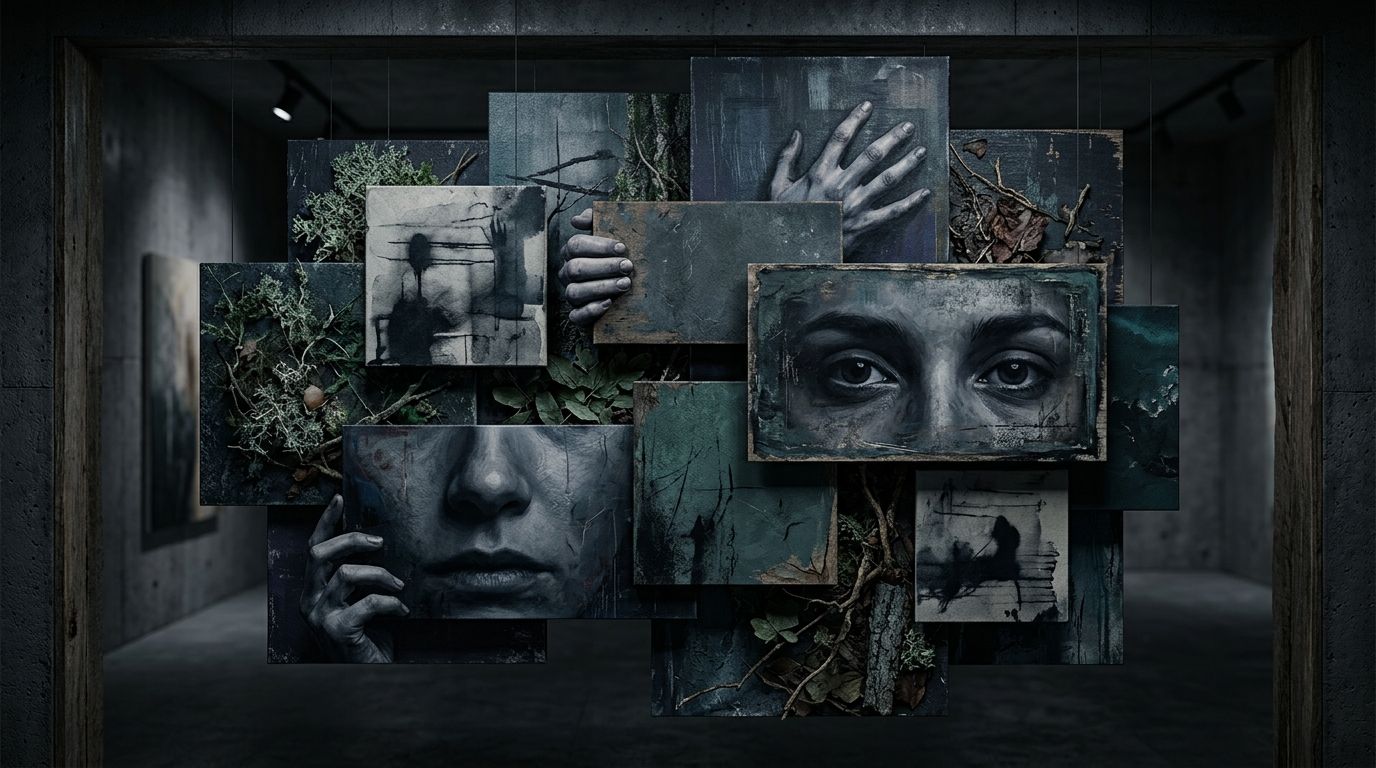
"On the Other Side of Silence" at Vienna's Belvedere represents something of a return. The survey brings together paintings, drawings and assemblages that trace Rosenstein's development of a distinctive visual vocabulary. Curator Stephanie Auer notes that the artist's recurring motif—severed, floating heads of her parents—first emerged within narrative contexts before evolving into surreal landscapes and isolated double portraits.
Visual Language
Rosenstein's mature style synthesised Surrealism with biomorphic abstraction and figuration. The 1951 canvas "Screens" demonstrates this approach: a blue rectangle hovers like a screen within a nocturnal forest, containing the hands and faces of her parents. As Auer observes, this technique creates distance from reality whilst suggesting memory's fluid nature. The monochrome field functions as both projection surface and testament to remembrance's fragility.
Contemporary Resonance
Recent institutional attention has elevated Rosenstein's profile internationally. Documenta 14 featured her work in 2017, followed by inclusion in "Surrealism Beyond Borders" at the Metropolitan Museum of Art (2021) and Tate Modern (2022). Her practice poses questions that resonate strongly today: how do museums preserve memory? How can fragmented histories be meaningfully reconstructed?
These concerns feel particularly urgent given current European conflicts and displacement. Rosenstein's art transforms personal tragedy into universal meditation on loss, making this retrospective especially timely.
Exhibition Details
Erna Rosenstein: On the Other Side of Silence continues at Lower Belvedere, Vienna, from 3 July 2026 until 10 January 2027.
Museums mentioned
Related reading

The Vienna Heist and the Disappearance of a Royal Jewel
Daylight intrusion at MAK claims historic platinum necklace linked to Egyptian royalty
Authorities pursue two suspects after a legendary diamond chain vanishes from a Viennese gallery during a coordinated daytime breach.

LEGO Unveils Its Largest Art Set Yet — A 4,000-Piece Reinterpretation of Klimt's The Kiss
Developed with the curatorial team at Vienna's Belvedere Museum, home to the original painting, the set translates Klimt's gold leaf and ornamentation into metallic bricks and layered textures — on sale from 1 August.
LEGO has unveiled its largest LEGO Art Masterpiece set to date: a 4,000-piece, three-dimensional reinterpretation of Gustav Klimt's The Kiss, developed in partnership with Vienna's Belvedere Museum, where the original painting is permanently displayed. The set goes on general sale on 4 August 2026.
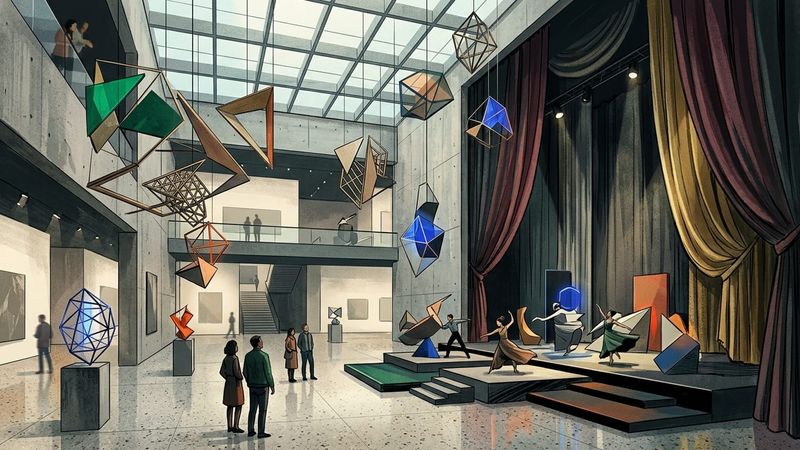
Stellprobe: Belvedere 21 Stages a Decade of Collection Acquisitions
Heimo Zobernig transforms the museum's recent acquisitions into an experimental spatial rehearsal
More than 150 works acquired over the past ten years are brought together in a bold installation that tests the relationships between objects, narratives and space.