
Washington, D.C. · United States
Hirshhorn's '50 for 50' Initiative to Send 200+ Artworks Across America
Smithsonian's modern art museum partners with Art Bridges for nationwide lending programme coinciding with America's semiquincentennial celebrations
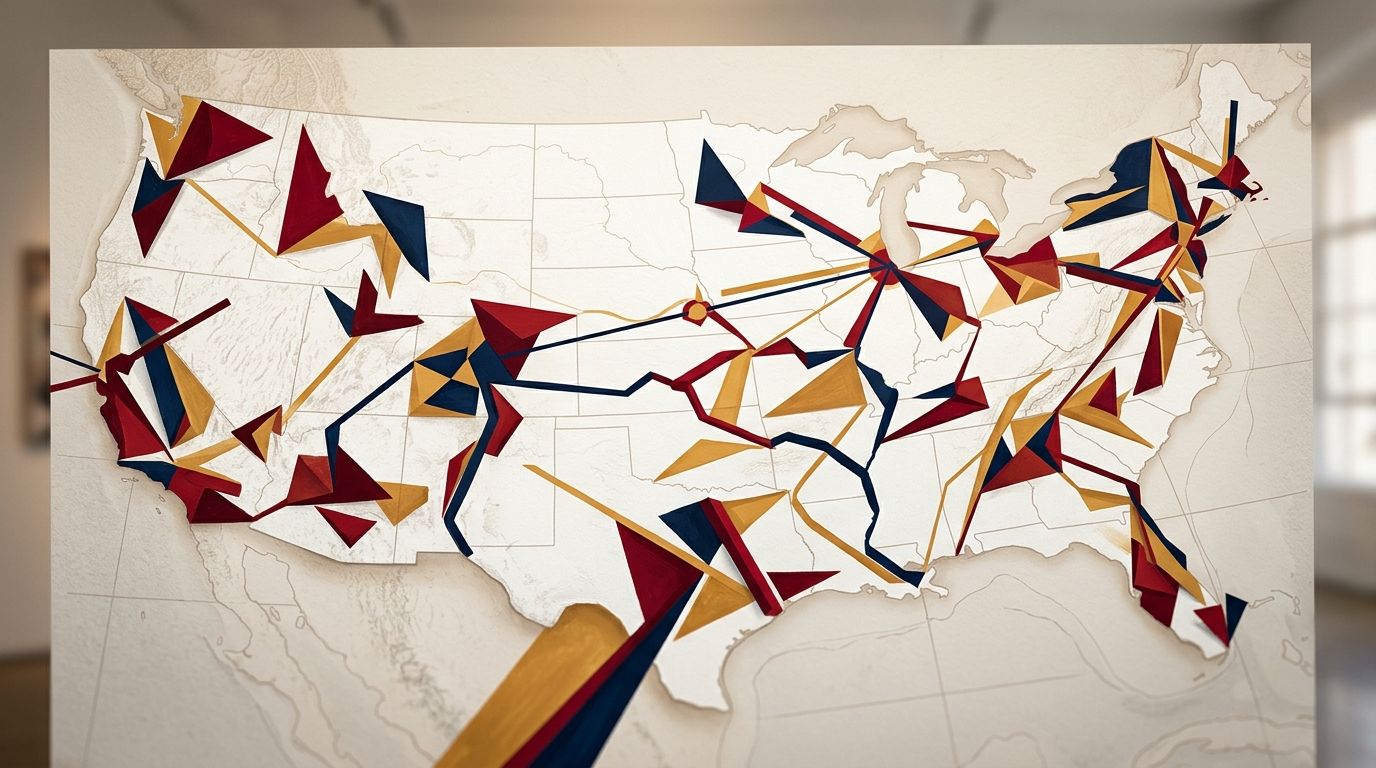
As Washington prepares to mark 250 years since the Declaration of Independence, the Smithsonian's premier museum of modern and contemporary art has announced an ambitious nationwide lending programme. The Hirshhorn Museum and Sculpture Garden, working with Arkansas-based Art Bridges Foundation, will send more than 200 works to partner venues spanning all fifty states and Puerto Rico.
Dubbed '50 for 50', the initiative addresses a fundamental challenge in American museums: how to share significant works beyond major metropolitan centres. All pieces selected for loan have been drawn from the Hirshhorn's storage facilities, where they will be matched to institutions seeking to fill collection gaps or create meaningful dialogues with existing holdings.
"We wish everyone could visit us so sharing our collection is a must," explained Melissa Chiu, the Hirshhorn's outgoing director.
The programme places important American masterworks from the national modern and contemporary collection into communities far beyond the National Mall, ensuring these pieces remain accessible rather than remaining unseen in storage.
The loans, lasting between three and five years, come at no cost to receiving institutions. Participating venues range from established urban museums to smaller regional galleries. The Oakland Museum of California and Queens Museum in New York will each receive works, as will the Museo de Arte Contemporáneo de Puerto Rico in San Juan.
Smaller communities feature prominently in the initiative. The Owensboro Museum of Fine Art in Kentucky (population 60,000) joins the Westerly Museum of American Impressionism in Rhode Island (population 23,000), while Wyoming's Brinton Museum in Big Horn (population 500) demonstrates the programme's commitment to reaching underserved areas.
Approximately twenty percent of participating institutions maintain university affiliations, including the Blanton Museum of Art at the University of Texas and Indiana University's Sidney and Lois Eskenazi Museum of Art. This mix ensures both scholarly and public engagement with the loaned works.
"Each of these 51 museums chose works that connect with their own collections and audiences—a loan in Tacoma looks nothing like one in Savannah," noted Anne Kraybill, chief executive of Art Bridges Foundation. The matching process, she emphasised, determines whether a Hirshhorn loan truly resonates with local communities.
From the Hirshhorn's 13,000-piece collection, eligible works span several decades and mediums. Paintings by Willem de Kooning, Helen Frankenthaler, Alex Katz, Childe Hassam, Georgia O'Keeffe and Alma Thomas will circulate alongside installations by Yoko Ono and Lawrence Weiner. Video art by Christian Marclay also features in the programme.
The first installations are scheduled to open by the end of 2026, with specific artwork allocations to be announced later this year. This represents one of the most comprehensive single-institution lending efforts in recent American museum history, timed to coincide with the nation's semiquincentennial celebrations.
The initiative reflects growing recognition that cultural access should extend beyond traditional museum boundaries. By partnering with Art Bridges, the Hirshhorn joins a broader movement toward decentralised art access that prioritises community engagement over institutional prestige.
Each loan becomes a curated conversation between the Hirshhorn's holdings and local collections, creating unique exhibitions that speak to regional identities while maintaining national artistic standards. The programme's structure allows smaller institutions to present works that might otherwise never reach their audiences, potentially inspiring new generations of art enthusiasts across diverse geographic and demographic landscapes.
Related reading

Smithsonian Secretary Lonnie Bunch III to Retire After Seven Years
The institution's longest-serving leader steps down amid shifting cultural and political landscapes
Lonnie G. Bunch III confirms his departure as Smithsonian secretary, concluding a transformative tenure marked by curatorial expansion and diplomatic resilience.
Navigating Politics and Preservation for Washington's Latino Museum
The Smithsonian considers repurposing a historic National Mall landmark to house the National Museum of the American Latino amid shifting federal funding landscapes.
Trustees weigh adaptive reuse against new construction as political and financial pressures shape the future of America's Latino cultural institution.

Smithsonian Museums Temporarily Close Following Utility Failure
Seven National Mall institutions suspend operations after municipal cooling outage
Seven Smithsonian galleries in Washington DC closed briefly on 6 August due to a municipal chilled water disruption, raising questions about cultural infrastructure resilience.